
About Lars Sonck
Lived 1870 – 1956 (aged 85). Lars Sonck was a Finnish and Russian architect and urban planner.
Lars Eliel Sonck (10 August 1870 – 14 March 1956) was a Finnish architect. He was a prominent figure in early 20th-century Finnish architecture, known for his role in developing the National Romantic and later Nordic Classicism movements in Finland.
Sonck graduated from the Polytechnic Institute of Helsinki (now Aalto University) in 1894. That same year, at age 23, he won the design competition for St Michael's Church, Turku, marking his professional breakthrough. While the church was designed in the Neo-Gothic style, Sonck’s later work evolved through Art Nouveau, National Romanticism, and ultimately Nordic Classicism during the 1920s.
Architectural style and urban planning
Sonck was one of the leading figures in shaping a distinctive Finnish architectural identity at a time when Finland was part of the Russian Empire. His early works in the National Romantic style reflected elements of Romanesque architecture and traditional Finnish medieval and vernacular buildings. He worked alongside architects such as Herman Gesellius, Armas Lindgren, and Eliel Saarinen to define this style.
Notable examples of Sonck’s work include: Kallio Church (1912), Helsinki – Neo-Romanesque Kultaranta (1916), the summer residence of the President of Finland, Naantali – Neo-Romanesque Tampere Cathedral (1907) – National Romantic Eira Hospital (1905), Helsinki – Art Nouveau Ainola (1903), home of composer Jean Sibelius – Art Nouveau Housing blocks on Museokatu, Töölö, Helsinki (c. 1920) – Nordic Classicism Mikael Agricola Church (1935), Helsinki – Nordic Classicism
Sonck also contributed significantly to urban planning. He participated in Finland’s first town planning competition (1898–1900), for the Töölö district of Helsinki. His entry, influenced by the picturesque planning principles of Camillo Sitte, emphasized curved streets and medieval urban character. Although first prize went to Gustaf Nyström, Sonck’s ideas were partially incorporated into the final city plan developed by Nyström and later refined by Bertel Jung in 1916.
Historian Pekka Korvenmaa noted that Sonck’s drawings conveyed a vision inspired by Central European urban forms, aiming to recreate the atmosphere of medieval cities.
Selected works St Michael's Church, Turku (1899–1905) Headquarters of the Helsinki Telephone Association (1903–1907) Eira Hospital, Helsinki (1905) Tampere Cathedral (1902–1907) Ainola, Järvenpää (1903–1904) Kallio Church, Helsinki (1908–1912) Helsinki Stock Exchange (1911) Kultaranta, Naantali (1920) City Hall, Mariehamn (1939) Mikael Agricola Church, Helsinki (1935)
Gallery
Don’t just read it —
keep it.
Full-length biographies made to live with: read them, listen on the way to work, watch them tonight.
- E-book
- Audio
- Video
Instant download · yours to keep · every purchase keeps this site free
Important facts
People in Lars Sonck's life
Named in this biography and alive at the same time

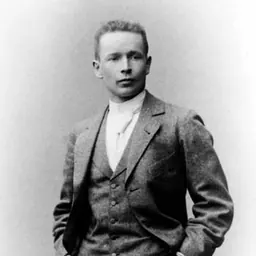
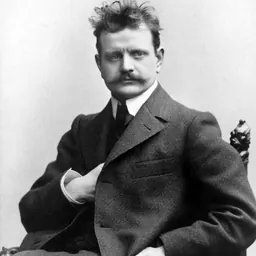




Related people
Same field, nearest in time
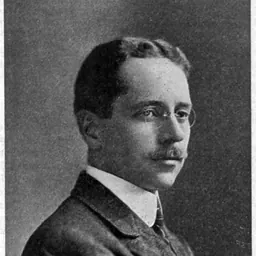


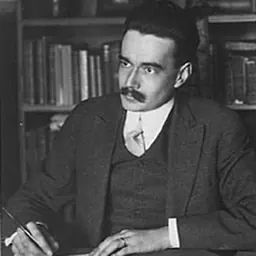
Contemporaries
People whose lives overlapped Lars Sonck's


Frequently asked questions
Who was Lars Sonck?
Finnish-Swedish architect (1870–1956)
When was Lars Sonck born?
Lars Sonck was born on 10 August 1870 in Kälviä.
When did Lars Sonck die?
Lars Sonck died on 14 March 1956 in Helsinki.
What was Lars Sonck's occupation?
Lars Sonck was an architect and urban planner.
What nationality was Lars Sonck?
Lars Sonck was Finnish and Russian.
Sources & further reading
Cite this page
APA: Biography.guide. (2026). Lars Sonck. https://biography.guide/lars-sonck/
MLA: "Lars Sonck." Biography.guide, https://biography.guide/lars-sonck/.
Chicago: "Lars Sonck." Biography.guide. https://biography.guide/lars-sonck/.
Data last updated: 2026-09-20 · Spot an error? Report a correction.
Page generated 2026-09-27 05:33 UTC