
About Lars-Erik Larsson
Lived 1908 – 1986 (aged 78). Lars-Erik Larsson was a Swedish conductor, composer, musicologist, university teacher, music educator and record producer.
Lars-Erik Vilner Larsson (15 May 190827 December 1986) was a Swedish composer, conductor, radio producer, and educator. He wrote three of the most popular works (each a suite) in Swedish art music: A Winter's Tale (; 1937–1938), the Pastoral Suite (; 1938), and God in Disguise (; 1940). Other notable works by Larsson include three symphonies, a sinfonietta, and numerous concertante works.
Biography Larsson was born in Åkarp in 1908, the son of a factory worker and a nurse. He studied with Ernst Ellberg at the Stockholm Conservatory (1925–1929) and with Alban Berg and Fritz Reuter in Vienna and Leipzig (1929–1930), then worked for Swedish Radio and taught at the Stockholm Conservatory (1947–1959) and Uppsala University, where he held the position as Director musices (1961–1966). One of his pupils was composer Hans Eklund.
His style as a composer is eclectic, ranging from the late Romantic to techniques derived from Arnold Schoenberg's twelve-note system, but original in method. He was the first Swede to write serial music (1932). Yet other works of that period are post-Sibelian or neo-classical, and his output generally is characterized by variety of style.
He wrote for the theatre, cinema and broadcasting, in addition to the more traditional forms of symphony, concerto, chamber and vocal music.
He died of diabetes complications in Helsingborg in 1986, aged 78.
Works Larsson wrote three of the most popular works in Swedish art music: A Winter's Tale , Op. 18 (1937–1938), four vignettes to The Winter's Tale by Shakespeare Pastoral Suite , for orchestra, Op. 19 (1938) God in Disguise , a non-religious cantata (officially "lyrical suite") for narrator, soprano, baritone, mixed choir, and orchestra, Op. 24 (1940)
Larsson's most important symphonic works are his three symphonies for full orchestra: Symphony No. 1 in D major, Op. 2 (1927–1928) Symphony No. 2 in E minor, Op. 17 (1937) Symphony No. 3 in C minor, Op. 34 (1944–1945)
Larsson also wrote a Sinfonietta for string orchestra and a popular Little Serenade.
He wrote a series of Twelve Concertinos for solo instruments: flute, clarinet, bassoon, oboe, horn, trumpet, trombone, violin, viola, cello, double bass, and piano.
Larsson's Saxophone Concerto, written for Sigurd Raschèr in 1934, is one of the first major works for saxophone to utilize ideas of non-standard tonality. The Violin Concerto, Op. 42 (1952) is another important work, as is the opera Prinsessan av Cypern.
Don’t just read it —
keep it.
Full-length biographies made to live with: read them, listen on the way to work, watch them tonight.
- E-book
- Audio
- Video
Instant download · yours to keep · every purchase keeps this site free
Important facts
People in Lars-Erik Larsson's life
Named in this biography and alive at the same time
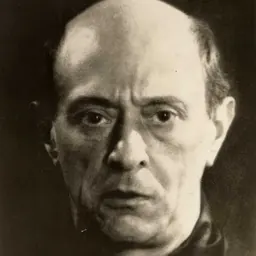




Related people
Same field, nearest in time


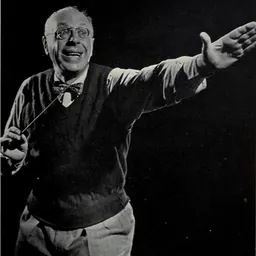

Contemporaries
People whose lives overlapped Lars-Erik Larsson's
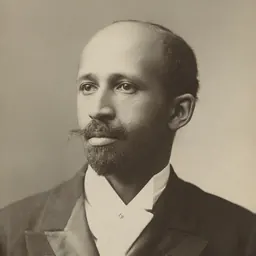

Frequently asked questions
Who was Lars-Erik Larsson?
Swedish composer and conductor (1908-1986)
When was Lars-Erik Larsson born?
Lars-Erik Larsson was born on 15 May 1908 in Burlövs parish.
When did Lars-Erik Larsson die?
Lars-Erik Larsson died on 27 December 1986 in Helsingborgs Maria church parish.
What was Lars-Erik Larsson's occupation?
Lars-Erik Larsson was a conductor, composer, musicologist, university teacher, music educator and record producer.
What nationality was Lars-Erik Larsson?
Lars-Erik Larsson was Swedish.
Sources & further reading
· Wikipedia: Lars-Erik Larsson
Cite this page
APA: Biography.guide. (2026). Lars-Erik Larsson. https://biography.guide/lars-erik-larsson/
MLA: "Lars-Erik Larsson." Biography.guide, https://biography.guide/lars-erik-larsson/.
Chicago: "Lars-Erik Larsson." Biography.guide. https://biography.guide/lars-erik-larsson/.
Data last updated: 2026-09-20 · Spot an error? Report a correction.
Page generated 2026-09-27 05:27 UTC