
About Lale Andersen
Lived 1905 – 1972 (aged 67). Lale Andersen was a German singer-songwriter, actor, singer, screenwriter, songwriter and autobiographer.
Lale Andersen (23 March 1905 – 29 August 1972) was a German chanson singer-songwriter She is best known for her interpretation of the song "Lili Marleen" in 1939, which by 1942 transcended the conflict to become World War II's biggest international hit. Popular with both the Axis and the Allies, Andersen's original recording spawned versions, by the end of the War, in most of the major languages of Europe, and by some of the most popular artists in their respective countries.
Biography Early life Andersen was born in Lehe and baptized Elisabeth Carlotta Helena Berta Bunnenberg, but known informally as "Liese-Lotte"—a diminutive of her first two names—to friends and family; this continued after her first marriage when she was known as "Liselotte Wilke".
In 1922, aged 17, (Although some online resources give 1924 as the year of the marriage, where she reportedly studied acting at the Schauspielschule at the Deutsches Theater.) In 1931, her marriage ended in divorce. Around this time, she began appearing on stage in various cabarets in Berlin. From 1933 to 1937, she performed at the Schauspielhaus in Zürich, where she also met Rolf Liebermann, who would remain a close friend for the rest of her life. In 1938, she was in Munich at the cabaret Simpl, and soon afterwards joined the prestigious Kabarett der Komiker (Comedians' Cabaret) in Berlin.
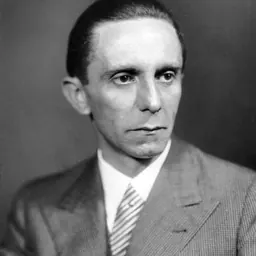
Andersen was awarded a gold disc for over one million sales of "Lili Marleen" [ His Master's Voice – EG 6993]. It is thought that she was awarded her copy after the end of World War II. A copy of this particular gold disc owned by the "His Master's Voice" label was discarded during the renovation of their flagship store on Oxford Street, London, during the 1960s where, hitherto, it had been on display. However, the disc was recovered and is now in a private collection. Nazi officials did not approve of the song and Joseph Goebbels prohibited it from being played on the radio. Andersen was not allowed to perform in public for nine months, not just because of the song but because of her friendship with Rolf Liebermann and other Jewish artists she had met in Zurich. In desperation, she reportedly attempted suicide. Andersen was so popular, however, that the Nazi government allowed her to perform again, albeit subject to several conditions, Shortly before the end of the war, Andersen retired to Langeoog, a small island off the North Sea coast of Germany.
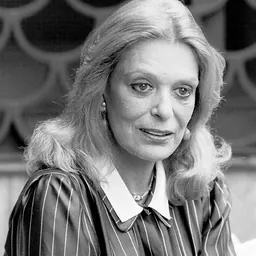
Career after World War II After the war, Andersen all but disappeared as a singer. In 1949, she married Swiss composer Artur Beul. In 1952 she made a comeback with the song "Die blaue Nacht am Hafen", the lyrics of which she had written for herself. In 1959, she had another hit "Ein Schiff wird kommen...", a cover version of "Never on Sunday", the title song from the movie of the same name, originally sung in Greek by Melina Mercouri.
Each song won her a gold album in West Germany. In 1961, she participated as the West German representative in the Eurovision Song Contest with the song "Einmal sehen wir uns wieder", which only reached 13th place with three points. Fifty-six years old at the time, she held the record of the eldest participant at Eurovision for over 45 years – surpassed only in 2008 by the 75-year-old Croatian entertainer 75 Cents. Her death was the first among female Eurovision contestants and German-speaking Eurovision contestants and, following Jacques Pills and Jean-Paul Mauric, the third among Eurovision contestants in general; Mauric also appeared in Eurovision 1961.
Footnotes
Don’t just read it —
keep it.
Full-length biographies made to live with: read them, listen on the way to work, watch them tonight.
- E-book
- Audio
- Video
Instant download · yours to keep · every purchase keeps this site free
Important facts
People in Lale Andersen's life
Named in this biography and alive at the same time


Related people
Same field, nearest in time


Contemporaries
People whose lives overlapped Lale Andersen's


Frequently asked questions
Who was Lale Andersen?
German singer and actress (1905–1972)
When was Lale Andersen born?
Lale Andersen was born on 23 March 1905 in Lehe.
When did Lale Andersen die?
Lale Andersen died on 29 August 1972 in Vienna.
What was Lale Andersen's occupation?
Lale Andersen was a singer-songwriter, actor, singer, screenwriter, songwriter and autobiographer.
What nationality was Lale Andersen?
Lale Andersen was German.
Sources & further reading
Cite this page
APA: Biography.guide. (2026). Lale Andersen. https://biography.guide/lale-andersen/
MLA: "Lale Andersen." Biography.guide, https://biography.guide/lale-andersen/.
Chicago: "Lale Andersen." Biography.guide. https://biography.guide/lale-andersen/.
Data last updated: 2026-09-20 · Spot an error? Report a correction.
Page generated 2026-09-27 05:33 UTC