
About L. H. C. Tippett
Lived 1902 – 1985 (aged 83). L. H. C. Tippett was a British statistician, known for Extreme value theory, Fisher–Tippett distribution and Fisher–Tippett–Gnedenko theorem.
Leonard Henry Caleb Tippett (8 May 1902 – 9 November 1985), known professionally as L. H. C. Tippett, was an English statistician.
Tippett was born in London but spent most of his early life in Cornwall and attended St Austell County Grammar School, where his contemporaries included the historian A. L. Rowse. Tippett graduated in physics in the early 1920s from Imperial College London. He studied for his Master of Science in statistics under Karl Pearson at the Galton Laboratory, University College London and R. A. Fisher at Rothamsted. He spent his entire career, 1925 to 1965, on the staff of the Shirley Institute, Manchester becoming in 1952 one of the first assistant directors. Along with R.A. Fisher and Emil Gumbel, he pioneered extreme value theory. The Fisher–Tippett distribution is named after him.
At the Shirley Institute he applied statistics to the problem of yarn breakage rates in weaving. In the late 1920s and 1930s, he became known for his 'snap-reading' method of observation which led to improved production efficiency and operative utilization. As a result of his work in the textile industry, he was awarded the Shewart Medal of the American Society for Quality Control.
Tippett published "Random Sampling Numbers" in 1927 and thus invented the random number table.
In 1965 he retired to St Austell, Cornwall and in this period became an UNIDO consultant, being active in India. He died in 1985 after being hit by a van whilst walking from his home to the St. Austell Choral Society to sing in the St. Matthew Passion.
Awards
Warner Medal of the Textile Institute Fellow of the American Statistical Association, 1950 Guy Medal in Silver of the Royal Statistical Society, 1954 Honorary MSc UMIST President of the Manchester Statistical Society President of the Royal Statistical Society, 1965 Shewart Medal of the American Society for Quality Control
Books
Random Sampling Numbers, CUP, London, 1927 Statistics, The Home University Library of Modern Knowledge, Oxford University Press, London, 1943 Methods of Statistics, Williams & Norgate Ltd., London, 1931, 1948, 1952 Statistical Methods for Textile Technologists, by T. Murphy, K. P. Norris, L. H. C. Tippett, Textile Institute, Manchester, 1960, 1963, 1973, 1979 A Portrait of the Lancashire Textile Industry, OUP, London 1969
Don’t just read it —
keep it.
Full-length biographies made to live with: read them, listen on the way to work, watch them tonight.
- E-book
- Audio
- Video
Instant download · yours to keep · every purchase keeps this site free
Important facts
People in L. H. C. Tippett's life
Named in this biography and alive at the same time


Related people
Same field, nearest in time

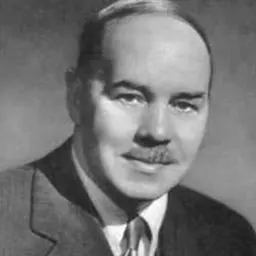
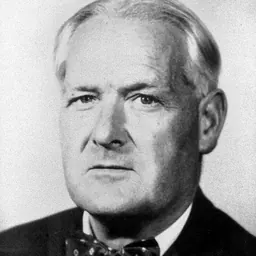


Contemporaries
People whose lives overlapped L. H. C. Tippett's
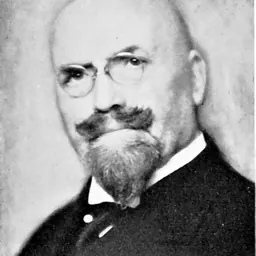





Frequently asked questions
Who was L. H. C. Tippett?
British statistician (1902–1985)
When was L. H. C. Tippett born?
L. H. C. Tippett was born on 8 May 1902 in London.
When did L. H. C. Tippett die?
L. H. C. Tippett died on 9 November 1985 in St Austell.
What was L. H. C. Tippett's occupation?
L. H. C. Tippett was a statistician.
What was L. H. C. Tippett known for?
L. H. C. Tippett was known for Extreme value theory, Fisher–Tippett distribution, Fisher–Tippett–Gnedenko theorem and Random number table.
What nationality was L. H. C. Tippett?
L. H. C. Tippett was British.
Sources & further reading
Cite this page
APA: Biography.guide. (2026). L. H. C. Tippett. https://biography.guide/l-h-c-tippett/
MLA: "L. H. C. Tippett." Biography.guide, https://biography.guide/l-h-c-tippett/.
Chicago: "L. H. C. Tippett." Biography.guide. https://biography.guide/l-h-c-tippett/.
Data last updated: 2026-09-22 · Spot an error? Report a correction.
Page generated 2026-09-27 05:24 UTC