
About Kwŏn Kŭn
Lived 1352 – 1409 (aged 56–57). Kwŏn Kŭn was a Korean philosopher and civil servant.
Kwŏn Kŭn (1352 – 14 February 1409) was a Korean Neo-Confucian scholar at the dawn of the Joseon period, and a student of Yi Saek. He was one of the first Neo-Confucian scholars of the Joseon dynasty, and had a lasting influence on the rise of Neo-Confucianism in Korea.
Biography Kwŏn Kŭn was a Korean Neo-Confucian scholar at the time of the change from the Goryeo dynasty (during which Buddhism was a prominent philosophy) to Joseon. He was a member of the Andong Kwŏn clan that was very influential in the Goryeo court. He was a student of Yi Saek, and passed the civil service examinations at the age of eighteen. In 1389, during an envoy mission to the Ming dynasty, he discovered in advance that a Ming diplomatic document recognized King U as the son of Sin Ton, thereby denying the legitimacy of King Chang, and alerted the king, asking to take countermeasures.
During his one-year exile he got involved in the faction's attempt to prevent the rise of Yi Sŏng-gye, by alerting the Ming dynasty. He was acquitted when a flood that stopped the trial was accepted as an omen. When he returned from his exile, Kwŏn retired to the village of Yangchon, on which he based his pen name.
When a diplomatic dispute with the Ming dynasty arose in the fifth year of king Taejo's reign, Kwŏn Kŭn volunteered to travel to China to resolve the issue, coming into conflict with Chŏng To-jŏn's insistence on mobilizing the military and waging war; thus, Kwŏn's role was kept minimal, but Chŏng To-jŏn and many of his colleagues were wiped out during the succession struggle of 1398. From that point until his death, Kwŏn Kŭn became the most important scholar in the government.
Importance
Kwŏn Kŭn lived and served during the dynastic change, and became eventually one of the architects of the Neo-Confucian ideology that provided both reasoning for the change, and ideological framework for the Joseon literati. Kwŏn Kŭn developed a theory of ritual and emphasized the role of ritual in social order. He rearranged the Classic of Music, taking the first part as the original and the second part as a commentary.
Kwŏn Kŭn was a prolific writer, and he is also known for his contributions to several anti-Buddhist texts, including his preface to Chŏng To-jŏn's Pulssi Chappyŏn (An Array of Critiques of Buddhism),
Family Grandfather Kwŏn Ko Father Kwŏn Hŭi (; 1319–1405) Mother Lady Han of the Hanyang Han clan (; 1315–1398) Wife and children Princess Sukgyŏng, Lady Yi of the Gyeongju Yi clan (; 1367–1423); daughter of Yi Chon-o (; 1341–1371) Son - Kwŏn Che (1387–1445) Daughter-in-law - Lady Yi of the Gyeongju Yi clan (경주 이씨; 慶州李氏; 1385–1468); daughter of Yi Hyu (이휴; 李携) Son - Kwŏn Kyu (; 1393–1421) Daughter-in-law - Princess Gyŏng-an (; 1393 – 22 April 1415) Daughter - Lady Kwŏn Son-in-law - Yi Chong-sŏn Daughter - Lady Kwŏn Son-in-law - Sŏ Mi-sŏng
Works Iphak doseol (Diagrams and Explanations upon Entering Learning; ) Ogyeong cheongyeonnok (Short Commentaries on the Five Classics; ) Saseo ogyeong gugyeol (Mnemonics for the Four Book and the Five Classics; ) Gwonhaksaui paljo (Eight Articles on Recommendations for Learning; ) Dongguk ssaryak (Concise History of the Eastern State; ) Daeganjik imsamok (Admonition to the Appointment of Officials; ) Sangdae byeolgok Yangchonjip (Collected Works of Yangchon; )
Popular culture Portrayed by Lee Jung-woon in the 1996 KBS1 TV series Tears of the Dragon. Portrayed by Kim Cheol-ki in the 2014 KBS1 TV series Jeong Do-jeon. Portrayed by Yang Hyun-min in the 2015 SBS TV series Six Flying Dragons. Portrayed by Kim Young-gi in the 2021 KBS1 TV series The King of Tears, Lee Bang-won.
Don’t just read it —
keep it.
Full-length biographies made to live with: read them, listen on the way to work, watch them tonight.
- E-book
- Audio
- Video
Instant download · yours to keep · every purchase keeps this site free
Important facts
People in Kwŏn Kŭn's life
Named in this biography and alive at the same time
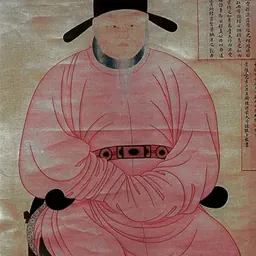
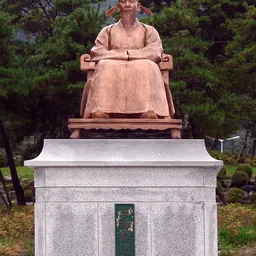
Related people
Same field, nearest in time


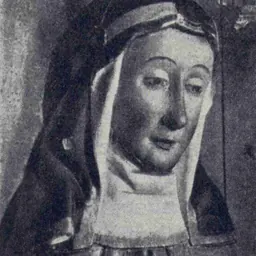
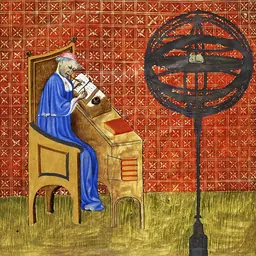

Contemporaries
People whose lives overlapped Kwŏn Kŭn's



Frequently asked questions
Who was Kwŏn Kŭn?
Korean Neo-Confucian scholar (1352-1409)
When was Kwŏn Kŭn born?
Kwŏn Kŭn was born in 1352.
When did Kwŏn Kŭn die?
Kwŏn Kŭn died in 1409.
What was Kwŏn Kŭn's occupation?
Kwŏn Kŭn was a philosopher and civil servant.
What nationality was Kwŏn Kŭn?
Kwŏn Kŭn was Korean.
Sources & further reading
Cite this page
APA: Biography.guide. (2026). Kwŏn Kŭn. https://biography.guide/kwon-kun/
MLA: "Kwŏn Kŭn." Biography.guide, https://biography.guide/kwon-kun/.
Chicago: "Kwŏn Kŭn." Biography.guide. https://biography.guide/kwon-kun/.
Data last updated: 2026-09-20 · Spot an error? Report a correction.
Page generated 2026-09-27 05:16 UTC