
About Kuyucu Murad Paşa
Lived 1530 – 1611 (aged 80–81). Kuyucu Murad Paşa was a Turkish politician.
Early life He was born in Ottoman Bosnia in 1530. As a young boy of South Slavic origin he was converted to Islam and went through the Devshirme conscription process.
Career He was beylerbey (governor-general) of Karaman in 1585. During the Ottoman–Safavid War (1578–1590), he participated in Özdemiroğlu Osman Pasha's Tabriz campaign. During a military retreat from the Safavid forces under Hamza Mirza, he fell into a deep well with his horse. He was taken prisoner and sent to the prison of Alamut Castle. He was released following the Ottoman-Safavid Treaty of 998 (1590), and returned to Istanbul. Tens of thousands of Turks, Kurds and other Muslims were killed during Murad Pasha's office in his several campaigns against separate large rebel groups.
Murad Pasha had a complex built in Istanbul, about 300 meters northwest of the Bayezid II Mosque on the Third Hill of Istanbul. The complex also includes Murad Pasha's mausoleum where he was buried after his death in 1611, the walls of whose entrance gate have become darkened due to time. Cleanup on the building has been halted, leading to its current state, because of strong reactions by several Anatolian groups, such as Yörüks, Alevis, and Bektashis, against honoring Murad Pasha, who they hold responsible for killing thousands of members of their groups. Some have suggested that the mausoleum be made into a museum for the massacres and called the government's intention to conduct repairs on the building "shameful" in light of Murad Pasha's legacy. However, Karen Barkey suggests that Murad Pasha's methods were standard for the time and were often equalled or exceeded by many predatory rebel leaders (bandits and bureaucrats).
In 1593 Murad Pasha built a souk in Damascus called the Qaysariyya Muradiyya after him at Bab al-Barid, the western entrance of the Umayyad Mosque. It consisted of a caravanserai, a coffeehouse and forty-seven shops. Its connection with the Umayyad Mosque was demonstrated by the construction of a large dome over its entrance on the remains of the Roman propylaeum of Jupiter. In the process of the souk's construction, Murad Pasha had existing buildings demolished. The souk's revenues were a waqf (religious endowment) designated for the poor of Mecca and Medina.
Don’t just read it —
keep it.
Full-length biographies made to live with: read them, listen on the way to work, watch them tonight.
- E-book
- Audio
- Video
Instant download · yours to keep · every purchase keeps this site free
Important facts
People in Kuyucu Murad Paşa's life
Named in this biography and alive at the same time
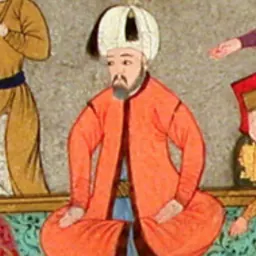
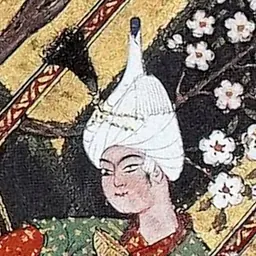
Related people
Same field, nearest in time
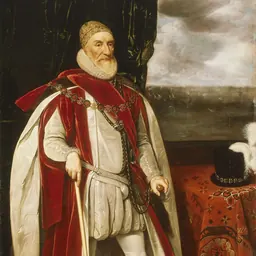
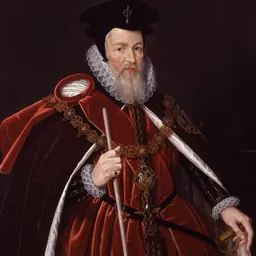


Contemporaries
People whose lives overlapped Kuyucu Murad Paşa's

Frequently asked questions
Who was Kuyucu Murad Paşa?
Ottoman grand vizier (1530–1611)
When was Kuyucu Murad Paşa born?
Kuyucu Murad Paşa was born in 1530 in Bosnia eyalet.
When did Kuyucu Murad Paşa die?
Kuyucu Murad Paşa died on 5 August 1611 in Diyarbakır.
What was Kuyucu Murad Paşa's occupation?
Kuyucu Murad Paşa was a politician.
What nationality was Kuyucu Murad Paşa?
Kuyucu Murad Paşa was Turkish.
Sources & further reading
· Wikipedia: Kuyucu Murad Paşa
Cite this page
APA: Biography.guide. (2026). Kuyucu Murad Paşa. https://biography.guide/kuyucu-murad-pasa/
MLA: "Kuyucu Murad Paşa." Biography.guide, https://biography.guide/kuyucu-murad-pasa/.
Chicago: "Kuyucu Murad Paşa." Biography.guide. https://biography.guide/kuyucu-murad-pasa/.
Data last updated: 2026-09-20 · Spot an error? Report a correction.
Page generated 2026-09-27 05:34 UTC