
About Kusunoki Masashige
Lived 1294 – 1336 (aged 41–42). Kusunoki Masashige was a Japanese samurai and bushi, known for Kamakura shogunate.
Equestrian statue of Kusunoki Masashige outside the Imperial Palace in Tokyo.
, was a Japanese military commander and samurai of the Kamakura period remembered as the ideal loyal samurai.
Kusunoki fought for Emperor Go-Daigo in the Genkō War to overthrow the Kamakura shogunate and restore power in Japan to the Imperial Court. Kusunoki was a leading figure of the Kenmu Restoration in 1333, and remained loyal to the unpopular Emperor Go-Daigo after Ashikaga Takauji began to reverse the restoration in the Nanboku-chō wars three years later. Kusunoki attacked Takauji in Settsu at the command of the Emperor, an act of obedience sure to result in defeat. He performed seppuku at the Battle of Minatogawa in 1336.
Kusunoki became a popular legend in Japan representing loyalty and virtue, and associated with the phrase "Would that I had seven lives to give for my country!" (, ). Kusunoki was posthumously awarded the highest court rank in Japan, Senior First Rank , by the Meiji government in 1880, over 500 years after his death. He was highly regarded as one of "Japan's three loyal retainers" along with Fujifusa Madenokoji and Taira no Shigemori.
Early life Kusunoki Masashige's origin has not been validated and it was merely six years between the start of his military campaign in 1331 and his demise in 1336. Kusunoki is believed to have been born in 1294 in Kawachi Province as a "well-to-do member of the rural gentry" and claimed descent from Tachibana Moroe, "a great nobleman" of the eighth century. His birthplace has been linked to the village of Chihaya-Akasaka where a small monument called the "Nanko Tanjochi" can be found.
Kusunoki was a "scholar and a devout Buddhist" with much of his early education taking place at Kanshin-ji Temple in Kawachinagano, in present-day southern Osaka Prefecture.
Military career
A brilliant tactician and strategist, Kusunoki's cunning defense of two key Loyalist fortresses at Akasaka, the Siege of Akasaka, and Chihaya, the Siege of Chihaya, helped allow Go-Daigo to briefly return to power.
Equestrian statue of Kusunoki Masashige at the entrance to Kanshin-ji in Kawachinagano, Osaka Prefecture.
He is also thought to have built a number of smaller castles throughout southern Osaka, particularly within what is now the city of Kawachinagano. Eboshigata Castle and Ishibotoke Castle were both built along the route of the Koya Kaido, a popular pilgrimage trail stretching between Kyoto and Koyasan. These castles were designed not only to protect the trail from bandits but also as an important source of income and intelligence as travelers were obliged to pay a toll and the garrison would listen out for rumours and news from around Japan.
Battle of Minato River and end
A loyalist general, Ashikaga Takauji, betrayed Go-Daigo and led an army against Kusunoki and the remaining loyalists. Takauji was able to take Kyoto, but only temporarily before Nitta Yoshisada and Masashige were able to dislodge Takauji, forcing him to flee to the west. By 1336 however, Takauji was a threat to Kyoto again.
According to legend, his brother Masasue's last words were (; 'Would that I had seven lives to give for my country!') and Kusunoki Masashige agreed. Upon his death, his head was removed and sent to Kanshin-ji where it was buried in a kubizuka.
Legacy
His son, Kusunoki Masatsura, served the emperor's successor, the 12-year-old Go-Murakami, in a relationship of reciprocal trust and devotion mirroring the figure of his father Kusunoki and keeping the flame of loyalist resistance alive. Masatsura died alongside his brother Masatoki and cousin Wada Takahide in a battle that saw the end of the Kusunoki clan and there followed a less-than-ideal scramble for power and gain among the Courts.
Kusunoki "stands in the history of his country as the ideal figure of a warrior, compact of civil and military virtues in a high degree."
The parting of Masashige with his son "used to be included in all elementary school readers and was the subject of a patriotic song which was popular in Japanese schools before World War II."
Masashige had a tachi called Little Dragon Kagemitsu (, ). An elaborate Kurikara dragon was carved on the handle. Originally, the dragon's appearance was visible on the blade, but later, in the process of cutting off the handle and shortening the length, the dragon's body was hidden by the handle. The dragon is a manifestation of Acala.
Legend After the full-scale introduction of Neo-Confucianism as a state philosophy by the Tokugawa shogunate, Kusunoki Masashige, once called a traitor by the Northern Court, was resurrected with Emperor Go-Daigo as a precursor of Sinocentric absolutists, based upon the Neo-Confucian theories. During the Edo period, scholars and samurai who were influenced by the Neo-Confucian theories popularized the legend of Kusunoki and enshrined him as a patriotic hero, called or , who epitomized loyalty, courage, and devotion to the Emperor. In 1871 Minatogawa Shrine is established in order to enshrine the kami spirit of Kusunoki Masashige. Kusunoki later became a patron saint of sorts to World War II kamikaze, who saw themselves as his spiritual heirs in sacrificing their lives for the Emperor.
Family Brother:
Kusunoki Masasue
Children:
Kusunoki Masatsura Kusunoki Masanori Kusunoki Masatoki
Honours Senior First Rank (July 20, 1880; posthumous)
Don’t just read it —
keep it.
Full-length biographies made to live with: read them, listen on the way to work, watch them tonight.
- E-book
- Audio
- Video
Instant download · yours to keep · every purchase keeps this site free
Important facts
People in Kusunoki Masashige's life
Named in this biography and alive at the same time
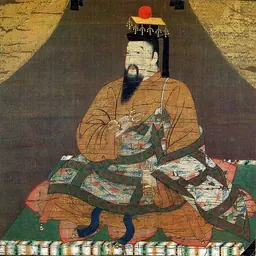
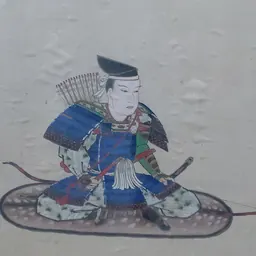


Related people
Same field, nearest in time
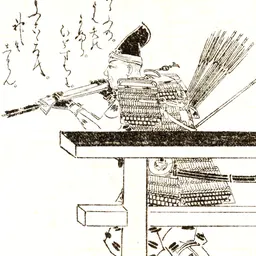
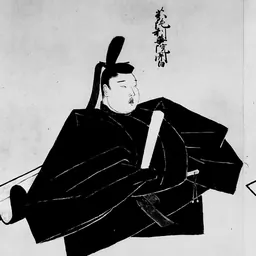


Contemporaries
People whose lives overlapped Kusunoki Masashige's

Frequently asked questions
Who was Kusunoki Masashige?
samurai
When was Kusunoki Masashige born?
Kusunoki Masashige was born in 1294 in Kawachi Province.
When did Kusunoki Masashige die?
Kusunoki Masashige died on 4 July 1336 in Minato River.
What was Kusunoki Masashige's occupation?
Kusunoki Masashige was a samurai and bushi.
What was Kusunoki Masashige known for?
Kusunoki Masashige was known for Kamakura shogunate.
What nationality was Kusunoki Masashige?
Kusunoki Masashige was Japanese.
Sources & further reading
· Wikipedia: Kusunoki Masashige
Cite this page
APA: Biography.guide. (2026). Kusunoki Masashige. https://biography.guide/kusunoki-masashige/
MLA: "Kusunoki Masashige." Biography.guide, https://biography.guide/kusunoki-masashige/.
Chicago: "Kusunoki Masashige." Biography.guide. https://biography.guide/kusunoki-masashige/.
Data last updated: 2026-09-22 · Spot an error? Report a correction.
Page generated 2026-09-27 05:18 UTC