
About Kurt R. Grossmann
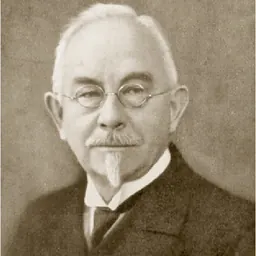
Lived 1897 – 1972 (aged 74). Kurt R. Grossmann was a German and American journalist.
Kurt Großmann (21 May 1897 – 2 March 1972) began his career as a German journalist. He emigrated from Germany in the Hitler years, living his final decades in Queens, New York. Although sources sometimes describe him as an American journalist, his preferred working language remained German. West German newspapers for which he reported from New York during the 1950s and the 1960s included the Rheinischer Merkur and Vorwärts.
His experiences as a soldier during the First World War turned Großmann into a committed pacifist. He served as General Secretary of the German League for Human Rights between 1926 and 1933.
Biography Provenance and early years Kurt Richard Großmann was born in Berlin-Charlottenburg, the second child of the businessman Hermann Grossmann and his wife Rahel (born Rahel Freundlich). Both parents were originally from East Prussia and had, like thousands of others during the closing decades of the nineteenth century, moved from the economically depressed countryside to the rapidly expanding German capital in pursuit of better financial security. Fifteen years older than his wife, and 48 by the time his son was born, Hermann Großmann died following a heart attack in 1909, leaving Kurt and his elder sister Margaret to be bought up by their mother as a single parent. Margaret later recalled that as a boy Kurt Großmann became an enthusiastic junior member of the city's Animal Welfare Association. He used to visit the Berlin carriage stands, which were the taxi ranks of the time, and distribute leaflets to the coachmen urging that they should treat their animals with consideration. Under his guidance the league campaigned against courtroom injustices. Another case in which Großmann engaged prominently involved Walter Bullerjahn who was set-up by a commercial rival and then, in 1925, found guilty of treason and sentenced to a fifteen-year jail term. Bullerjahn's release was reported in 1932.
Régime change and exile At the start of 1933 the National Socialists took power and lost no time in transforming Germany into a post-democratic one-party dictatorship. Großmann was one of the organisers of Das Freie Wort, a large "antifascist protest meeting" held at Berlin's Kroll Opera House on 19 February 1933 (which was broken up by police after two hours). None of his friends in Prague was expecting him. The previous evening Kurt and Elsa Großmann had been guests at a party in Berlin held by the Social Democrats to mark the fiftieth anniversary of the death of Karl Marx. He moved on to Paris in 1938. After the Munich Agreement in September of that year he made efforts, from Paris, to help extract endangered German anti-fascist exiles out of Czechoslovakia. A formidable organiser and prodigious author of memoranda, letter, reports and articles for publication, he took a lead in organising and contributing to material support for refugees. Having arrived as a stateless refugee, during the 1940s Grossmann acquired US citizenship.
After 1945 Grossmann took as his principal mission the forging of German-Jewish reconciliation. Already during—and in some cases before—the war he had been a frequent contributor to publications that were or had become "emigrant newspapers" such as Aufbau, Neue Weltbühne, Neu Vorwärts, Pariser Tageblatt and Neue Tage-Buch.
During the postwar period Grossmann was briefly employed as US correspondent for the SPD newspaper Vorwärts, and at various stages wrote for all West Germany's important left-liberal newspapers. He also worked for the (Swiss) Berner Tagwacht and the (Israeli) Jedioth Chadashoth. This book provided the impetus for a 1960 initiative by the Berlin Senator Joachim Lipschitz to commemorate, for the first time, the "antifascist" activities undertaken by a wide number of citizens never individually identified.
In 1972 Kurt Grossmann was nominated as a candidate for receipt of the Carl von Ossietzky Medal to be awarded by the Berlin branch of the International League for Human Rights. Unfortunately he died unexpectedly before the award could be bestowed.
Selected works
Don’t just read it —
keep it.
Full-length biographies made to live with: read them, listen on the way to work, watch them tonight.
- E-book
- Audio
- Video
Instant download · yours to keep · every purchase keeps this site free
Important facts
People in Kurt R. Grossmann's life
Named in this biography and alive at the same time


Related people
Same field, nearest in time



Contemporaries
People whose lives overlapped Kurt R. Grossmann's


Frequently asked questions
Who was Kurt R. Grossmann?
German journalist (1897-1972)
When was Kurt R. Grossmann born?
Kurt R. Grossmann was born on 21 May 1897 in Berlin.
When did Kurt R. Grossmann die?
Kurt R. Grossmann died on 2 March 1972 in St. Petersburg.
What was Kurt R. Grossmann's occupation?
Kurt R. Grossmann was a journalist.
What nationality was Kurt R. Grossmann?
Kurt R. Grossmann was German and American.
Sources & further reading
· Wikipedia: Kurt R. Grossmann
Cite this page
APA: Biography.guide. (2026). Kurt R. Grossmann. https://biography.guide/kurt-r-grossmann/
MLA: "Kurt R. Grossmann." Biography.guide, https://biography.guide/kurt-r-grossmann/.
Chicago: "Kurt R. Grossmann." Biography.guide. https://biography.guide/kurt-r-grossmann/.
Data last updated: 2026-09-22 · Spot an error? Report a correction.
Page generated 2026-09-27 05:21 UTC