
About Kurt Liebknecht
Lived 1905 – 1994 (aged 88). Kurt Liebknecht was a German architect, politician, university teacher and functionary.
Kurt Liebknecht (sometimes Curt Liebknecht: 26 March 1905 – 6 January 1994) was a German architect. After 1937 he pursued his career as a Soviet architect, except during a hiatus of eighteen months spent in a Soviet jail as a suspected spy.
Returning to Germany at the end of 1948, after the launch of the German Democratic Republic (East Germany) in 1949 he became an important and influential member of the new country's artistic establishment during the 1950s and 1960s, both through his teaching work at the Berlin-based Bauakademie (college of building and architecture) and on account of his activities as an engaged member of the party. Between 1954 and 1963 he was a member of the powerful Party Central Committee, which under the highly centralised Leninist power structure in force in East Germany was the fulcrum of political power.
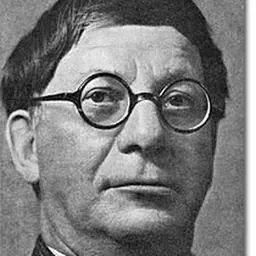
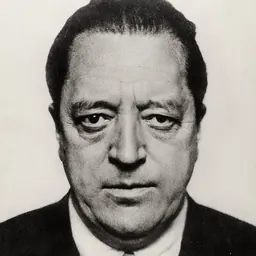
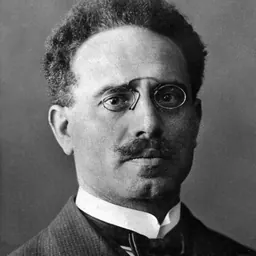
Liebknecht's approach was influenced, over time, by contrasting currents in modern architecture, which taken together can be seen as remarkably ambivalent. During his early years he was powerfully influenced by the work of great twentieth century pioneers of modern architecture and urban planning, such as Ludwig Mies van der Rohe, Hans Poelzig and Ernst May. Till the early 1930s he was close to he New Objectivity and Neue Bauen movements, or in Soviet terms Constructivism. Otto Liebknecht (the father) has been identified in one source as "one of the pioneers of Persil ("Perborat-Silikat") washing powder". His mother, born Elsa Ernestine Friedland, was a pianist who had trained at the Berlin Conservatory: she came from a musical Jewish family. However, it was Kurt Liebknecht's uncle, Karl Liebknecht, as one of the murdered founders of the Communist Party in postwar Germany, who left a larger footprint in the mainstream historical record than either of his parents. Another of his father's brothers, Theodor Liebknecht, was also prominent in left-wing politics during and directly after the First World War.
Liebknecht completed his schooling at the Wöhler-Realgymnasium (secondary school), passing his Abitur exam early in 1924, which opened the way to a university-level education. The next year he emerged with a "Diplom-Ingenieur" degree in architecture. Between 1929 and 1931 he was employed by the Hans Poelzig firm. One of his projects during his time as part of "Team Poelzig" was for the interior fitting out of Berlin's prestigious new Haus des Rundfunks (Broadcasting House). This was followed a period working as a "Regierungsbauführer" (government buildings manager) working for the Free State of Prussia, after which he passed the government exams necessary to move up a notch, to the level of a "Regierungsbaumeister". In that position he headed up the construction of the "University Women's Clinic" ("Universitäts-Frauenklinik") in Berlin. Further work that he undertook between 1929 and the middle part of 1931, alongside involvement in city planning projects, tended to focus on the health care sector, especially on functional buildings, principally hospitals. The backwash from the Wall Street crash in October 1929 had been reflected in a cut back in new building in Germany, and it was possible to anticipate more and better opportunities for architects in Moscow than in Berlin. Liebknecht was assigned to the so-called "Second May Group" under the leadership of another expatriate German architect, Werner Hebebrand: construction activity was focused on Moscow. Within the "Second May Group" Liebknecht was placed in charge of the "Hospitals Building Sub-group". He was provided with a comfortable three room apartment just a few hundred meters from his Moscow office. For two days, as he later testified under questioning, he was left naked in an empty cell without even a board on which to lie, after which an unconscious man was placed in the cell with him, followed by many more mangled individuals. In three interrogation session during June 1938 he sought to place the blame on others. Then, under torture, he accepted that he had become a spy. He remained in detention for more than a year. This set the pattern for numerous development and redevelopment schemes including, most prominently, the "Stalin-Alle" (formerly the "Große Frankfurter Straße", and since 1961 the "Karl-Marx-Allee") which, as a major boulevard development fit for a socialist future, became an important part of the government's propaganda repertoire.
In 1950 Liebknecht undertook a research contract to analyse clinical facilities in the region administered till 1952 (and again after 1990) as the State of Brandenburg. In 1951 he was given a professorship at the "Hochschule für Baukunst" in Weimar, Meanwhile, the government gave him a lead role in the planning of the Bauakademie (college of building and architecture), set in the heart of East Berlin, which finally opened its doors in January 1951. Kurt Liebknecht became its first president in April 1951.
In some ways the death of Stalin marked the beginning of the end of Liebknecht's stellar career. He remained in post as president of the ""Bauakademie" till 1961, but never entirely came to terms with the emerging trends in architecture during the second half of the 1950s. Liebknecht's career took a clear stumble in 1961 with his appointment as director at the "Institute for the theory and history of architecture" ("Institut für Theorie und Geschichte der Architektur"), which was clearly a significantly less influential position than the one from which he had retired. As a pensioner he continued to undertake freelance work. Some commentators feel that in it he rather glossed over some of the more brutal aspects of his time in the Soviet Union.
Awards and honours (selection) 1970: Patriotic Order of Merit in Silver 1971: Schinkel Medal (East German virtual equivalent of West German Schinkel prize) 1975: Patriotic Order of Merit in Gold 1980: Order of Karl Marx 1985: Star of People's Friendship
Output (selection)
Don’t just read it —
keep it.
Full-length biographies made to live with: read them, listen on the way to work, watch them tonight.
- E-book
- Audio
- Video
Instant download · yours to keep · every purchase keeps this site free
Important facts
People in Kurt Liebknecht's life
Named in this biography and alive at the same time



Related people
Same field, nearest in time
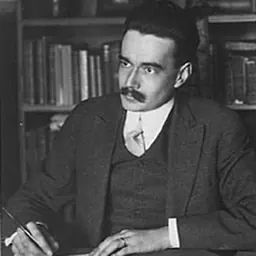
Contemporaries
People whose lives overlapped Kurt Liebknecht's



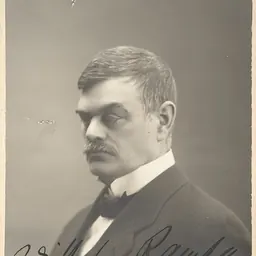

Frequently asked questions
Who was Kurt Liebknecht?
German architect and politician
When was Kurt Liebknecht born?
Kurt Liebknecht was born on 26 March 1905 in Frankfurt.
When did Kurt Liebknecht die?
Kurt Liebknecht died on 6 January 1994 in Berlin.
What was Kurt Liebknecht's occupation?
Kurt Liebknecht was an architect, politician, university teacher and functionary.
What nationality was Kurt Liebknecht?
Kurt Liebknecht was German.
Sources & further reading
Cite this page
APA: Biography.guide. (2026). Kurt Liebknecht. https://biography.guide/kurt-liebknecht/
MLA: "Kurt Liebknecht." Biography.guide, https://biography.guide/kurt-liebknecht/.
Chicago: "Kurt Liebknecht." Biography.guide. https://biography.guide/kurt-liebknecht/.
Data last updated: 2026-09-22 · Spot an error? Report a correction.
Page generated 2026-09-27 05:25 UTC