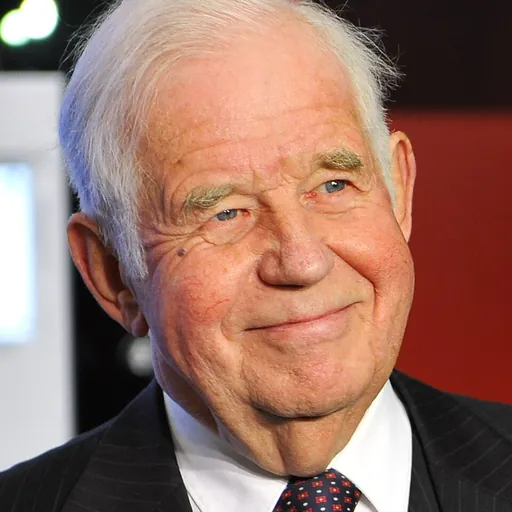
Kurt Biedenkopf
German jurist, politician (CDU), MdB, MdL Saxony, and university teacher
About Kurt Biedenkopf
Lived 1930 – 2021 (aged 91). Kurt Biedenkopf was a German politician, jurist and university teacher.
Kurt Hans Biedenkopf (; 28 January 1930 – 12 August 2021 ) was a German jurist, academic teacher and politician of the Christian-Democratic Union (CDU) party. He was rector of the Ruhr University Bochum.
Biedenkopf made a political career first in North Rhine-Westphalia, where he was chairman of the party. After the re-unification of Germany, he served as the first Minister President of Saxony from 1990 until 2002. He was 54th president of the German Bundesrat from 2000, overseeing the body's move from Bonn to Berlin. Biedenkopf is regarded as the intellectual leader of the CDU when Helmut Kohl was chancellor. the family moved to Schkopau, where he attended school. He then studied economics and law in Germany at the Ludwig-Maximilians-Universität München, He became lecturer of the Ruhr University Bochum in 1964. In the early 1970s, Biedenkopf moved to the board of Henkel. During the terms 1976–1980 and 1987–1990 he was a member of the Bundestag. Media reported that Broszey had been a spy.
Career in North Rhine-Westphalia In the 1980, state elections in North Rhine-Westphalia, Biedenkopf unsuccessfully ran against the incumbent Minister-President Johannes Rau. He served as chairman of the CDU in North Rhine-Westphalia – the party's largest chapter – until 1987, when he was succeeded by Norbert Blüm. In late 1989, he joined forces with Lothar Späth, Heiner Geißler, Rita Süssmuth and others in an unsuccessful effort to oust Kohl as CDU chairman.
Minister-President of Saxony After the re-unification of Germany in 1990 Biedenkopf was elected as Minister-President in the newly formed state of Saxony. Early in his tenure, Biedenkopf emerged as a kind of unofficial spokesman for the regions of East Germany. He enjoyed great popularity among a majority of the people of Saxony. Known for his autocratic leadership style, he was often referred to as "the Saxon King" or "King Kurt". During his time in office, he doubled outlays on primary and secondary education and sharply ramped up spending on research and development. He also led a legal battle against the European Commission on subsidies for Volkswagen investments in Saxony.
Ahead of the German presidential election in 1994, Biedenkopf was widely seen as a likely candidate, but the post went to Roman Herzog.
In 2000, Biedenkopf held the rotating presidency of the Bundesrat of Germany. In this capacity, he oversaw the body's move to Berlin to complete the government's return to the pre-World War II capital from Bonn.
In January 2001, Biedenkopf dismissed State Minister of Finance Georg Milbradt because Milbradt had started a debate about Biedenkopf's succession. Milbradt eventually succeeded Biedenkopf in 2002.
Death
Biedenkopf died in Dresden on 12 August 2021 at the age of 91.
Political positions
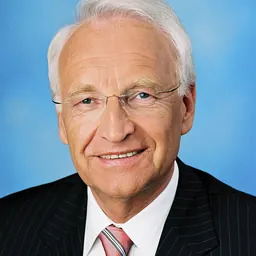
Before the introduction of the euro, Biedenkopf was the only German state leader to vote against the monetary union in the Bundesrat, the legislative body that represents the German states; he later argued that "Europe wasn't ready for that epochal step." Already in 1997, he had joined the minister-presidents of two other German states, Gerhard Schröder and Edmund Stoiber, in making the case for a five-year delay in Europe's currency union.
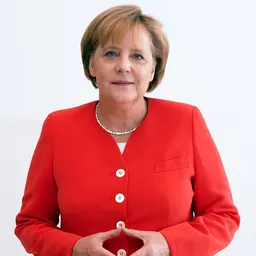
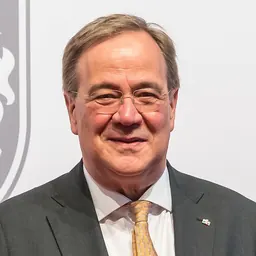
Ahead of the Christian Democrats' leadership election in 2018, Biedenkopf publicly endorsed Annegret Kramp-Karrenbauer to succeed Angela Merkel as the party's chair. He later supported Armin Laschet's candidacy to succeed Kramp-Karrenbauer in the 2021 leadership election.
Other activities In 1983, Biedenkopf became a member of the advisory board of the non-profit Bertelsmann Stiftung. In 1987, he became chairman of the board (until 1990). During his term, the Carl Bertelsmann Prize (today Reinhard Mohn Prize) was awarded for the first time. He was active on the board of the , active for the unification of Germany after the separation and within the European community, and was the foundation's honorary senator until his death.
Between 2004 and 2006, Biedenkopf and Christine Bergmann served as ombuds, observing the impact of the Schröder government's labour market reforms, with a mandate to advise government and parliament on any recommended revisions to it. In 2005, he was appointed by Chancellor Gerhard Schröder to head a commission on the future of codetermination in Germany. Both Biedenkopf and Schröder later served as mediators in a 2006 conflict over privatisation plans at German railway operator Deutsche Bahn; the plans eventually fell through.
In addition, Biedenkopf held a number of paid and unpaid positions, including: Dresden Frauenkirche, member of the board of trustees International Law Institute (ILI), member of the international advisory board Independent Commission on Turkey, member Stifterverband für die Deutsche Wissenschaft, member of the board of trustees Hertie School of Governance, chairman of the board of trustees (2003–2010) Lions Club Germany Foundation, member Staatliche Porzellan-Manufaktur Meissen, chairman of the supervisory board (1991–2015)
Recognition
1974: Honorary doctorate, Davidson College, Davidson, US 1978: Honorary doctorate, Georgetown University, Washington, US 1994: Honorary doctorate, Catholic University of Brussels, Belgium 2002: Constitutional Medal of Saxony 2003: Brückepreis 2008: Honorary doctorate, HHL Leipzig Graduate School of Management 2021: Honorary doctorate, Leipzig University
Don’t just read it —
keep it.
Full-length biographies made to live with: read them, listen on the way to work, watch them tonight.
- E-book
- Audio
- Video
Instant download · yours to keep · every purchase keeps this site free
Important facts
People in Kurt Biedenkopf's life
Named in this biography and alive at the same time


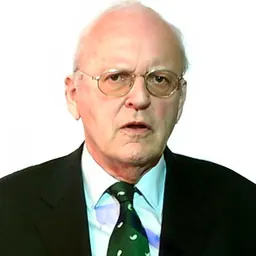

Related people
Same field, nearest in time





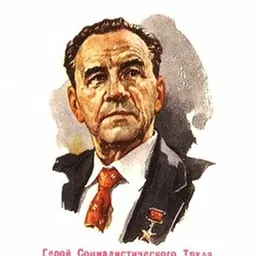
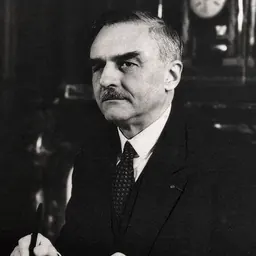
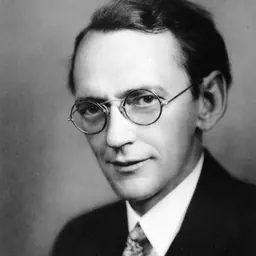
Contemporaries
People whose lives overlapped Kurt Biedenkopf's


Frequently asked questions
Who was Kurt Biedenkopf?
German jurist, politician (CDU), MdB, MdL Saxony, and university teacher (1930–2021)
When was Kurt Biedenkopf born?
Kurt Biedenkopf was born on 28 January 1930 in Ludwigshafen.
When did Kurt Biedenkopf die?
Kurt Biedenkopf died on 12 August 2021 in Dresden.
What was Kurt Biedenkopf's occupation?
Kurt Biedenkopf was a politician, jurist and university teacher.
What nationality was Kurt Biedenkopf?
Kurt Biedenkopf was German.
Sources & further reading
Cite this page
APA: Biography.guide. (2026). Kurt Biedenkopf. https://biography.guide/kurt-biedenkopf/
MLA: "Kurt Biedenkopf." Biography.guide, https://biography.guide/kurt-biedenkopf/.
Chicago: "Kurt Biedenkopf." Biography.guide. https://biography.guide/kurt-biedenkopf/.
Data last updated: 2026-09-23 · Spot an error? Report a correction.
Portrait: Wikimedia Commons · author & licence
Page generated 2026-09-27 05:06 UTC