
About Kurt Benirschke
Lived 1924 – 2018 (aged 94). Kurt Benirschke was an American pathologist, zoologist and geneticist, known for Reproduction.
Kurt Benirschke (May 26, 1924 – September 10, 2018) was a German-American pathologist, geneticist and expert on the placenta and reproduction in humans and myriad mammalian species. At the San Diego Zoo, he created the world's first frozen zoo for the cryopreservation of genetic material from endangered species.
Early life and education Benirschke grew up in Glückstadt, a small town in northern Germany. He received his M.D. degree from the University of Hamburg in 1948. He immigrated to the United States in 1949. In the 1970s when he began this collection, there was no technology available to make use of it, but he quoted Daniel Boorstin: "You must collect things for reasons you don't yet understand." The Frozen Zoo eventually became a priceless genetic resource.
Throughout his career, he moved freely back and forth between human medicine and animal medicine. This inspired the title One Medicine given to a Festschrift written by 50 of his colleagues to honor his 60th birthday. In the introduction, O. A. Ryder and M. L. Byrd state, "The acknowledgment that the underlying mechanisms of cellular function and organismal development are highly similar among animals provides the impetus for the title of this volume, One Medicine. It is a tribute to Prof. Kurt Benirschke from his students and colleagues. As such, we attempt to recognize the breadth and depth of his thinking and to acknowledge the significant role he has played in aspects of human medicine, veterinary medicine, and wildlife conservation."
In 1994, he was elected a fellow of the American Academy of Arts and Sciences. The same year, he retired from the faculty at UCSD. From 1997-2000 he was president of the Zoo's Board of Trustees and looked after the "Proyecto Tagua" in Paraguay, a breeding facility of the newly discovered species of peccary. His text (with Peter Kaufmann) on Human Placental Pathology is the standard text on the subject. In 2008 he was one of the founders of the Center for Academic Research and Training in Anthropogeny (CARTA), an interdisciplinary research group based at UCSD and devoted to the study of human origins.
Benirschke was a member of many societies and authored 30 books and 510 scientific publications. He was described as a "visionary" and a "Renaissance physician".
Don’t just read it —
keep it.
Full-length biographies made to live with: read them, listen on the way to work, watch them tonight.
- E-book
- Audio
- Video
Instant download · yours to keep · every purchase keeps this site free
Important facts
People in Kurt Benirschke's life
Named in this biography and alive at the same time

Related people
Same field, nearest in time


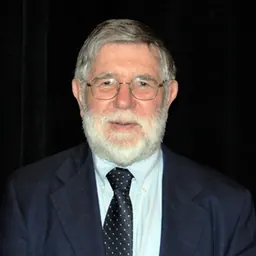



Contemporaries
People whose lives overlapped Kurt Benirschke's

Frequently asked questions
Who was Kurt Benirschke?
pathologist
When was Kurt Benirschke born?
Kurt Benirschke was born on 26 May 1924 in Glückstadt.
When did Kurt Benirschke die?
Kurt Benirschke died on 11 September 2018 in San Diego.
What was Kurt Benirschke's occupation?
Kurt Benirschke was a pathologist, zoologist and geneticist.
What was Kurt Benirschke known for?
Kurt Benirschke was known for Reproduction.
What nationality was Kurt Benirschke?
Kurt Benirschke was American.
Sources & further reading
Cite this page
APA: Biography.guide. (2026). Kurt Benirschke. https://biography.guide/kurt-benirschke/
MLA: "Kurt Benirschke." Biography.guide, https://biography.guide/kurt-benirschke/.
Chicago: "Kurt Benirschke." Biography.guide. https://biography.guide/kurt-benirschke/.
Data last updated: 2026-09-20 · Spot an error? Report a correction.
Page generated 2026-09-27 05:24 UTC