
About Kumar Narayan
Lived 1890 – 1920 (aged 30). Kumar Narayan was an Indian cricketer.
Maharaj Kumar Hitendra Singh Narayan (1 July 1890 – 7 November 1920), commonly anglicised as Prince Hitendra Narayan, played first-class cricket for Somerset in 1909 and 1910. He later played in first-class matches for teams brought together by his brother, the Maharaja of Cooch Behar.
Known variously in his cricket career as "Kumar Narayan" or "Hitendra Narayan", he was educated at Eton College and Cambridge University and was a forceful right-handed batsman. His four first-class matches for Somerset in 1909 and 1910 were not successful, with a top score of just 16 in his first game, against the 1909 Australians. In 1918, he played three matches for his brother's scratch side against teams composed largely of expatriate Englishmen. The matches have first-class status although all three were of only two-days' duration; Narayan was not successful in any of them as a batsman.
Early life Hitendra Singh Narayan was born in Cooch Behar, Bengal, India, on 1 July 1890. He was the youngest of four sons born to Nripendra Narayan, the Maharaja of Cooch Behar State. The Maharaja was a keen sportsman, and funded at least three cricket teams in India, as well as hosting polo, horse racing and wrestling on his palatial estate. A history of the Eden Gardens cricket ground in Kolkata describes Nripendra as "a patron of cricket without parallel in east India." Two of Hitendra Narayan's older brothers, Jitendra Narayan and Victor Narayan, played first-class cricket. Hitendra Narayan was tutored as a child by John Daniell, an English sportsman who had played top-level rugby union and cricket. Narayan continued his education in England, first at Farnborough School, and then Eton College, where he enjoyed some sporting success, being school junior champion in the high jump, and runner-up in the long jump. He went up to Pembroke College, Cambridge, where he played cricket for his college, but did not make it into the university team.
County cricket Daniell returned to cricket in 1908, rejoining Somerset County Cricket Club as captain, and that year, Narayan had great success as a batsman for the amateur "Somerset Stragglers" cricket team. Contemporary reports eulogised his batting, He made scores of 104 and 103 for the Stragglers in one drawn match against the Devon Dumplings, while another time, he scored 99 and 91 against Incogniti. Narayan played in that match due to special dispensation from the Australians, as he had not yet qualified for Somerset. His batting in the match was praised in a letter in The Sportsman, especially his "fine defensive game under most trying conditions". He appeared later in the year as a substitute fielder against Middlesex.
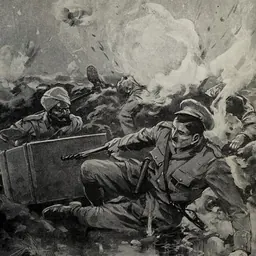
In 1910, Narayan qualified for Somerset on residency grounds. At the time, Somerset were suffering financial problems, and selected players based on how little they could pay them, rather than purely on their ability. Narayan played three County Championship matches for Somerset, generally as a lower-order batsman; against Kent he scored two and three, against Surrey, fourteen and six, while against Gloucestershire he opened the batting in the first innings, but scored just one run. Somerset lost two of the matches, and drew the other – that season they finished bottom of the County Championship without winning a single match. In Somerset Cricketers 1882 – 1914, Stephen Hill suggests that Narayan grew bored of the novelty of county cricket and left in 1911, returning to India. initially as part of the Dehra Dun Brigade, and later the Garhwal Brigade. He was posted as a staff officer to the general officer commanding. On 22 June 1915, he was mentioned in dispatches, for his role in the Battle of Neuve Chapelle. He was injured on the Western Front in 1915 and spent the rest of the war in India. He later served as Military Secretary to Bhupinder Singh of Patiala. Hitendra played in three of these matches, though with little success; he scored fifteen runs at an average of 7.50. He died from influenza on 7 November 1920, in Darjeeling.
Don’t just read it —
keep it.
Full-length biographies made to live with: read them, listen on the way to work, watch them tonight.
- E-book
- Audio
- Video
Instant download · yours to keep · every purchase keeps this site free
Important facts
People in Kumar Narayan's life
Named in this biography and alive at the same time



Related people
Same field, nearest in time


Contemporaries
People whose lives overlapped Kumar Narayan's




Frequently asked questions
Who was Kumar Narayan?
Indian cricketer (1890-1920)
When was Kumar Narayan born?
Kumar Narayan was born on 1 July 1890 in Cooch Behar.
When did Kumar Narayan die?
Kumar Narayan died on 7 November 1920 in Darjeeling.
What was Kumar Narayan's occupation?
Kumar Narayan was a cricketer.
What nationality was Kumar Narayan?
Kumar Narayan was Indian.
Sources & further reading
Cite this page
APA: Biography.guide. (2026). Kumar Narayan. https://biography.guide/kumar-narayan/
MLA: "Kumar Narayan." Biography.guide, https://biography.guide/kumar-narayan/.
Chicago: "Kumar Narayan." Biography.guide. https://biography.guide/kumar-narayan/.
Data last updated: 2026-09-20 · Spot an error? Report a correction.
Page generated 2026-09-27 05:17 UTC