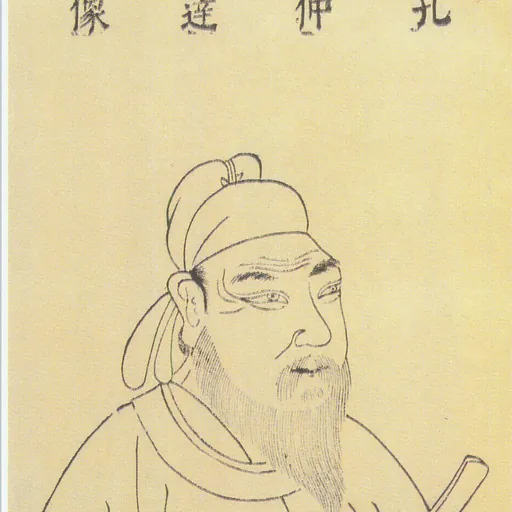
About Kong Yingda
Lived 574 – 648 (aged 73–74). Kong Yingda was a Chinese philosopher and writer.
Kong Yingda (; 574 – 648), courtesy names Chongyuan and Zhongda , was a Chinese philosopher during the Sui and Tang dynasty. An ardent Confucianist, he is considered one of the most influential Confucian scholars in Chinese history. His most important work is the Wujing Zhengyi ("Correct Meaning of the Five Classics"), which became the standard curriculum for the imperial examinations, and the basis for all future official commentaries of the Five Classics. He was also "skilled at mathematics and the calendar."
Early life Kong Yingda was born 574 in Hengshui, Jizhou , in the state of Northern Qi of the Northern dynasties. He was said to be a 32nd-generation descendant of Confucius, and his father Kong An , grandfather Kong Shuo , and great-grandfather Kong Linggui all served as high-ranking government officials.
Tang dynasty After the Tang dynasty replaced the short-lived Sui, Kong Yingda became one of the "Eighteen Scholars" in the court of Emperor Taizong of Tang, along with the likes of Du Ruhui and Fang Xuanling. He served in several top positions of the Imperial Academy, and participated in the composition of the Book of Sui, the official history of the Sui dynasty. The emperor awarded him the nobility rank of viscount.
To reconcile the conflicting versions and traditions of the Confucian classics, in 637, Emperor Taizong sponsored a project to create a standardized compilation and interpretation of the texts. Kong Yingda was appointed the head of the project, and he gathered a team of experts including Yan Shigu, Sima Caizhang , Wang Gong , and Wang Yan , who spent five years to finish the project, and Emperor Taizong personally named the work Wujing Zhengyi (五經正義, "Correct Meaning of the Five Classics"). However, their work was criticized for verbosity by other scholars including Ma Jiayun , and the emperor ordered further revisions to be made. Kong Yingda died before the revision was completed, and Zhangsun Wuji was appointed to finish the work, which was finally approved in 653 by the next emperor, Gaozong.
Kong Yingda died in 648, at the age of 74. He was given the honour to be buried in the Zhao Mausoleum, accompanying Emperor Taizong in death.
Legacy Kong Yingda's Wujing Zhengyi became the canonical interpretation of the Confucian classics, and the standard curriculum for the imperial examinations. He coined the Chinese word for curriculum, kecheng, in a commentary to the Classic of Poetry. Wujing Zhengyi was also the basis for all future official commentaries on the Five Classics. As such, Kong Yingda is recognized as one of the most influential Confucian scholars in history.
Don’t just read it —
keep it.
Full-length biographies made to live with: read them, listen on the way to work, watch them tonight.
- E-book
- Audio
- Video
Instant download · yours to keep · every purchase keeps this site free
Important facts
more
Kung Chung-ta, Chung-ta, Hsien, K'ung Hsien, Kung Hsien, Kong Zhongda, Kong Xian, Kong Chongyuan, K'ung Ch'ung-yuan, Kung Chung-yuan, Kung Chung-yüan, K'ung Ch'ung-yüan, Cong-yng-ta, Cong Yng-ta, Cong-ing-ta, Cong Ing-taPeople in Kong Yingda's life
Named in this biography and alive at the same time
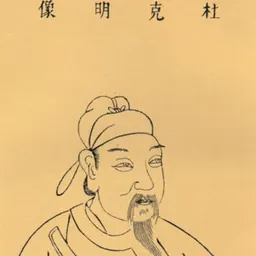
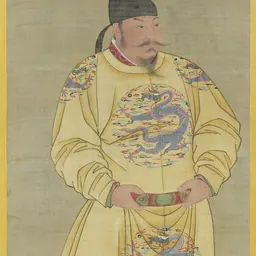



Related people
Same field, nearest in time



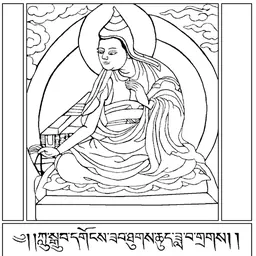


Contemporaries
People whose lives overlapped Kong Yingda's



Frequently asked questions
Who was Kong Yingda?
Chinese philosopher (574 – 648)
When was Kong Yingda born?
Kong Yingda was born in 574 in Hengshui.
When did Kong Yingda die?
Kong Yingda died on 10 October 648.
What was Kong Yingda's occupation?
Kong Yingda was a philosopher and writer.
What nationality was Kong Yingda?
Kong Yingda was Chinese.
Sources & further reading
Cite this page
APA: Biography.guide. (2026). Kong Yingda. https://biography.guide/kong-yingda/
MLA: "Kong Yingda." Biography.guide, https://biography.guide/kong-yingda/.
Chicago: "Kong Yingda." Biography.guide. https://biography.guide/kong-yingda/.
Data last updated: 2026-09-21 · Spot an error? Report a correction.
Portrait: Wikimedia Commons · author & licence
Page generated 2026-09-27 04:59 UTC