
About Klara Valko
Klara Valko was a researcher.
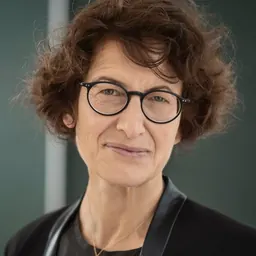
Klara Valko is a scientist, consultant, academic and author. She is the director of Bio-Mimetic Chromatography as well as an honorary professor at University College London School of Pharmacy.
Valko is most known for her work on early drug discovery and lead optimization. Among her authored works are her publications in academic journals, as well as books such as Chromatographic Determination of Molecular Interactions and Physicochemical and Biomimetic Properties in Drug Discovery: Chromatographic Techniques for Lead Optimization.
Education Valko completed her Master of Pharmacy from Semmelweis University in 1997, followed by a PhD in Pharmaceutical Chemistry and Pharmacology from the same institution in 1979. Later in 1996, she obtained a DSc degree in Drug Discovery from Hungarian Academy of Sciences.
From 1977 to 1981, Valko served as a lecturer in the Department of Pharmaceutical Chemistry at Semmelweis University. Additionally, she held a Mappletorpe research fellowship in the School of Pharmacy at the University of London from 1991 to 1993. Since 2004, she has held the position of honorary professor at the University College London School of Pharmacy.
Research Valko's 1986 study compared the efficacy of microwave irradiation as a sample preparation method for chromatography with traditional approaches. This research highlighted its exceptional time and energy efficiency, particularly suited for rapid extractions in large sample series. In 1997, she invented the Chromatographic Hydrophobicity Index (CHI) based on reversed-phase HPLC retention times, offering a high-throughput approach for physicochemical profiling in drug design, demonstrating strong correlations with acetonitrile distribution and octanol/water partition coefficients. Her collaborative effort with GSK colleagues in 2003 outlined the development and validation of a rapid gradient HPLC method for determining Human Serum Albumin (HSA) binding of discovery compounds. In 2011, she proposed a novel approach, using calibrated HPLC retention times on biomimetic stationary phases to develop mechanistic models. This approach enabled estimating in vivo unbound volume of distribution (V(du)) and fraction unbound in tissue (f(ut)) during lead optimization, aiding consideration of in vitro potency and estimated in vivo pharmacokinetic distribution of compounds. In the same year, she explored the optimization of drug properties in drug discovery, introducing the drug efficiency index (DEI) as a marker of in vivo efficacy. Moreover, her 2015 study explored developing and optimizing a high-throughput assay for directly measuring intracellular compound concentration in HeLa cells.
Investigating the use of standardized HPLC methods, Valko's 2016 research suggested that Chromatographic properties measured at early stages of the drug discovery process can assess lipophilicity, oral absorption, volume of distribution, drug efficiency, and even early dose estimation. In related research, she introduced standardized procedures for accelerating drug discovery by evaluating in vivo distribution and non-specific binding through chromatographic profiling of analogs, highlighting the advantages over traditional metrics such as Ligand Lipophilicity Efficiency (LLE). Later, her 2018 work tackled peptide therapeutic challenges by assessing biomimetic properties like lipophilicity and membrane affinity via High-Performance Liquid Chromatography, using chemically bonded protein and immobilized artificial membrane stationary phases. Her 2021 suggested that membrane and alpha-1-acid glycoprotein retention can be considered as promising indices for assessing the ecotoxicological risk of drugs, with membrane models showing superior performance compared to those derived from the traditional octanol-water system. In addition, she also proposed a model using biomimetic HPLC methods and measured binding properties to predict hERG inhibition, addressing early screening for potential cardiotoxicity and reducing late-stage failures in drug discovery.
Awards and honors 1989 – Young Scientist Award, Hungarian Academy of Sciences Fellow - The Royal Society of Chemistry Associate - The Royal Pharmaceutical Society
Don’t just read it —
keep it.
Full-length biographies made to live with: read them, listen on the way to work, watch them tonight.
- E-book
- Audio
- Video
Instant download · yours to keep · every purchase keeps this site free
Important facts
Related people
Same field, nearest in time





Frequently asked questions
Who was Klara Valko?
researcher
What was Klara Valko's occupation?
Klara Valko was a researcher.
Sources & further reading
Cite this page
APA: Biography.guide. (2026). Klara Valko. https://biography.guide/klara-valko/
MLA: "Klara Valko." Biography.guide, https://biography.guide/klara-valko/.
Chicago: "Klara Valko." Biography.guide. https://biography.guide/klara-valko/.
Data last updated: 2026-09-20 · Spot an error? Report a correction.
Page generated 2026-09-27 05:17 UTC