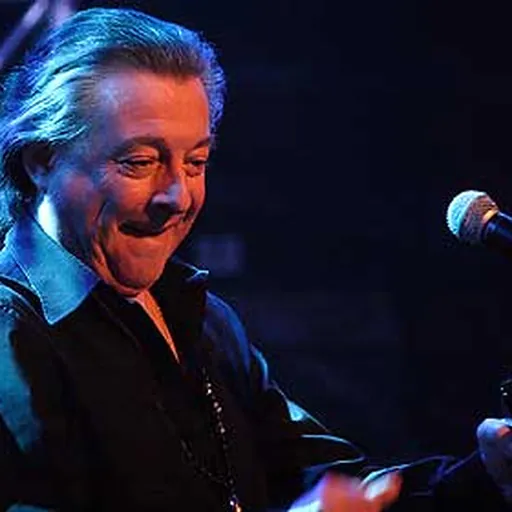
About Kirka
Lived 1950 – 2007 (aged 56). Kirka was a Finnish musician and singer.
Kirill "Kirka" Babitzin (; 22 September 1950 in Helsinki, Finland – 31 January 2007 in Helsinki, Finland) was a Finnish vocalist and musician. One of the most commercially successful artists from Finland, his career lasted from the late 1960s until his death in 2007. Sales of Kirka's records have exceeded one million copies. During his career, Kirka was awarded five Emma prizes.
Kirka's career spanned over four decades with hardly any interruptions. He started his career in 1964 in the band The Creatures, which never published any records. Previously associated with Ilkka Lipsanen's band, The Islanders, Kirka went on to record a wide array of rock and pop music. He went on a solo career in 1967 with his song "Hetki Lyö" (Beat the Clock) in the same year becoming his breakthrough. By the middle 1970s, several hits followed such as "Leijat" (Kites) and "Varrella virran" (Down by the River). His 1988 album Surun Pyyhit Silmistäni (The Sadness in Your Eyes) went on to be one of the best sold records in Finnish history. He also represented Finland in the Eurovision Song Contest 1984 with his song "Hengaillaan" (Hanging Around), with the album of the same name being awarded a gold record. From 1986 to 1987 Kirka published hard rock in English, but soon returned to schlagers in Finnish. In 1988 Kirka won the Syksyn sävel competition with his song "Surun Pyyhit Silmistäni" with the album of the same name being awarded five platinum records. Thus started the most successful part of Kirka's career with numerous gold and platinum records. By the start of the 21st century, Kirka was part of the popular Mestarit ("The Masters") group. His last album was published in 2005.
Kirka's career spanned many different kinds of music. When performing, he sang many rock and soul songs which were his favourite kinds, but his records mostly consisted of softer material. This contradiction sometimes bothered him, and he described himself as a rock singer who performed pop and schlager songs.
Kirka came from a Russo-Finnish background. Of the children in the Babitzin family, Sammy, Muska, Ykä and Anna have also made their careers in the music business. Kirka's daughter Alexandra has also appeared as a singer. Sammy's signature hit Daa-da daa-da tells a story of high-speed automotive cruising.
Biography Childhood and youth (1950 to 1966) Background and family The Babitzin Family in the early 1960s at their apartment in Maunula in Helsinki. Kirka is standing to the left. The family's father Leo is holding Georgij ("Ykä") in his lap and the mother Elisabeth is holding Anna in her lap. In the background on the right is Marija ("Muska") and in the foreground on the right is Aleksandr ("Sammy"). Kirill Babitzin was born in Helsinki in 1950 to a Russian family. His father, Leo Babitzin was born in 1914 in St. Petersburg and fled to Finland in the aftermath of the October Revolution.
Kirill's mother, Elizaveta , was partially of German-Russian descent and was born in a part of Karelia that Finland was later forced to cede to the Soviet Union. Elizaveta's father had been a commandant in the Russian Navy and committed suicide when the Bolsheviks came to fetch him. There had also been other officers of the Imperial Russian Army in the families of both of Kirka's parents. As well as Kirka, the Babitzin family included other children who also made a career in music: Aleksandr ("Sammy", 1948 - 1973), Marija ("Muska", born 1952), Georgij ("Ykä", born 1955) and Anna (born 1961 ) and Leo (1946-1948) who drowned when he was two years old. The Russian names of the children were difficult to pronounce to their Finnish-speaking playmates, so they first started calling Kirill as Kira and then as Kirka. In 1961 the Babitzin family moved to Maunula
Start of musical interest and The Creatures Kirill Babitzin first got into music at the age of five when his grandmother Sofia gave him an accordion, which he played on visits to senior homes. Leo Babitzin signed Kirka and Muska up for music lessons, but they quit going to them after becoming frustrated at the tight discipline held by the elderly teacher. In the next year, Kirka took part in a televised accordion competition held at the Kulttuuritalo venue in Helsinki, where he was awarded the second prize in the regional championships for children under 12 years.
Kirka's interest in singing began at the age of eleven or twelve, when his big brother Sammy who worked as an errand boy at the Musiikki-Fazer music company started bringing records home with him. Kirka began listening to records by Elvis Presley and Paul Anka, and later also by The Beatles and The Rolling Stones. The raspy-voiced Little Richard proved to be the artist that made the biggest impression to Kirka, and this left a permanent effect on his style of singing. As Kirka started becoming interested in rock music he left his hobby of playing the accordion behind, The band played straightforward rock and roll as well as rhythm and blues. Kirka's first appearance with The Creatures was in November 1964 at the Vocational School for Girls in Helsinki. The band played many times on television and in the 1966 films Käpy selän alla and Topralli, but never published any records. Under pressure from his father, Kirka applied to secondary school three times and was finally approved, but never actually showed up at the school. where he attempted to narrow the difference in material between his live performances and his albums. At the wedding Mikkola was pregnant, and their first-born child was born in October in the same year. of which Alexandra (born 1981) has also appeared as a singer.
Kirka's financial situation had remained stable for as long as he had been employed at D-tuotanto, Despite the intricate work that went to the album, it too performed poorly and failed to become a hit. The album also contains the song "Kyyneleet" ("Tears") which Kirka hated and was the only one of his songs he refused to perform.
Kirka's eighth attempt at the Finnish competition for the Eurovision Song Contest was finally a success in 1984 when the song "Hengaillaan" arranged by Jukka Siikavire and written by Jussi Tuominen was chosen as Finland's entry to the Eurovision Song Contest in Luxembourg. It got ninth place at the finals, which was Finland's best ranking since 1975. Kirka's contract would still have required one more album, but Kirka left the company because of disputes over royalty payments. The dispute was over a minor sum and also otherwise controversial, but the management at CBS refused to take the potential breach of contract to court.
Peak popularity years In 1988 Kirka moved back to Finnish schlagers and rose to the peak of his popularity after winning the Syksyn sävel competition with his song "Surun pyyhit silmistäni" ("You wipe the sorrow from my eyes"), a melancholic pop-schlager, which proved to be his greatest chart success. and he paid off his tax debt in autumn 1993. In 1991 Kirka returned to Monaco because of the success of the album Anna käsi. The 1990 album Parhaat, uudet versiot, consisting of re-recordings of Kirka's old hits, true to its name "The best, new version", also sold for gold. Flamingo Records ceased operations in 1995, at which time Kirka was no longer employed at the record company. On the song "Toukokuu" ("The month of May") Kirka took part at the Finnish competition for the Eurovision Song Contest for the last time and got third place. From 1972 and 1996 he had applied for the Eurovision Song Contest with twenty-two songs, which was more than any other Finnish artist ever. In 2002 Kirka was also active in anti-drug work by participating in the "Katkolla tulevaisuus" project. At the same time, the drug problems of Kirka's son were debated publicly. The arguments between Kirka and his extramarital daughter about her support costs also attracted attention.
In 2006 Kirka appeared together with Taiska on the "Kahden hullun matka" tour. During the months before his death Kirka had felt very tired and sickly and had suffered from a rotavirus infection in December. He had visited the doctor to check on his health, for the last time five days before his death, but he was not sent to hospital. Kirka's sister Muska has said that before Kirka's death his rib cage had been unnaturally swollen.
Kirka was buried on 2 February at the Helsinki Orthodox Cemetery at the Babitzin family grave where his father Leo and his brothers Sammy and Leo had also been buried. Kirka was blessed by his friend Mitro Repo. On the last day of his life he had to skip practice because he was not feeling well.
After Kirka's death, Warner Music Finland published a memorial album called Kaikki parhaat 1967 - 2007 in March 2007 and all of Kirka's albums from 1969 to 1978 on CD for the first time. The compilation sold for gold.
Kirka's memorial concert was held on 14 February 2008 at the Hartwall Arena. It was videotaped and later televised, and its profits were donated to the Kirill Babitzin Foundation. and said he was a rock singer performing pop and schlagers.
Singer and performer Kirka was very diverse in his singing, and his voice was raspy. He drew inspiration in his singing style from Little Richard. On his performances, Kirka sometimes forgot the lyrics to his songs. People who knew Kirka have described him as gentle and polite. Also Kirka himself told the press about his memories concerning his Orthodox congregation. However, his success sometimes varied, and for example in the early 1980s he had briefly fallen from a great star to a common artist. Kirka's next-best selling albums are Anna käsi (1989) which sold over 100 thousand copies and Ota lähellesi (1990). Of these, the first sold for double platinum and the second also sold for platinum, as did the albums Tie huomiseen (1996) and Hetki lyö: 1967 - 1997 (1997). The albums Hengaillaan (1984), R.O.C.K. (1986), Parhaat, uudet versiot (1990), Kasvot peilissä (1991), Pyydä vain (1992), Kirka (1994), 40 unohtumatonta laulua (2007) and Kaikki parhaat 1967 - 2007 (2007) have sold for gold.
Works about Kirka In 1982 Yleisradio showed the television document Kirka, laulaja.
The "Hengaillaan" tour in 2014 played several of Kirka's popular songs and stories told by people close to him. Backed by Kirka's own band, the tour featured artists such as Pauli Hanhiniemi, Pete Parkkonen, Pentti Hietanen, Sami Hintsanen, Roosa Nummela as well as Muska, Ykä and Alexandra Babitzin.
The musical Surun pyyhit silmistäni by the Helsinki City Theatre premiered at the Peacock Theatre at Linnanmäki in Helsinki in February 2017. Kirka was played by actors Kalle Lindroth and Heikki Ranta. but also documents memories and views of his gigs and public image.
Dubbings Kirka had a dubbing role on the Finnish dub of the animation film Rock-a-Doodle (1992) where he acted as the speaking and singing voice of the rooster in the main role.
Don’t just read it —
keep it.
Full-length biographies made to live with: read them, listen on the way to work, watch them tonight.
- E-book
- Audio
- Video
Instant download · yours to keep · every purchase keeps this site free
Important facts
People in Kirka's life
Named in this biography and alive at the same time





Related people
Same field, nearest in time


Contemporaries
People whose lives overlapped Kirka's




Frequently asked questions
Who was Kirka?
Finnish singer (1950–2007)
When was Kirka born?
Kirka was born on 22 September 1950 in Helsinki.
When did Kirka die?
Kirka died on 31 January 2007 in Helsinki.
What was Kirka's occupation?
Kirka was a musician and singer.
What nationality was Kirka?
Kirka was Finnish.
Sources & further reading
Cite this page
APA: Biography.guide. (2026). Kirka. https://biography.guide/kirka/
MLA: "Kirka." Biography.guide, https://biography.guide/kirka/.
Chicago: "Kirka." Biography.guide. https://biography.guide/kirka/.
Data last updated: 2026-09-22 · Spot an error? Report a correction.
Portrait: Wikimedia Commons · author & licence
Page generated 2026-09-27 05:04 UTC