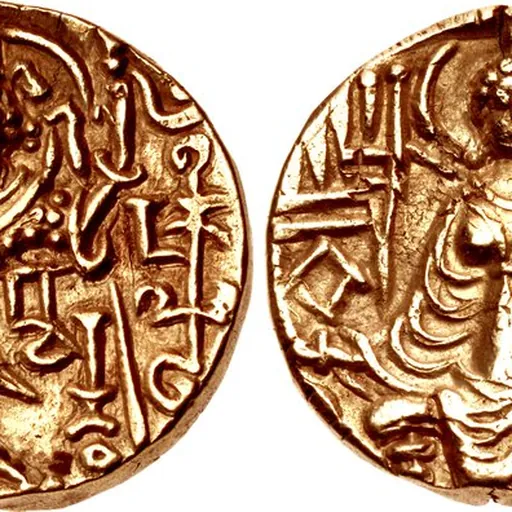
Kipunada
Kushan ruler from 335 to 350 AD
About Kipunada
Kipunada (Brahmi script: 10px10px10px14px Ki-pu-ṇa-dha), also Kipanadha, was probably the last ruler of the Kushan Empire around 335-350 CE. He succeeded Shaka I. Kipunada was probably only a local ruler in the area stretching from Waisa to Taxila, in northwestern Punjab, and he may have been a subject of Gupta Emperor Samudragupta.
Gupta and Kidarite successors
Kipunada lost his independence directly to the invading Hunas who had invaded northern India and acted as a local ruler of Taxila (alongside Mahi and Shaka) under the suzerainty of the Gupta emperors, while still using the coinage style of the Great Kushans. The Kushano-Sasanian sites, including the coins, extended to Gandhara due to Shapur II's protection of the eastern borders of his Sasanian Empire against the invading Huns/Chionites. His treaties with the Huns resulted in: allowing them to join the Sasanian troops, treating them as allies and allowing his direct control over the east. The Kushano-Sasanian coin series issued by Kidara and a certain Pērōz, in Tokharistan and Gandhara continued. Evidently, Kidara I was the Kushan king who submitted to the Gupta king Samudragupta and accepted Gupta suzerainty.
Don’t just read it —
keep it.
Full-length biographies made to live with: read them, listen on the way to work, watch them tonight.
- E-book
- Audio
- Video
Instant download · yours to keep · every purchase keeps this site free
Frequently asked questions
Who was Kipunada?
Kushan ruler from 335 to 350 AD
Sources & further reading
Cite this page
APA: Biography.guide. (2026). Kipunada. https://biography.guide/kipunada/
MLA: "Kipunada." Biography.guide, https://biography.guide/kipunada/.
Chicago: "Kipunada." Biography.guide. https://biography.guide/kipunada/.
Data last updated: 2026-09-22 · Spot an error? Report a correction.
Portrait: Wikimedia Commons · author & licence
Page generated 2026-09-27 05:03 UTC