
Kinjirō Ashiwara
Japanese self-proclaimed emperor
About Kinjirō Ashiwara
Lived 1852 – 1937 (aged 84–85). Kinjirō Ashiwara was a Japanese.
Kinjirō Ashiwara (, Hepburn: , ; November 3, 1850 as the third son of a samurai of Takaoka clan. As a young adult, Ashiwara worked for a comb wholesaler in Fukaya, Saitama Prefecture. According to a Yomiuri Shimbun report, he worked as a confectioner.
Initial newspaper reports
The earliest extant mention of Ashiwara in the Japanese media occurred on June 1, 1880, in an article titled "Famous Man Shogun Ashiwara: Huge Scene at the Ministry of the Treasury " on Tokyo Eiri Shimbun, According to the article, he caused a public disturbance with his "usual" angry outbursts at the Ministry of the Treasury and was taken to the police station.
On June 12, Tokyo Jiyu Shimbun reported that Ashiwara had come into a in Tokyo and declared that he was "Shogun Ashiwara, Senior Third-Rank and First-Class Minister of the Left" and that he needed to send an urgent telegram to Li Hongzhang, a well-known diplomat of the Qing dynasty in China, over "a matter of great concern". The alarmed office staff called the police.
Hospitalization
In July 1881, Ashiwara disrupted a procession of Emperor Meiji, who was on a tour of the Tōhoku region, and attempted to approach him. Ashiwara was arrested and admitted to the Tokyo Metropolitan Psychiatric Asylum (present-day Tokyo Metropolitan Matsuzawa Hospital) in 1882, having been diagnosed with hereditary mania. The psychiatrists who later evaluated him, however, disagreed on the diagnosis of his condition; opinions were largely divided between paranoid schizophrenia and chronic mania. Dictionary of Clinical Psychiatry noted that, although delusional, he did not exhibit a personality breakdown attributable to dementia.
Ashiwara escaped from the hospital three times—in 1885, 1892, and 1904—but was re-detained each time. From May 7 to June 20, 1903, the Yomiuri Shimbun, one of the country's major newspapers, serialized an article titled "Mankind's Greatest Dark World: Psychiatric Hospital ", in which the living conditions and treatments of patients at the hospital (then-named Sugamo Prefectural Hospital) were described in detail. During the Taishō era (1912–1926), he held press conferences at the hospital whenever there was political turbulence. Newspaper reporters would visit Ashiwara when they ran out of news material.
Soon after the Shōwa era began in 1926, Ashiwara started to call himself "emperor" and sold papers with his (Imperial edict) written on them to visitors. He remained in the hospital until his death in 1937. The vice president of the Matsuzawa Hospital performed an autopsy on Ashiwara's body and stated that he observed no pathological findings in Ashiwara's brain.
Don’t just read it —
keep it.
Full-length biographies made to live with: read them, listen on the way to work, watch them tonight.
- E-book
- Audio
- Video
Instant download · yours to keep · every purchase keeps this site free
Important facts
People in Kinjirō Ashiwara's life
Named in this biography and alive at the same time

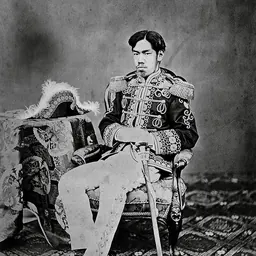
Contemporaries
People whose lives overlapped Kinjirō Ashiwara's
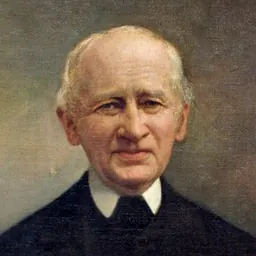
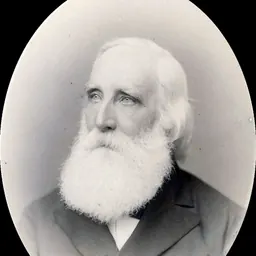
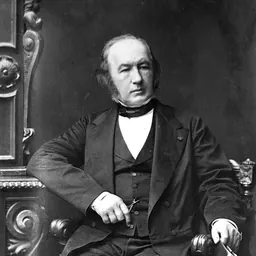

Frequently asked questions
Who was Kinjirō Ashiwara?
Japanese self-proclaimed emperor
When was Kinjirō Ashiwara born?
Kinjirō Ashiwara was born in 1852 in Takaoka.
When did Kinjirō Ashiwara die?
Kinjirō Ashiwara died on 2 February 1937 in Tokyo City.
What nationality was Kinjirō Ashiwara?
Kinjirō Ashiwara was Japanese.
Sources & further reading
Cite this page
APA: Biography.guide. (2026). Kinjirō Ashiwara. https://biography.guide/kinjiro-ashiwara/
MLA: "Kinjirō Ashiwara." Biography.guide, https://biography.guide/kinjiro-ashiwara/.
Chicago: "Kinjirō Ashiwara." Biography.guide. https://biography.guide/kinjiro-ashiwara/.
Data last updated: 2026-09-20 · Spot an error? Report a correction.
Page generated 2026-09-27 05:30 UTC