
Kinji Fukasaku
Japanese film director and screenwriter
About Kinji Fukasaku
Lived 1930 – 2003 (aged 72). Kinji Fukasaku was a Japanese film director, screenwriter, film producer, actor and director.
was a Japanese filmmaker. Known for his "broad range and innovative filmmaking", he worked in many different genres and styles, but was best known for his gritty yakuza films, typified by the Battles Without Honor and Humanity series (1973–1976). According to the Berkeley Art Museum and Pacific Film Archive, his "turbulent energy and at times extreme violence express a cynical critique of social conditions and genuine sympathy for those left out of Japan's postwar prosperity". He used a cinema verite-inspired shaky camera technique in many of his films from the early 1970s.
Fukasaku wrote and directed over 60 films between 1961 and 2003. Some Western sources have associated him with the Japanese New Wave movement of the 1960s and 1970s, but this belies his commercial success. His works include the Japanese portion of the Hollywood war film Tora! Tora! Tora! (1970), jidaigeki such as Shogun's Samurai (1978), the space opera film Message from Space (1978), the science fiction film Virus (1980), the fantasy film Samurai Reincarnation (1981), and the highly influential dystopian thriller film Battle Royale (2000).
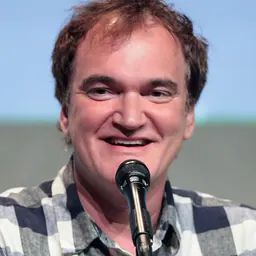
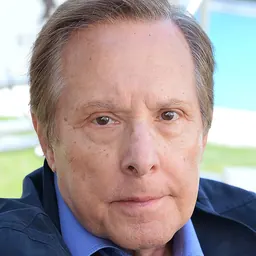
Fukasaku won the Japan Academy Film Prize for Director of the Year three times from nine nominations. He served as the sixth president of the Directors Guild of Japan from 1996 until his death from prostate cancer in 2003. He received the Purple Medal of Honor from the Japanese government for his work in 1997. His films have inspired directors such as Quentin Tarantino, William Friedkin, and John Woo.
Early life Kinji Fukasaku was born on 3 July 1930 in Mito, Ibaraki, the youngest of five children. When he was 15 years old, his entire class was drafted, and he worked as a munitions worker during World War II. In July 1945, the class was caught in a bombing. Since the children could not escape the bombs, they had to dive under each other in order to survive; the surviving members of the class had to dispose of the corpses. After the war, he spent much of his time watching foreign films.
Career Fukasaku studied cinema at Nihon University, in the country's first film department, before switching to the literature department for screenwriting during his junior year. There he studied under Kogo Noda and Katsuhito Inomata. After graduating in 1953, Fukasaku became an assistant director at Toei in June 1954, where he worked under people such as Masahiro Makino and Yasushi Sasaki.
In 2000, Battle Royale was released. The film received positive critical praise and became a major financial success, grossing ¥3.11 billion domestically. It became a cultural phenomenon, creating an entire genre of its own in which a select group of people are instructed to kill each other until there is a triumphant survivor. Whenever Fukasaku directed other actresses, the media ran sensationalist stories of their marriage supposedly being in "crisis", which they both ignored.
Death In September 2002, Fukasaku revealed that he had prostate cancer. ダブル・パニック'90 ロス警察大捜査線! Daburu Panikku '90 Rosu Keisatsu Daisōsasen!
The Triple Crossa.k.a. The Day's Too Bright いつかギラギラする日 Itsuka Giragira Suru Hi
Crest of Betrayala.k.a. Loyal 47 Ronin: Yotsuya Ghost Story 忠臣蔵外伝 四谷怪談 Chūshingura Gaiden: Yotsuya Kaidan
The Abe Clan 阿部一族 Abe Ichizoku
The Eaters 20世紀末黙示録 もの食う人びと Nijusseikimatsu Mokushiroku: Mono kuu Hitobito
The Geisha House おもちゃ Omocha
Battle Royale バトル・ロワイアル Batoru Rowaiaru
Battle Royale II: Requiem (directed one scene) バトル・ロワイヤル II: 【鎮魂歌】 Batoru Rowaiaru Tsū: "Rekuiemu"
Episodes of television series Key Hunter (1968) - Episodes 1 and 2 Hissatsu Shikakenin (1972) - Episodes 1, 2, and 24 G-Men '75 (1975-1979) - Episodes 16, 20, 85, and 354 The Yagyu Conspiracy (1978) - Episode 1 Shadow Warriors (1981) - Season 2, Episode 1
Video game Clock Tower 3 (2002)
Awards 1974 Kinema Junpo Reader's Choice Award for Best Film - Battles Without Honor and Humanity 1976 Blue Ribbon Award for Best Director - Graveyard of Honor, Cops vs. Thugs 1982 Hochi Film Award for Best Film - Fall Guy 1983 Japan Academy Prize for Director of the Year - Fall Guy, Dotonbori River 1983 Japan Academy Prize for Picture of the Year - Fall Guy 1983 Blue Ribbon Award for Best Film - Fall Guy 1983 Blue Ribbon Award for Best Director - Fall Guy 1983 Mainichi Film Award for Best film - Fall Guy 1983 Mainichi Film Award for Best Director - Fall Guy 1983 Mainichi Film Award Reader's Choice Award - Fall Guy 1983 Kinema Junpo Reader's Choice Award for Best Film - Fall Guy 1983 Kinema Junpo Reader's Choice Award for Best Director - Fall Guy 1983 Kinema Junpo Reader's Choice Award for Best Film - Fall Guy 1985 Japan Academy Prize for Director of the Year - Legend of the Eight Samurai, Shanghai Rhapsody 1987 Japan Academy Prize for Director of the Year - House on Fire 1987 Japan Academy Prize for Picture of the Year - House on Fire 1987 Kinema Junpo Reader's Choice Award for Best Film - House on Fire 1993 Yokohama Film Festival Special Prize - career 1994 Nikkan Sports Film Award for Best Director - Crest of Betrayal 1995 Japan Academy Prize for Director of the Year - Crest of Betrayal 1995 Japan Academy Prize for Picture of the Year - Crest of Betrayal 1997 ATP Award Television Grand Prix - Grand Prix award - The Eaters 2001 Japan Academy Prize for Director of the Year (Nomination) - Battle Royale 2003 Japan Academy Prize Special Award - career 2003 Blue Ribbon Award Special Award - career 2004 Mainichi Film Award Special Award - career
Don’t just read it —
keep it.
Full-length biographies made to live with: read them, listen on the way to work, watch them tonight.
- E-book
- Audio
- Video
Instant download · yours to keep · every purchase keeps this site free
Important facts
Family & relationships
People in Kinji Fukasaku's life
Named in this biography and alive at the same time




Related people
Same field, nearest in time


Contemporaries
People whose lives overlapped Kinji Fukasaku's
Frequently asked questions
Who was Kinji Fukasaku?
Japanese film director and screenwriter (1930–2003)
When was Kinji Fukasaku born?
Kinji Fukasaku was born on 3 July 1930 in Midorioka.
When did Kinji Fukasaku die?
Kinji Fukasaku died on 12 January 2003 in Tokyo.
What was Kinji Fukasaku's occupation?
Kinji Fukasaku was a film director, screenwriter, film producer, actor and director.
What nationality was Kinji Fukasaku?
Kinji Fukasaku was Japanese.
Sources & further reading
Cite this page
APA: Biography.guide. (2026). Kinji Fukasaku. https://biography.guide/kinji-fukasaku/
MLA: "Kinji Fukasaku." Biography.guide, https://biography.guide/kinji-fukasaku/.
Chicago: "Kinji Fukasaku." Biography.guide. https://biography.guide/kinji-fukasaku/.
Data last updated: 2026-09-22 · Spot an error? Report a correction.
Page generated 2026-09-27 05:28 UTC