
About Kim Yong-sŏp
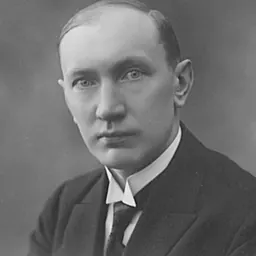
Lived 1931 – 2020 (aged 89). Kim Yong-sŏp was a South Korean historian.
Kim Yong Sop (; 8 October 1931 - 20 October 2020) was a South Korean scholar, historian, and honorary professor at Yonsei University.
Kim is known for influencing change in Korea. Korea was seen as a country whose development was due to colonization. Kim showed how capitalism was already changing Korea. Through nine books and over fifty years, his research on agricultural history from the late Joseon period to modern Korea explores how Joseon could develop and sustain a capitalist society.
Kim's work used extensive data and a variety of evidence to document Joseon's transformation move into a capitalist society, showing that Japanese colonization was not needed to accelerate the process. Because Joseon was a Japanese colony, the history of Joseon was written by the Japanese. Through “intrinsic development theory” (“내재적 발전론”[nae-jae-jeok bal-jeon-ron]), he argued that Japanese colonialism was not responsible for the development Joseon, as the Japanese had claimed in their colonial histories. As a displaced person, he paid great attention to overcoming the division of the country and tried to explain the internal causes of the Korean War. As it was necessary to understand the socioeconomic background of the war of ethnic conflict, his research on agricultural history focused on the social conflict between landlords and farmers in the agriculturally oriented society of Joseon. Careful analysis of the land ledger, Yangan (양안), and the family register determined that the “well-to-do tenant farmers” (경영형 부농) were growing in the late Joseon. The foreign scholar who identified the various stages in the process of forming a modern state (in the context of rural changes) is Barrington Moore, author of the Social Origins of Dictatorship and Democracy. There are many differences between Barrington Moore and Kim Yong Sop's research, but comparing the two will greatly help to understand contemporary Korean history in a comparative historical context.
Kim Yong Sop's research on agricultural history is a huge academic achievement accomplished by the liberation generation. This generation experienced the tragedies of colonialism, division, and war. His work represents the history of knowledge that the liberated generation struggled with during their era. In addition, his work could help today's generation, as it continues to work through the problem of division and the task of overcoming spiritual colonialism.
Criticism from Kim Ho Gi:
From a sociological point of view, the theory of intrinsic development still explains well. Above all, the theory of intrinsic development provides a consistent explanation of internal change. It shows how the internal response to external conflicts is important to social change. In other words, the exploration of how internal and external factors have been combined to become something else in history is a task that Kim Yong Sop has left to future generations.
Some see the theory of intrinsic development as a product of nationalism's desire to exaggerate the history of the great development of the people to compensate for the inferiority complex that comes from being trampled on by foreign powers. However, Kim Yong Sop's aim is to look at the dark wounds of the nation from the front and try to find the cause from the inner background without blaming others.
Achievements Kim Yong Sop received many awards, including:
The 11th Korean Publishing Culture Award (제11회 한국출판문화상 저작상, 1971) The 1st Chi-Am Academic Award (제1회 치암학술상, 1984) Korean Academic Writing Award (제1회 한국학저술상, 2020)
When he was awarded the first Korean Studies Literature award with his nine books, he stated:
I recently published an ancient Korean agricultural study. Since publishing a study on agricultural history in the late Joseon Dynasty, all Korean agriculture over the entire period has been organized into nine volumes. It took 50 years since the first work was published. As we began research on Korean agriculture, we tried to overcome the colonial history of Japanese imperialism, which was a task of the Korean academic world after liberation, and to reveal the independent historical development of our history. And from the beginning, I planned to organize the ancient agricultural history of Korea. Now I'm done with my research on my hospital bed. I'm so happy to share my personal joy with you through today's writing award. Thank you to everyone who helped me complete this work. In the midst of that, we can't help but mention the help of Lee Gyeomro who gave us the award today. There are no Korean studies researchers who have not walked to Tongmungwan and have not received help. So did I. In particular, during the period of Dongsung-dong at Seoul National University's Literary University in the late 1960s, I was able to start research on the holding system during the Japanese colonial period. Taking this harvest season as an example, we were able to proceed with several cases of holding management. Of course, this thesis is published in my work, Korean Modern and Contemporary Agricultural Research. Once again, I would like to thank Lee Seung-ro, the teacher of Tongmungwan. Now that we have completed the agricultural history study, I would like to express my sincere gratitude to President Kim Kyung-hee, who recommended the publication of the work and was in charge of non-commercial publishing. We received the Writing Award together.
Don’t just read it —
keep it.
Full-length biographies made to live with: read them, listen on the way to work, watch them tonight.
- E-book
- Audio
- Video
Instant download · yours to keep · every purchase keeps this site free
Important facts
People in Kim Yong-sŏp's life
Named in this biography and alive at the same time

Related people
Same field, nearest in time


Contemporaries
People whose lives overlapped Kim Yong-sŏp's

Frequently asked questions
Who was Kim Yong-sŏp?
South Korean historian
When was Kim Yong-sŏp born?
Kim Yong-sŏp was born on 8 October 1931.
When did Kim Yong-sŏp die?
Kim Yong-sŏp died on 20 October 2020.
What was Kim Yong-sŏp's occupation?
Kim Yong-sŏp was a historian.
What nationality was Kim Yong-sŏp?
Kim Yong-sŏp was South Korean.
Sources & further reading
Cite this page
APA: Biography.guide. (2026). Kim Yong-sŏp. https://biography.guide/kim-yong-sop/
MLA: "Kim Yong-sŏp." Biography.guide, https://biography.guide/kim-yong-sop/.
Chicago: "Kim Yong-sŏp." Biography.guide. https://biography.guide/kim-yong-sop/.
Data last updated: 2026-09-20 · Spot an error? Report a correction.
Page generated 2026-09-27 05:25 UTC