
About Khalid Mahmud Arif
Lived 1930 – 2020 (aged 89–90). Khalid Mahmud Arif was a Pakistani and Indian poet.
Khalid Mahmud Arif (29 December 1930 – 6 March 2020) better known as K. M. Arif, was a four-star rank general of the Pakistan Army, who served as the Vice Chief of Army Staff under President General Zia-ul-Haq from 1984 to 1987 and was considered one of his closest confidants.
An intelligence assessment made by the Central Intelligence Agency (CIA) in 1982 on who would succeed General Zia-ul-Haq in the event of his death mentioned Arif as one of the generals who may succeed him: "A darkhorse candidate is Lt. Gen. K. M. Arif, who runs the federal bureaucracy through the martial law secretariat, where he serves as chief of staff to Zia in the latter's role as Chief Martial Law Administrator. Arif is regarded as the most skilled bureaucratic player in Islamabad. He wants a corps command, and he recently tried unsuccessfully to resign as Zia's chief of staff. He has also supported negotiations between the martial law administration and the opposition political parties."
His career in the army was mostly spent in the military intelligence, and served in the East Pakistan Rifles, briefly fighting in the civil war aided by neighboring India. of Pashtun descent on 29 December 1930 in Jullundur to Akbar Hussain.
He attended Edwardes College in Peshawar and graduated in 1947.
Military career He joined the 1st Course of the Officers Training School in Kohat as a cadet on 17 March 1949. His family permanently moved to Kohat as he gained commission into the Armoured Corps. In 1952, he was selected for further military training in the United States and was sent to attend the United States Army Armor School at Fort Knox, where he graduated in specializing in the armoured tactics. He was further educated in Military College of Signals in Rawalpindi where he excelled in intelligence management, and graduated from Staff College, Quetta. Arif commanded an American M48 tank Squadron against the Indian Army.
After the war, he was sent back to the military intelligence and stationed in East Pakistan (in the East Pakistan Rifles).
Promoted to Lieutenant Colonel in 1967, he greatly aided towards troop redeployment of the Eastern Command in formulating a battle plan, codename: "Operation X-Sunderbans-1."
In 1969, he was posted in Dhaka as a martial law officer under the Government of East Pakistan led by Governor Vice Admiral S. M. Ahsan in 1969.
In March 1971, he was promoted to full Colonel and witnessed the meeting with President Yahya Khan who decided the launch of the military operations against the rebels in the East should take place. Arif took over the situation himself to control the law and order.
About this meeting, Arif described the meeting as: President Yahya took matters in his hands, thus good bye to civil bureaucracy.
His efforts and actions in the liberation war in East that accounted his bravery had earned admiration in Pakistan which led to Prime Minister Zulfikar Ali Bhutto accepting recommendations to decorate Major Arif with service award, Sitara-e-Basalat.
After receiving orders from Lieutenant-General F.A. Chishti, GoC-in-C of X Corps, Brigadier Arif rotated the 111th Brigade to take control of the civilian government in support of Chief of Army Staff General Zia-ul-Haq and Chairman joint chiefs Mohammad Shariff.
In 1979, he helped and aided in preparing a national security strategy against the Russian invasion of Afghanistan, after a meeting with President Zia-ul-Haq upon the latter's request.
Vice Chief of Army Staff (1984–87) A quintessential staff officer, Major-General Arif's career accelerated and gained reputation as an effective commander in the military intelligence. Major-General Arif served in the military intelligence until 1983 when he promoted as Lieutenant-General and posted in a staff assignment in the Army GHQ.
Despite never effectively commanding the field assignments, he was named and appointed as Vice Chief of Army Staff under President Zia in 1984. Towards diplomacy with the United States, General Arif made frequent trips with United States, successfully convincing the Reagan administration to allow the secretive atomic bomb development by making it very clear to the United States that "[Pakistan] won't compromise on its nuclear weapons programme, but won't conduct a test to harm to relationship between two nations." In 1983, the Central Intelligence Agency (CIA) placed a mole near the Kahuta Research Laboratories but was thwarted by the ISI, which according to General Arif, the ISI took the mole to its secret museum to train its own spies in espionage operations.
In 1986–87, he deployed and rotated the V Corps, with support from the Southern Air Command to deter the Indian Army's major military exercise that took place near Pakistan's border under supervision of General Sundarji, then-army chief of Indian Army. During this time, he refuted the claims made by dr. A.Q. Khan and immediately issued directives towards the policy of deliberate ambiguity over the clandestine atomic bomb programme.
Post-retirement In 1987, General Arif sought retirement from his military service.
Upon retiring, he focused on poetry and became a military historian when he authored the notable eye witnessed and famed text on the military interference led General Zia-ul-Haq, Working with Zia, published in 1995. In 2001, he published Khaki Shadows: Pakistan 1947–1997, about the politics, government, and armed forces of Pakistan during and shortly after the Cold War.
In 1991, Arif and foreign minister Agha Shahi went on a goodwill tour of India.
In 2010, he authored another book, Estranged Neighbours: India, Pakistan (1947-2010) on the foreign relations of India and Pakistan. In the book, he criticised Nawaz Sharif for politicising bureaucrats in Punjab and wrote: "A new group of senior civil servants emerged on the administrative horizon of the country. Such favoured super bureaucrats overshadowed efficient colleagues who were less known to ruling prime ministers."
Views on nuclear weapons Arif often changed his views on nuclear weapons, sometimes opposing or sometimes agreeing. At a meeting titled "Security Assurances for non-Nuclear Weapon States" chaired by Chinese strategist and disarmament negotiator Zhai Dequan, General Arif dismissed the concept of security assurances as useless and said "we do not need non-proliferation but elimination of nuclear weapons."
However in 1989, he said "Pakistan's national interest demands that her nuclear programme be expanded and taken to its logical conclusions to produce the ultimate weapon.
Death Arif died on 6 March 2020.
Awards and decorations
Nishan-e-Imtiaz (Military)
(Order of Excellence)Hilal-i-Imtiaz (Military)
(Crescent of Excellence)Sitara-i-Imtiaz (Military)
(Star of Excellence)Sitara-e-Basalat (Star of Valour)Sitara-e-Harb 1965 War (War Star 1965)Sitara-e-Harb 1971 War (War Star 1971)Tamgha-e-Jang 1965 War (War Medal 1965)Tamgha-e-Jang 1971 War (War Medal 1971)Pakistan Tamgha (Pakistan Medal)
1947Tamgha-e-Sad Saala Jashan-e-Wiladat-e-Quaid-e-Azam
(100th Birth Anniversary of Muhammad Ali Jinnah)
1976Tamgha-e-Qayam-e-Jamhuria (Republic Commemoration Medal)
1956Hijri Tamgha (Hijri Medal)
1979Legion of Merit (Degree of Commander)
(US)
Foreign decorations Foreign AwardsLegion of Merit (Degree of Commander)
Works
Don’t just read it —
keep it.
Full-length biographies made to live with: read them, listen on the way to work, watch them tonight.
- E-book
- Audio
- Video
Instant download · yours to keep · every purchase keeps this site free
Important facts
People in Khalid Mahmud Arif's life
Named in this biography and alive at the same time

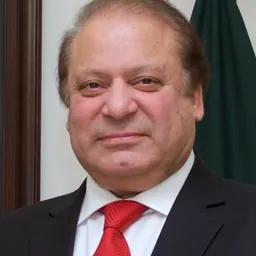

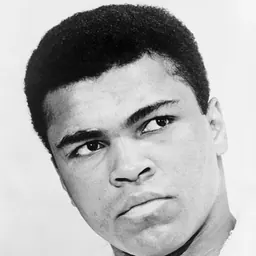
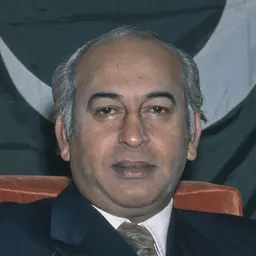

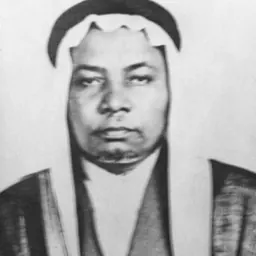

Related people
Same field, nearest in time

Contemporaries
People whose lives overlapped Khalid Mahmud Arif's

Frequently asked questions
Who was Khalid Mahmud Arif?
Pakistani general
When was Khalid Mahmud Arif born?
Khalid Mahmud Arif was born in 1930 in Jalandhar.
When did Khalid Mahmud Arif die?
Khalid Mahmud Arif died on 6 March 2020.
What was Khalid Mahmud Arif's occupation?
Khalid Mahmud Arif was a poet.
What nationality was Khalid Mahmud Arif?
Khalid Mahmud Arif was Pakistani and Indian.
Sources & further reading
· Wikipedia: Khalid Mahmud Arif
Cite this page
APA: Biography.guide. (2026). Khalid Mahmud Arif. https://biography.guide/khalid-mahmud-arif/
MLA: "Khalid Mahmud Arif." Biography.guide, https://biography.guide/khalid-mahmud-arif/.
Chicago: "Khalid Mahmud Arif." Biography.guide. https://biography.guide/khalid-mahmud-arif/.
Data last updated: 2026-09-20 · Spot an error? Report a correction.
Page generated 2026-09-27 05:27 UTC