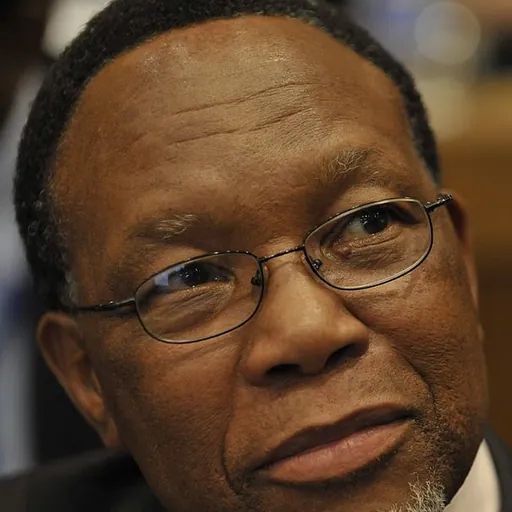
Kgalema Motlanthe
President of South Africa, Deputy President of the ruling African National Congress (ANC) and Secretary-General of the African National Congress
About Kgalema Motlanthe
Born 1949. Kgalema Motlanthe is a South African politician and minister.
Kgalema Petrus Motlanthe (born 19 July 1949) is a South African politician who served as the third president of South Africa from 2008 to 2009, following the resignation of Thabo Mbeki. Thereafter, he was deputy president under Jacob Zuma from 2009 to 2014.
Raised in Soweto in the former Transvaal after his family was forcibly removed from Alexandra, Motlanthe was recruited into uMkhonto weSizwe, the armed wing of the African National Congress (ANC), after he finished high school. Between 1977 and 1987, he was imprisoned on Robben Island under the Terrorism Act for his anti-apartheid activism. Upon his release, he joined the influential National Union of Mineworkers, where he was general secretary between 1992 and early 1998. After the end of apartheid, he ascended from the trade union movement to the national leadership of the ruling ANC, serving as ANC secretary general from late 1997 to late 2007. He was elected ANC deputy president, on a slate aligned to Zuma, by the ANC's 2007 Polokwane conference. In mid-2008, he was sworn in as a Member of Parliament and as Mbeki's second Minister in the Presidency – his first job in government.
Only weeks later, on 25 September 2008, Parliament elected him national president after Mbeki resigned at the ANC's request. Motlanthe was widely understood to be a compromise candidate and to be leading a caretaker administration until the 2009 national election. During his seven and a half months as president, he appeared to prioritise stability and continuity with the policies of the previous administration. However, on his first day in office, he replaced Health Minister Manto Tshabalala-Msimang with Barbara Hogan, effecting a break with Mbeki's HIV/AIDS policy, which had been criticised as ineffective and driven by denialism. He also made controversial changes at the National Prosecuting Authority, dismissing the National Director of Public Prosecutions, Vusi Pikoli, and assenting to legislation which disbanded the Scorpions, an elite anti-corruption unit.
Zuma was elected president in May 2009, and Motlanthe was appointed his deputy. In December 2012, under pressure from Zuma's opponents, he contested the ANC presidential elections at the party's Mangaung conference. Zuma, the incumbent, won in a landslide. Motlanthe declined to seek re-election to the ANC National Executive Committee, and had already declined a nomination for re-election as ANC deputy president. Having thus vacated the party leadership, he resigned from government and from Parliament in May 2014, at the end of his term as national deputy president.
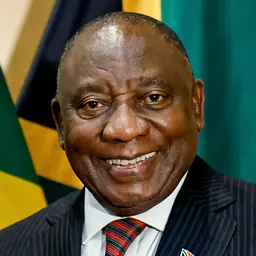
Variously and at various times perceived as an ally of each of the other living presidents – Mbeki, Zuma, and his trade union colleague Cyril Ramaphosa. Motlanthe always kept a low public and political profile. He is seen as holding broad respect in the ANC, and is frequently characterised as one of its preeminent left-leaning intellectuals.
Early life and career Motlanthe was born on 19 July 1949 to a family in Alexandra, a township outside Johannesburg in the former Transvaal (now Gauteng). worked as a cleaner at St John's College and later for Anglo American, and his mother, Masefako Sophia Madingoane (d. 2014), was a domestic worker and then a machinist in a clothing factory.
He has said that the Anglican church was an important influence on his early development, especially the Community of the Resurrection sect to which Archbishop Trevor Huddleston belonged and which, during his childhood, was visible for its community work in the townships.
During this period, in the 1970s, he was recruited into the underground of uMkhonto weSizwe, the armed wing of the African National Congress (ANC), which had been banned in South Africa since 1960. His MK unit was initially concerned with recruitment but was later instructed to form a sabotage unit and to help smuggle MK cadres in and out of the country's borders. It was during this period that he first met Jacob Zuma, also an underground MK operative.
Five years after his release, Motlanthe spoke about the solidarity forged in prison, and described the period as "enriching": ...we were a community of people who ranged from the totally illiterate to people who could very easily have been professors at universities. We shared basically everything, every problem even of a personal nature we discussed with others and a solution would be found. The years out there were the most productive years in one's life, we were able to read, we read all the material that came our way, took an interest in the lives of people even in the remotest corners of this world. To me those years gave meaning to life. and Ramaphosa later said that he had "joined us at just the right time". According to senior NUM and SACP official Frans Baleni, Mandela (affectionately known as Madiba) advocated for Motlanthe's appointment as follows:Madiba ended up telling us a story of a young man from a rural village who was looking for a wife. He travelled from one village to another but he could not find one. However, when he arrived back home he saw that he had a neighbour who matched all the criteria he had in mind. In that way, Mandela told us that that the secretary general the ANC needed was right here and in the same way that the man was looking for a wife the ANC was looking for a bride.
After the conference, Motlanthe resigned from the NUM and from the Central Committee of the SACP. However, there was a momentous increase in ANC membership during his tenure, from under 386,000 members in 1997 to more than 620,000 in 2007. He was also associated with implementing the early phases of the ANC's cadre deployment and Black Economic Empowerment (BEE) policies.
Their alliance apparently began in the mid-1990s when Mbeki was deputy president and Motlanthe was invited to attend the so-called "Under the Tree" meetings at Mbeki's home. He had been identified as one of the key leftist leaders who was dissatisfied with the new Growth, Employment and Redistribution (GEAR) policy, and he later told Gevisser that, at the meetings, Mbeki had indeed managed to sway his position on GEAR. In an early show of support for "broad-based" BEE, he called out fronting, proposed a "frank and open" assessment of why BEE's effects had been limited, and suggested that BEE should drive economic growth instead of hindering it.
Most controversially, Motlanthe argued that BEE should be restructured to limit the benefits (the number of deals or their total value) incurred by individuals from BEE transactions. Once an individual had been enriched by BEE, he said, he or she should no longer be considered historically disadvantaged in the sense of being eligible for BEE benefits. In his words, the government might "limit one person to one empowerment". His rationale was that the narrow base of BEE beneficiaries limited the success of the current policy, which he said had been characterised by transfer of wealth instead of genuine economic transformation. This was particularly controversial because many of the individuals who comprised that narrow base of BEE beneficiaries were ANC stalwarts or donors. An investigation by the intelligence inspector-general confirmed that the emails were fake, but Motlanthe reportedly rejected this conclusion and, in a meeting of the ANC National Executive Committee, demanded that the ANC conduct an internal investigation. From early 2006, there were rumours, denied by the ANC, that the saga had "damaged personal relations and destroyed trust" between Motlanthe and Mbeki.
ANC deputy president
On 18 December 2007, the ANC's 52nd National Conference, held in Polokwane, elected Motlanthe deputy president of the ANC. He beat Nkosazana Dlamini-Zuma comfortably, receiving 61.9% of the vote. His last act as secretary general was to deliver a memorable organisational report to the conference, criticising various wings of the party and especially the outgoing National Executive Committee, which he said had failed to resolve problems relating to factionalism and branch-level fraud.
The conference also saw incumbent ANC deputy president Jacob Zuma elected to the ANC presidency, deposing Mbeki in the culmination of a bitter leadership contest. There is debate about the extent of Motlanthe's role in Zuma's success. Motlanthe later condemned the practice of voting for candidates on slates, saying that he had held "as far back as Polokwane" that it was harmful to internal democracy in the party. Nevertheless, it is understood that Motlanthe ran on the Zuma-aligned slate of candidates, with Dlamini-Zuma as Mbeki's preferred candidate, though he was also at the top of the pro-Mbeki camp's list of recommended candidates for the National Executive Committee. Political analyst Susan Booysen claims that Zuma and Motlanthe had fallen out over Mbeki's handling of the Oilgate scandal and hoax email scandal, and suggests that Motlanthe used his detailed knowledge of the ANC's branches to help engineer Zuma's campaign – to the extent that he "co-directed" the mobilisation against Mbeki.
On the other hand, local journalist Ranjeni Munusamy claims that Motlanthe did not take a clear position in favour of either candidate until the conference itself, and that, as secretary general, he was focused on "trying to hold things together" and "had to rise above the camp warfare". He was certainly involved in attempting to maintain discipline during the conference – on the first day, he confiscated partisan placards from some delegates and took the stage to restore order when the session devolved into shouting from Zuma supporters. Ebrahim Harvey later said that his "open, frank and courageous report and interventions increased [his] stature in the party", and Gevisser agrees that he was "the hero of Polokwane".
In March 2008, Both Mbeki and Motlanthe were initially opposed to this proposal, with Motlanthe later explaining that he had thought his appointment to cabinet would have been "setting a wrong precedent, which says that once you have been elected at conference into a leadership position you have the right to be accommodated in the government." and on 18 July was sworn in as a member of cabinet. He was appointed the second Minister in the Presidency (Essop Pahad was the first), as well as Leader of Government Business. He later joked that he had been told that the appointment was apt because he was interested in business – the Leader of Government Business does not actually deal with business in the sense of enterprise, but rather coordinates between Parliament and cabinet. By the time of his appointment, and thereafter, Motlanthe was viewed as Zuma's "right-hand man".
Election to the presidency
Ultimately, Motlanthe served as a minister for just over two months. On 20 September 2008, Mbeki announced his resignation from the presidency. He had been "recalled" by the ANC national executive following allegations that the criminal corruption charges against Zuma were the result of political interference by Mbeki. As a party-political body, the National Executive Committee did not technically have the authority to remove Mbeki from government office, but it could have instructed the ANC-controlled Parliament to remove him. In the same way, it could ensure the ascension of its presidential successor of choice, who would be indirectly elected by Parliament. On 22 September, while the resignation was still being formalised, Zuma said that the ANC would not confirm its choice until after the vote, but hinted to the press that it was Motlanthe, saying, "I am convinced, if given that responsibility, he would be equal to the task."
On 25 September 2008, Parliament elected Motlanthe President of South Africa by secret ballot. Having been nominated by ANC MP Ben Turok, he received 269 votes, against 50 votes for the opposition candidate, Joe Seremane of the Democratic Alliance (DA), with 41 ballots spoilt. He was sworn in the same day.
Presidency (2008–2009) Motlanthe with Indian President Pratibha Patil in New Delhi, 15 October 2008.
Inauguration Backbenchers at the parliamentary session which elected Motlanthe sang pro-Zuma songs, but it was reported that his appointment had broad support within the ANC and in the business community, and even among opposition parties. In Parliament, opposition politician Pieter Mulder of the Freedom Front Plus alluded to the possibility that Motlanthe might come to challenge Zuma's dominance:To Mr Zuma I want to tell a story. Two Afrikaners in the olden days were on their way with a wagon and eight oxen. That evening they unharnessed the oxen and went to sleep in the bush next to the road. At midnight they heard lions roaring around the camp. Quickly and anxiously they harnessed the oxen and dashed away. When the sun came up that morning they saw that in their haste they had harnessed seven oxen and one of the lions. The two looked at each other and said: 'it was easy to hastily harness the lion in the dark, but how do we now unharness it again?'The ANC harnessed Mr Motlanthe as a lion today in the dark and current crisis and we wish him well with that. Does the ANC also know how to unharness a lion, should it be necessary? Quote box Mine is not the desire to deviate from what is working. It is not for me to reinvent policy. Nor do I intend to reshape either cabinet or the public service. In a turbulent global economy, we will remain true to the policies that have kept South Africa steady, and that have ensured sustained growth. — Inaugural address, 25 September 2008 Mbete was appointed deputy president. The rand strengthened, after Mbeki's announcement had caused a steep fall in its value.
He was president for seven and a half months, between 25 September 2008 and 9 May 2009. He gave his first and only State of the Nation address on 6 February 2009, and in his speech he, "as expected, refrained from announcing any new plans", given that an election was scheduled for later that year.
HIV/AIDS policy In the opinion of commentators, the most significant change made by Motlanthe to Mbeki's cabinet in September 2008 was the removal of Manto Tshabalala-Msimang from the health ministry. Hogan's appointment, and later her performance in the position, were lauded by scientists: she prioritised the HIV/AIDS crisis and the roll-out of free antiretroviral drugs. thumb Motlanthe with Indian Prime Minister Manmohan Singh and Brazilian President Lula da Silva at the third IBSA Dialogue Forum in October 2008. IBSA was an initiative of the Mbeki government.
Before this, Motlanthe's stance on HIV/AIDS had been more ambiguous. On some accounts, while secretary general he supported, or at least defended, Mbeki's widely discredited HIV/AIDS policy, In later years, however, including as deputy president, Motlanthe continued to advocate science-driven HIV/AIDS policy.
Zimbabwe Ahead of the 2005 Zimbabwean parliamentary election, Motlanthe had delivered what was considered the ANC's "first public criticism" of Robert Mugabe's ZANU-PF regime in Zimbabwe. However, he was ANC secretary general at the time, and was almost certainly speaking on behalf of the ANC national executive. In general, he was viewed as sympathetic to Mbeki's controversial and non-confrontational "quiet diplomacy" approach to the regime, at least insofar as he appeared to share Mbeki's view that democratic change in Zimbabwe should not be externally imposed. and his government "[threw] its weight behind" the resulting Zimbabwean power-sharing agreement. Motlanthe, accompanied by Mbeki, met several times with Mugabe and Tsvangirai to try to convince them to implement the agreement and form a government. He retained Mbeki's stance that Mugabe had to be installed at the head of any power-sharing arrangement, but there were occasions on which he was critical of the ZANU-PF government. His administration provided financial and diplomatic support to the Zimbabwean unity government when it was ultimately formed in February 2009. The 2007 Polokwane conference had resolved to disband the unit, and the issue had been part of Zuma's campaign platform ahead of the conference. In fact, there were reports that Motlanthe exasperated the ANC national executive by delaying before signing the legislation – it passed in the National Assembly in October 2008, but Motlanthe's office sought to review its constitutionality. His assent to the legislation was viewed by some as the result of political pressure from inside the ANC. During the same period, there were also rumours that the ANC was pressuring him to sign a controversial amendment to the Broadcasting Act, which governed the state broadcaster, the SABC.
The decision to dissolve the Scorpions was hotly contested, and opposition parties accused the ANC of making the move in order to subvert investigations into corrupt ANC politicians. Controversially, the Hawks, the unit which replaced the Scorpions, subsequently shut down the Scorpions' investigation into the 1999 Arms Deal, a R30-billion defence procurement package from which several senior ANC politicians, including Zuma, were accused of unlawfully profiting.
In 2011, the Constitutional Court ruled that the legislation disbanding the Scorpions had been unconstitutional, but Motlanthe has defended the decision as recently as August 2020.
Dismissal of Vusi Pikoli On 8 December 2008, Motlanthe fired the head of the NPA, the National Director of Public Prosecutions Vusi Pikoli. Pikoli had been suspended by Mbeki in September 2007, ostensibly because of a breakdown in Pikoli's relationship with Justice Minister Brigitte Mabandla, but allegedly – according to Pikoli – for political reasons, in an attempt to shield police commissioner Jackie Selebi from prosecution on corruption charges. Motlanthe's decision to fire Pikoli was contrary to the recommendations of a commission of inquiry into Pikoli's fitness for office, established by Mbeki and chaired by Frene Ginwala, which had concluded that Pikoli should be reinstated. Pikoli challenged his dismissal in court, but Motlanthe continued to defend his decision, and Pikoli settled out of court with Zuma's government in November 2009.
Pikoli's removal was highly controversial. Although Motlanthe denied that he had been acting on the ANC's instructions, or in order to facilitate the dropping of corruption charges against Zuma. A Financial Mail editorial said that Pikoli's dismissal was evidence that as president Motlanthe was "dancing to the tune" of Zuma and was "a crucial cog in the shin' wam project", Motlanthe declined and, adhering to "the party line",
Succession From the time of his appointment, Motlanthe was perceived as a "caretaker president". This was not based on the legal status of his administration or election, but on the understanding that Zuma, not Motlanthe, would be the ANC's presidential candidate in the 2009 elections. Towards the end of Motlanthe's presidency, there were rumours that Zuma's allies had grown concerned about Motlanthe's heightened profile as president and were suspicious that he might attempt to challenge Zuma.
Deputy president (2009–2014) As deputy president, Motlanthe filled various official duties, including as chairperson of the national Energy Advisory Council, the National AIDS Council, the Human Resource Development Council, and, until mid-2013, the National Nuclear Energy Coordination Committee. He also chaired the inter-ministerial committee on the 2010 FIFA World Cup, which was held in South Africa. In January 2011, there were unconfirmed media reports that former president Mandela was seriously ill, causing public panic. In a press conference which received international attention, Motlanthe reassured the public and admitted that the government's communication had been poor. The Daily Maverick complimented his handling of the situation. However, some suspected that Motlanthe was increasingly "frozen out" of important official business by Zuma, especially after he challenged Zuma for the ANC presidency in 2012. As deputy president, he became involved in public discourse around further controversial government proposals which would affect press freedom and access to information. In September 2010, the ANC's National General Council resolved that Parliament should begin the process of setting up a state-regulated media appeals tribunal; the next month, following a summit with the South African National Editors' Forum, Motlanthe announced a reversal of this position, and said that the media would be given a chance to review its own self-regulatory mechanisms first. He was perceived as having "stronger democratic tendencies" than others in the cabinet on freedom of expression issues. A key issue of contention was the inclusion of a public interest defence exemptions clause. In September 2011, there were reports that the ANC was divided over the bill, with dissenters led by the party-political committee, chaired by Motlanthe. In November 2011, Motlanthe told the press that there could be "a meeting point" between the government and the bill's opponents over the public interest clause. He acknowledged as valid the press's argument that any public interest defence would have to be tested by the courts, and also promised that the bill would not be "rammed through" through Parliament by the ANC. Right2Know, a respected non-profit, declared: "We don't trust Motlanthe on this one." and the draft was adopted by the National Assembly two weeks after Motlanthe's comments. When asked about it in Parliament, he continued to advocate further negotiations about the bill's contents.
Expulsion of Julius Malema Julius Malema, the president of the ANC Youth League and previously among Zuma's most vocal supporters, was expelled from the ANC in February 2012 for insubordination. By then, elements of the Youth League had begun to call for Motlanthe to succeed Zuma, and Motlanthe appeared at political rallies with Malema even after he was expelled. Motlanthe had himself been critical of Malema's conduct in the past. Indeed, they had had a major public spat in 2008, when Motlanthe criticised Malema for saying that he was willing to "kill for Zuma" and criticised the broader Youth League for its verbal attacks on the judiciary. However, while deputy president, he had been involved with attempting to mediate with malcontent Youth League leaders. In October 2012, the Sowetan reported that, in a meeting with the SACP and unions at which Zuma was also present, Motlanthe had expressed disagreement with how Zuma had handled the conflict with Malema, arguing that the ANC should have met with the Youth League to discuss their grievances. Earlier that month, an authorised biography of Motlanthe had been published in which he made the same argument. The saga was seen as having damaged his relationship with Zuma.
2012 presidential campaign
Ahead of the ANC's 53rd National Conference, there were rumours that the so-called "Anyone but Zuma" (ABZ) camp planned to nominate a candidate to challenge Zuma for the ANC presidency (and effectively therefore for the national presidency, since the ANC was overwhelmingly likely to win the 2014 general elections). In the run-up to the conference, it was apparent that Motlanthe and Zuma's relationship had deteriorated, and Motlanthe argued against a key Zuma-endorsed policy proposal at an ANC policy conference in June, implying that it was nonsensical and laced with "smatterings of Marxist jargon". By then, he was viewed as a possible challenger to Zuma's incumbency. In October 2012, he told the Financial Times that the ANC required "renewal", but evaded questions about his own willingness to stand for the party presidency, saying that the decision was up to the party branches, which are responsible for proposing nominees for the top leadership positions. Indeed, Motlanthe was a staunch adherent to ANC norms which disapproved of overt campaigning for party-political leadership positions.
By early December, he was the "overwhelming choice" among Zuma's opponents to challenge the incumbent, and, although the branch nominations favoured Zuma overall, Motlanthe was formally nominated by the provincial branches of Gauteng, Limpopo, and the Western Cape, and by the Youth League. Motlanthe told journalists that he was "agonising" over his nomination. The ANC's influential Tripartite Alliance partners, the SACP and COSATU, supported Zuma's presidency but wanted Motlanthe to remain deputy president. However, when the conference began in Mangaung in December, Motlanthe unexpectedly declined the nomination to stand for re-election as deputy president, meaning that he would be removed from the "Top Six" leadership if he did not win the presidency. Ramaphosa, who had retired from politics more than a decade earlier, was announced as the Zuma-endorsed candidate for the deputy presidency – a move viewed as a strategic attempt to "outsmart and punish" Motlanthe, whose constituency was presumed to resemble Ramaphosa's, given their shared union backgrounds and polished reputations. In a famous photo by Greg Marinovich taken just after the announcement of the result, Motlanthe held up two fingers in the sign for "victory". Later in the conference, he declined a nomination to serve on the National Executive Committee, an early signal of his retreat from politics. According to ANC tradition, Ramaphosa, the newly elected ANC deputy president, would replace him as national deputy president after the 2014 elections. Despite speculation that Motlanthe might resign or be recalled before the elections, he served the rest of his term as deputy president.
Retirement On 12 March 2014, shortly before the 2014 general election, Motlanthe announced his resignation from government and from Parliament. During his last parliamentary session, he received a standing ovation from other MPs, and Mlangeni told Motlanthe and the rest of the National Assembly that Walter Sisulu had "always wanted" him to become president. and he became an outspoken opponent of President Zuma during the latter's second term of office, when allegations emerged of widespread political corruption in Zuma's administration. As early as 2015, Motlanthe was perceived as tacitly deprecating Zuma's leadership in the press. In an interview with the Business Day, he made various comments critical of the ANC leadership, including that he had decided not to seek re-election for the ANC national executive at the 2012 Mangaung conference because: My sense [at the time] was that I cannot serve in an organisation that does not respect its own constitution... I was clear that if I continued serving in that leadership it would be a constant battle just to get them to operate on the basis of the constitution. In an interview in March 2016, though not directly using Zuma's name, Motlanthe spoke of an "integrity gap" in the ANC and criticised leaders who failed to take accountability and resign from office when warranted. In January 2017, he called explicitly for Zuma and the party's other Top Six leaders to resign. Two months later, presenting a eulogy at the funeral of Ahmed Kathrada, his friend and an ANC stalwart, Motlanthe received a standing ovation when he quoted from a letter sent to Zuma by Kathrada in 2016, in which Kathrada had asked Zuma to step down from the presidency. Motlanthe pointed out that Zuma had never responded to the letter and said: "On a day like this we should not mince words. We should say it like it is." In April 2017, repeating his call for Zuma to resign, he said of the Zuma presidency that MPs "would have learnt their lesson" ahead of the next presidential election and would now be aware that, "It's always important to elect someone who is honest and of integrity, and not an incorrigible person."
He is presumed to be allied to Ramaphosa, who is now national and ANC president,
ANC activities Motlanthe remains active in the ANC, and he campaigned door-to-door for the ANC in Soweto ahead of the 2016 local elections. After he resigned, it was reported that he would become the dean the ANC's new political school, The ANC's O. R. Tambo School of Leadership ultimately was not established until 2019, but Motlanthe has indeed been appointed its chairperson. In April 2021, the ANC's National Working Committee asked him to oversee talks between competing factions in the party's highly divided Free State branch. He also chaired the ANC's internal electoral committee in the run-up to the 2021 local elections, overseeing the selection of the party's electoral candidates. Under his leadership, the committee decided to exclude from competition all potential candidates accused of corruption or misconduct.
Foundation The Kgalema Motlanthe Foundation was established in 2018, with a mission statement encompassing socioeconomic development, access to knowledge and education, and human rights and social inclusion in South Africa and in Africa more broadly. Ramaphosa made a speech at the foundation's launch in KwaZulu-Natal.
Other positions In 2017, Motlanthe chaired the High Level Panel on the Assessment of Key Legislation and the Acceleration of Fundamental Change, a government panel which made significant findings on land reform, leading to the Pietermaritzburg High Court's 2021 finding against the Ingonyama Trust. In March 2018, he chaired the African Union's election observation mission to the 2018 elections in Sierra Leone. Later that year, Zimbabwean President Emmerson Mnangagwa appointed him chairperson of a commission of inquiry into post-election unrest in Harare, during which state forces had killed several civilians.
He has been a member of the Global Commission on Drug Policy since March 2019. In 2020, he and former Nigerian president Olusegun Obasanjo co-authored an article in which they disowned their administrations' drug policies, arguing that criminalisation and prohibition were irrational and ineffective, and declaring: "We were wrong."
He joined the board of Ivanhoe Mines as a non-executive director in April 2018. He is also a trustee of the Nelson Mandela Foundation, and on 23 January 2021 the foundation announced that its top executives would be stepping down, pending a misconduct investigation, and that Motlanthe and two other trustees would lead the foundation in the interim.
Controversies
Oil-for-Food scandal and Oilgate
Among the biggest scandals in the ANC during Motlanthe's tenure as secretary-general were two closely related scandals revolving around the ANC's relationship with businessman Sandi Majali and his company Imvume Holdings, the recipient of state contracts worth R1.74 billion. First, in 2004, the Mail & Guardian reported that Majali's companies had purchased Iraqi oil – some of which was later sold to the South African state – under the widely abused United Nations (UN) Oil-for-Food Programme, possibly on the basis of Majali's ostensible political access, Later, in 2005, the same newspaper reported that Imvume had donated R11 million to the ANC shortly after receiving a R15-million advance on a state contract. Finally, topping off both scandals, it presented evidence that Imvume was "effectively a front" for the ANC. Motlanthe was seen as having a case to answer: in December 2000, and possibly on other occasions, Motlanthe had belonged to an ANC delegation that had travelled to Baghdad with Majali to meet with Iraqi officials, presumably to broker the Oil-for-Food deals, and he had written to the Iraqi government saying that Majali had the ANC's "full approval and blessing". In December 2011, Zuma released the interim report of the Donen Commission, which focused primarily on the allegations against Motlanthe and on others against Tokyo Sexwale. The report was widely viewed as exonerating Motlanthe: Donen rejected the Volcker Committee's views and concluded that Motlanthe's intentions had been innocent. The Mail & Guardian dissented, arguing that the Donen Commission had not fully and properly investigated the allegations against Motlanthe.
Land Bank loan In July 2005, while Motlanthe was secretary general, the Sunday Times reported that the state-owned Land Bank had funded a black economic empowerment deal from which Motlanthe was set to profit. The bank had provided R800 million – a very large loan, at more than 40% of the bank's reserves – for Pamodzi Investment Holdings to purchase 49% of Foodcorp. Both Motlanthe and Manne Dipico, an adviser to Mbeki, had a stake (in Motlanthe's case, 0.15%) in Pambi Trust, which owned 8% of Pamodzi. Mothlanthe was a beneficiary, not a trustee, of Pambi, and Pamodzi said that he had not been aware of the transaction while it was taking place; moreover, the loan had apparently been arranged by the Industrial Development Corporation, not directly by Pamodzi. The Public Protector's investigation cleared Motlanthe of misconduct. The bribe was allegedly intended to obtain government support, facilitated by Motlanthe (then deputy president), for a proposed sanctions-busting deal with the Iranian government. Motlanthe denied the allegation and asked the Public Protector to investigate; both he and Mtshali were cleared of wrongdoing. COSATU applauded Motlanthe's willingness to subject himself to public scrutiny and accountability.
Personality and public image
Motlanthe is considered one of the leading leftist ANC intellectuals. He was reputed to be "a highly skilled political operator" by the time he became president. Many commentators agree that Motlanthe appeared to harbour little personal ambition for political advancement. In 2012, he told reporters that he was "not a politician". In early 2009, while president himself, he told journalist John Carlin: "Being president means you have no life of your own. I actually don't like it. I think you have to be insane or very, very special." His own paradigm of good leadership seems to exclude personal ambition: on one occasion, he explained, "To volunteer leadership is the antithesis of democracy, which is about collective decisions and not individual ambitions"; on another, he said, "If you end up a leader it must be accidentally." some supporters were disappointed by his detachment and unwillingness to "be their hero", motivated by what they perceived as "his desire to avoid a messy scrap and keep his image squeaky clean". He has three adult children with Mokate – Kagiso, Ntabiseng, and Kgomotso – and is a jazz enthusiast.
Don’t just read it —
keep it.
Full-length biographies made to live with: read them, listen on the way to work, watch them tonight.
- E-book
- Audio
- Video
Instant download · yours to keep · every purchase keeps this site free
Important facts
Family & relationships
People in Kgalema Motlanthe's life
Named in this biography and alive at the same time
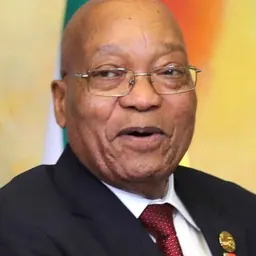


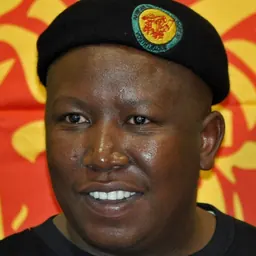

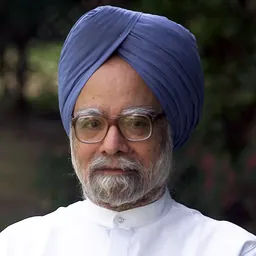

Related people
Same field, nearest in time





Contemporaries
People whose lives overlapped Kgalema Motlanthe's

Frequently asked questions
Who is Kgalema Motlanthe?
President of South Africa, Deputy President of the ruling African National Congress (ANC) and Secretary-General of the African National Congress
When was Kgalema Motlanthe born?
Kgalema Motlanthe was born on 19 July 1949 in Johannesburg.
What is Kgalema Motlanthe's occupation?
Kgalema Motlanthe is a politician and minister.
What nationality is Kgalema Motlanthe?
Kgalema Motlanthe is South African.
Sources & further reading
· Wikipedia: Kgalema Motlanthe
Cite this page
APA: Biography.guide. (2026). Kgalema Motlanthe. https://biography.guide/kgalema-motlanthe/
MLA: "Kgalema Motlanthe." Biography.guide, https://biography.guide/kgalema-motlanthe/.
Chicago: "Kgalema Motlanthe." Biography.guide. https://biography.guide/kgalema-motlanthe/.
Data last updated: 2026-09-20 · Spot an error? Report a correction.
Page generated 2026-09-27 05:09 UTC