
About Kevin Phillips
Lived 1940 – 2023 (aged 82). Kevin Phillips was an American journalist, writer and opinion journalist.
Kevin Price Phillips (November 30, 1940 – October 9, 2023) was an American writer and commentator on politics, economics, and history. He emerged as a Republican Party strategist who helped devise its Southern Strategy in the 1960s. Phillips became disaffected with the party by the 1990s, subsequently leaving it to become an independent and staunch critic of the Republicans. He was a regular contributor to the Los Angeles Times, Harper's Magazine, and National Public Radio, and was a political analyst on PBS's NOW with Bill Moyers.
Early life Phillips was born in Manhattan in 1940, and grew up in the Bronx, raised by a family of Irish, Scottish, and English descent. He was drawn to the Republican Party from an early age, supporting Dwight D. Eisenhower for president in 1952 and 1956. He attended the Bronx High School of Science before earning a bachelor's degree in political science from Colgate University in 1961 and a juris doctor from Harvard Law School in 1964. He also studied abroad at the University of Edinburgh from 1959 to 1960.
The book however was not used in the campaign itself, Phillips notes in the preface to the Princeton Edition,
Some observers concluded that The Emerging Republican Majority was the emerging Republican strategy. Newsweek labelled the book "The political bible of the Nixon Era." Not quite. The book was not a blueprint of the GOP's "Southern Strategy" as some claimed. ... Richard Nixon had read memos based on the book's analyses during the week before the November 1968 election, but in mid-1969 he truthfully said he had not read the actual book. He read it a few months later.
His predictions regarding shifting voting patterns in presidential elections proved accurate, though they did not extend "downballot" to Congressional elections until the Republican revolution of 1994.
Political commentary Phillips briefly worked in the Department of Justice during the Nixon administration, but later left to embark on a career as an author and commentator. states the book's theme is that the Republican Party (GOP), religious fundamentalism, petroleum, and borrowed money are an "Unholy Alliance."
The last chapter, in a nod to his first major work, is titled "The Erring Republican Majority". American Theocracy, "presents a nightmarish vision of ideological extremism, catastrophic fiscal irresponsibility, rampant greed and dangerous shortsightedness." The New York Times wrote:He identifies three broad and related trends — none of them new to the Bush years but all of them, he believes, exacerbated by this administration's policies — that together threaten the future of the United States and the world. One is the role of oil in defining and, as Phillips sees it, distorting American foreign and domestic policy. The second is the ominous intrusion of radical Christianity into politics and government. And the third is the astonishing levels of debt — current and prospective — that both the government and the American people have been heedlessly accumulating. If there is a single, if implicit, theme running through the three linked essays that form this book, it is the failure of leaders to look beyond their own and the country's immediate ambitions and desires so as to plan prudently for a darkening future.
Phillips uses the term financialization to describe how the U.S. economy has been radically restructured from a focus on production, manufacturing and wages, to a focus on speculation, debt, and profits. Since the 1980s, Phillips argues in American Theocracy,the underlying Washington strategy… was less to give ordinary Americans direct sums than to create a low-interest-rate boom in real estate, thereby raising the percentage of American home ownership, ballooning the prices of homes, and allowing householders to take out some of that increase through low-cost refinancing. This triple play created new wealth to take the place of that destroyed in the 2000-2002 stock-market crash and simultaneously raised consumer confidence.
Nothing similar had ever been engineered before. Instead of a recovery orchestrated by Congress and the White House and aimed at the middle- and bottom-income segments, this one was directed by an appointed central banker, a man whose principal responsibility was to the banking system. His relief, targeted on financial assets and real estate, was principally achieved by monetary stimulus. This in itself confirmed the massive realignment of preferences and priorities within the American system….
Likewise, huge and indisputable but almost never discussed, were the powerful political economics lurking behind the stimulus: the massive rate-cut-driven post-2000 bailout of the FIRE (finance, insurance, and real estate) sector, with its ever-climbing share of GDP and proximity to power. No longer would Washington concentrate stimulus on wages or public-works employment. The Fed's policies, however shrewd, were not rooted in an abstraction of the national interest but in pursuit of its statutory mandate to protect the U.S. banking and payments system, now inseparable from the broadly defined financial services sector.
Critical reception American Theocracy was reviewed widely. The New York Times Book Review wrote "It is not without polemic, but unlike many of the more glib and strident political commentaries of recent years, it is extensively researched and frighteningly persuasive..."
The Chicago Sun-Times wrote "Overall, Phillips' book is a thoughtful and somber jeremiad, written throughout with a graceful wryness... a capstone to his life's work."
Bad Money (2008) Phillips examines America's great shift from manufacturing to financial services. He also discusses America's petroleum policies and the tying of the dollar to the price of oil. Phillips suggests that the Euro and the Chinese Yuan/Renminbi are favourites to take the dollar's place in countries hostile towards America, such as Iran. He then tackles the lack of regulatory oversight employed in the housing market and how the housing boom was allowed to run free under Alan Greenspan. The book concludes with the proposal that America is employing bad capitalism and extends Gresham's law of currency to suggest that their good capitalism will be driven out by the bad.
Personal life and death In 1968, Phillips married Martha Henderson. A resident of Naples, Florida, he died from complications of Alzheimer's disease at a hospice facility near his home on October 9, 2023, at the age of 82.
Publications
The Emerging Republican Majority (1969) Mediacracy: American Parties and Politics in the Communications Age (1974) Electoral Reform and Voter Participation (with Paul H. Blackman, 1975) Post-Conservative America: People, Politics, and Ideology in a Time of Crisis (1982) Staying on Top: The Business Case for a National Industrial Strategy (1984) The Politics of Rich and Poor: Wealth and Electorate in the Reagan Aftermath (1990) Boiling Point: Democrats, Republicans, and the Decline of Middle Class Prosperity (1993) Arrogant Capital: Washington, Wall Street and the Frustration of American Politics (1994) The Cousins' Wars: Religion, Politics and the Triumph of Anglo-America (1999) Wealth and Democracy: A Political History of the American Rich (2002) William McKinley (The American Presidents Series: The 25th President, 1897-1901) (2003) American Dynasty: Aristocracy, Fortune, and the Politics of Deceit in the House of Bush (2004) American Theocracy: The Peril and Politics of Radical Religion, Oil, and Borrowed Money in the 21st Century (2006) Bad Money: Reckless Finance, Failed Politics, and the Global Crisis of American Capitalism (2008) After the Fall: The Inexcusable Failure of American Finance: An Update to Bad Money (2009) 1775: A Good Year for Revolution (2012)
Don’t just read it —
keep it.
Full-length biographies made to live with: read them, listen on the way to work, watch them tonight.
- E-book
- Audio
- Video
Instant download · yours to keep · every purchase keeps this site free
Important facts
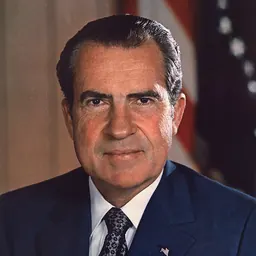
People in Kevin Phillips's life
Named in this biography and alive at the same time




Related people
Same field, nearest in time





Contemporaries
People whose lives overlapped Kevin Phillips's



Frequently asked questions
Who was Kevin Phillips?
American political commentator (1940–2023)
When was Kevin Phillips born?
Kevin Phillips was born on 30 November 1940 in Manhattan.
When did Kevin Phillips die?
Kevin Phillips died on 9 October 2023 in Naples.
What was Kevin Phillips's occupation?
Kevin Phillips was a journalist, writer and opinion journalist.
What nationality was Kevin Phillips?
Kevin Phillips was American.
Sources & further reading
· DBpedia: Kevin Phillips (political commentator)
Cite this page
APA: Biography.guide. (2026). Kevin Phillips. https://biography.guide/kevin-phillips-journalist/
MLA: "Kevin Phillips." Biography.guide, https://biography.guide/kevin-phillips-journalist/.
Chicago: "Kevin Phillips." Biography.guide. https://biography.guide/kevin-phillips-journalist/.
Data last updated: 2026-09-22 · Spot an error? Report a correction.
Page generated 2026-09-27 05:11 UTC