
Kerry James Marshall
American painter and professor (born 1955)
About Kerry James Marshall
Born 1955. Kerry James Marshall is an American painter, draftsperson and collagist.
Kerry James Marshall (born October 17, 1955) is an American artist and professor, known for his paintings of Black figures. He previously taught painting at the School of Art and Design at the University of Illinois at Chicago. In 2017, Marshall was included on the annual Time 100 list of the most influential people in the world. He was born and raised in Birmingham, Alabama, and moved in childhood to South Central Los Angeles. He has spent much of his career in Chicago, Illinois.
A retrospective exhibition of his work, Kerry James Marshall: Mastry, was assembled by the Museum of Contemporary Art, Chicago in 2016.
Early life and education Marshall was born October 17, 1955, in Birmingham, Alabama, United States.
The subject matter of his paintings, installations, and public projects is drawn from African-American culture and is rooted in the geography of his upbringing. In 1963, he moved with his family to the Nickerson Gardens public housing project in the Watts district of Los Angeles, just a few years before the race riots began.
Education In high school, Marshall began figure drawing under the mentorship of social realist painter Charles White, which continued on into Marshall's college career. He stated that during the years of his training, White "became as much as a friend as a mentor; I kept in touch with his family, even after his death." While studying at Otis College of Art and Design in Los Angeles, Marshall worked to "not have a representational image or a specific story to tell" over abstraction. Marshall earned a B.F.A. degree in 1978 from Otis College of Art and Design.
Career In 1992, art dealer Jack Shainman approached Marshall after seeing his exhibition at the Chicago Cultural Center. He spent a year persuading Marshall to mount a show in SoHo. Although the exhibition did not receive the level of attention Shainman had expected—resulting in the sale of only three paintings at $7,000 each—he continued to place Marshall’s work in a range of venues, including museums. This sustained exposure led to significant critical recognition, and in 2018 Marshall’s painting Past Times sold for $21.1 million at Sotheby’s.
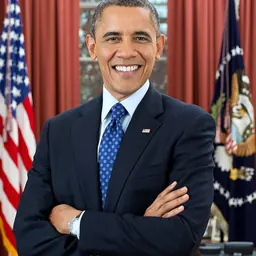
Marshall was awarded a MacArthur Fellowship in 1997. In 2013, he was named for the Committee on the Arts and the Humanities by President Barack Obama, one of seven new appointees chosen.
Conceptual artist Hank Willis Thomas has said that Marshall was a big influence on him and his practice.
Work influence, social views and themes
Marshall's childhood time spent in the Watts neighborhood of Los Angeles, California, where the Black Power and Civil Rights movements happened, had a significant impact on his paintings. Strongly influenced by his experiences as a young man, he developed a signature style during his early years as an artist that involved the use of extremely dark, essentially black figures. These images represent his perspective of African Americans, specifically black men with separate and distinct inner and outer appearances. At the same time, they confront racial stereotypes within contemporary American society. This common theme appeared continuously in his work throughout the subsequent decades, especially in the 1980s and 1990s, and still appears in his most recent works. Marshall is known for large-scale paintings, sculptures, and other objects that take African-American life and history as their subject matter. In a 1998 interview with Bomb Magazine, Marshall observed:"Black people occupy a space, even mundane spaces, in the most fascinating ways. Style is such an integral part of what black people do that just walking is not a simple thing. You've got to walk with style. You've got to talk with a certain rhythm; you've got to do things with some flair. And so in the paintings I try to enact that same tendency toward the theatrical that seems to be so integral a part of the black cultural body." Marshall believes that the gears of historical and institutional power in Western art resided primarily in painting. When he studied at Otis, he was fascinated by the work of Bill Traylor, the self-taught artist who was born into enslavement in Alabama, which inspired Marshall to create more artwork relating to depiction of "a kind of old-timey, grinning racial trope". His artworks are identity-based; specifically, he made black aesthetics visible and brought the black aesthetic into the fold of the grand narrative of art. In his own words, he uses blackness to amplify the difference as an oppositional force, both aesthetically and philosophically. One such "black" issue Marshall takes up is that of beauty. He stated that since most figures in advertising are white, he wanted to produce images of black bodies to "offset the impression that beauty is synonymous with whiteness" "Black is beautiful" was one of the Black Arts movement's slogans to counter the prevailing view that blackness was inherently unattractive. Marshall directly appropriates the slogan in some of his works by utilizing language. Marshall is best known for his richly designed large acrylic paintings on unstretched canvas. His works combined rough-hewn realism with elements of collage, signage, with lively and highly patterned settings. His images often suggest populist banners. Viewers often will see ornate texts and figures looking directly into them. Some of his works often are under-represented black middle class and many employ pictorial strategies. His artworks are closely related to the Black Arts movement. Through exploring the theme of being black in America, Marshall's work also explores race in context with the "Civil Rights Movement, Black Power Movement, housing projects, black beauty, and the political and social invisibility of blacks". Marshall's work was heavily influenced by his upbringing in Alabama in the 1950s and Los Angeles in the 1960s. His works were always based on the experience of being black in America during these time periods.
Marshall created comic strips, such as Rhythm Mastr, a story of an African-American teenager who gained superpowers through African sculptures using drum patterns. Specifically, the powers are derived from the seven gods that make up the Yoruba pantheon. Marshall was concerned with the lack of African-American heroes kids could look up to while growing up. When questioned about the presence of Marvel's Black Panther as a Black comic book hero, Marshall retorted with the fact that he was still created by white writers and therefore not representative of black culture. Other comics included P-Van, which was inspired by some guys who would sit in a Van outside Marshall's studio and just "hang out", while the Lost Boys series examines young black men "lost in the ghetto, lost in public housing, lost in joblessness, and lost in literacy." Marshall's work is dynamic and consistently relevant, especially to the problem of finding an identity.
Marshall reflected: "Under Charles White's influence I always knew that I wanted to make work that was about something: history, culture, politics, social issues. … It was just a matter of mastering the skills to actually do it."
Work
Portrait of the Artist as a Shadow of His Former Self (1980) The painting Portrait of the Artist as a Shadow of His Former Self (1980) was a departure for Marshall, and was the first painting he made of a Black figure. Prior to this work, Marshall was working in collage. It was created primarily in shades of black and depicts the bust of a black man with a large white smile and gapped teeth.
Voyager (1992)
Marshall based several of his pieces in the early 1990s on actual events in American history. One such painting,Voyager, painted in 1992, has special pertinence in a discussion of race issues in the United States because Marshall based it on a "luxury schooner ... secretly outfitted to carry African slaves".
As Marshall admits, he himself "had not considered that a black woman could be considered a goddess of love and beauty," but with this painting he proves its possibility. In an attempt to reconcile the African art and Western ideals, Marshall places both in his painting. Thus he highlights the search for a black identity that involves all aspects of their ancestral history and their current situation. Although African Americans may feel connected to two differing cultures, Marshall's painting of a classically Western figure represented with a new black aesthetic brings the two together, showing that they can live in harmony.
The Lost Boys series (1993–1995) One of his most famous series of works The Lost Boys (1993–1995) displays the lives of and issues many African Americans faced. The series of portraits was of young African-American boys from the shoulder up, with very dark skin tones, which contrasted with extreme whiteness of the subject's eyes which was common in Marshall's works. The portraits also featured almost completely white imagery, with white orbs, flowers, and areas in the background to create even more contrast. The artist explained that this series of portraits was to show these young boys loss of innocence at an early age and being a victim to ghettos and public housing. They epitomize the impoverished black man living in public housing and unlike the landscape that surrounds them, they are not cheerful. One stares condemningly at the viewer, while the other two avert their gaze, all devoid of happiness. The buildings they live in appear as cardboard backdrops, calling attention to the falsity of the situation. Truth is not found in the beautiful utopianism of the scenery or flowers, but rather in the artificiality of the buildings and the stereotypical, damning images of the men who live in them.
Souvenir series The Souvenir series chronicles the loss dealt to American society from the deaths of leaders in politics, literature, arts, and music. Souvenir III, finished in 1998, centers on the angel that arbitrates the present with the past. She is an angel of annunciation and the caretaker of the living room's arrangements.
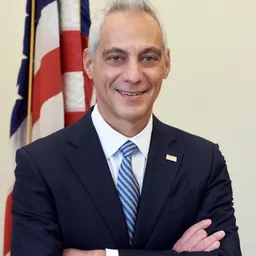
In 2018, two of Marshall's large-scale works came to public attention in a clash between public art, and commerce. In May, Past Times (1997) was sold by Chicago's Metropolitan Pier and Exposition Authority to Sean Combs for a $21 million funding windfall to the public agency, after hanging in McCormick Place for many years. Past Times had played an important role during its loan to the 2016 museum exhibition. In October, Chicago Mayor Rahm Emanuel announced plans to upgrade the Legler Branch of the Chicago Public Library on the West Side. The upgrade would be financed by the auction of the library's Knowledge and Wonder (1995). After criticism, including from Marshall, the Mayor cancelled the auction.
In 2021, Marshall was selected by Washington National Cathedral through its Racial Justice Windows Project to create two new stained glass windows. These replace earlier windows dating from 1953, which honored Confederate generals Robert E. Lee and Thomas "Stonewall" Jackson; the cathedral deconsecrated and removed those windows in 2017. Marshall's new windows, titled "Now and Forever", are the artist's first work in the medium of stained glass. They were revealed and dedicated publicly at the cathedral on September 23, 2023.
Exhibitions Marshall has staged several solo shows and exhibitions at museums and galleries in the United States and internationally. His solo shows include Kerry James Marshall, Telling Stories: Selected Paintings (1994–1995), originating at the Museum of Contemporary Art Cleveland; Kerry James Marshall: Mementos (1998–2000), originating at the Renaissance Society, Chicago; Along the Way (2005–2006), originating at Camden Arts Centre, London; Kerry James Marshall: In the Tower (2013), National Gallery of Art, Washington, D.C.; and Kerry James Marshall: Mastry (2016–2017), originating at the Museum of Contemporary Art, Chicago (also exhibited at the Metropolitan Museum of Art).
His work has also been exhibited in numerous group exhibitions, including documenta X (1997); the 50th Venice Biennale (2003); documenta 12 (2007); and Afro-Atlantic Histories (2022).
From 20 September 2025 - 18 January 2026, the Royal Academy of Arts presented Kerry James Marshall: The Histories, an exhibition of over 70 of Marshall’s works. It is “the largest survey of Marshall’s work ever presented in Europe; ” the exhibition was curated by the Royal Academy of Arts, London in collaboration with the Kunsthaus Zurich and the Musée d'Art Moderne, Paris. An exhibition catalog accompanied the exhibit.
Notable works in public collections
Silence is Golden (1986), Studio Museum in Harlem, New York When Frustration Threatens Desire (1990), Glenstone, Potomac, Maryland De Style (1993), Los Angeles County Museum of Art The Lost Boys (A.K.A. Untitled) (1993), Seattle Art Museum Better Homes, Better Gardens (1994), Denver Art Museum Great American (1994), National Gallery of Art, Washington, D.C. Many Mansions (1994), Art Institute of Chicago Supermodel (1994), Museum of Fine Arts, Boston Our Town (1995), Crystal Bridges Museum of American Art, Bentonville, Arkansas Watts 1963 (1995), Saint Louis Art Museum Souvenir II (1997), Addison Gallery of American Art, Andover, Massachusetts Souvenir III (1998), San Francisco Museum of Modern Art Souvenir IV (1998), Whitney Museum, New York Untitled (1998-1999), Rubell Museum, Miami Heirlooms & Accessories (2002), Studio Museum in Harlem, New York 7am Sunday Morning (2003), Museum of Contemporary Art, Chicago Africa Restored (Cheryl as Cleopatra) (2003), Art Institute of Chicago Diptych Color Blind Test (2003), Denver Art Museum Gulf Stream (2003), Walker Art Center, Minneapolis SOB, SOB (2003), Smithsonian American Art Museum, Smithsonian Institution, Washington, D.C. Black Painting (2003-2006), Glenstone, Potomac, Maryland Untitled (2008), Harvard Art Museums, Cambridge, Massachusetts Untitled (Bride of Frankenstein) (2010), Fine Arts Museums of San Francisco; Los Angeles County Museum of Art; Museum of Modern Art, New York; and Pennsylvania Academy of the Fine Arts, Philadelphia Untitled (Frankenstein) (2010), Fine Arts Museums of San Francisco; Los Angeles County Museum of Art; Museum of Modern Art, New York; and Pennsylvania Academy of the Fine Arts, Philadelphia Untitled (Handsome Young Man) (2010), Minneapolis Institute of Art Vignette (Wishing Well) (2010), Carnegie Museum of Art, Pittsburgh; Museum of Fine Arts, Houston; Pennsylvania Academy of the Fine Arts, Philadelphia; and Walker Art Center, Minneapolis Untitled (Club Scene) (2013), Museum of Modern Art, New York Untitled (Orange Pants) (2014), The Broad, Los Angeles Untitled (Studio) (2014), Metropolitan Museum of Art, New York Untitled (policeman) (2015), Museum of Modern Art, New York Untitled (Gallery) (2016), Carnegie Museum of Art, Pittsburgh Untitled (2017), The Broad, Los Angeles Untitled (London Bridge) (2017), Tate, London Untitled (Underpainting) (2018), Glenstone, Potomac, Maryland
Personal life He is married to playwright, director, and actress Cheryl Lynn Bruce. In 1987, Marshall followed Bruce in moving to her hometown on Chicago's South Side, where they were married in 1989 at the South Side Community Art Center. His stepdaughter is United States Representative Sydney Kamlager-Dove.
Awards and honors
1997 – MacArthur Fellowship, MacArthur Foundation 1999 – Honorary doctorate, Otis College of Art and Design, Los Angeles, California 2022 – Elected Honorary Royal Academician (HonRA) on 13 December 2022
Filmography
Film
Television
Don’t just read it —
keep it.
Full-length biographies made to live with: read them, listen on the way to work, watch them tonight.
- E-book
- Audio
- Video
Instant download · yours to keep · every purchase keeps this site free
Important facts
People in Kerry James Marshall's life
Named in this biography and alive at the same time






Related people
Same field, nearest in time

Contemporaries
People whose lives overlapped Kerry James Marshall's


Frequently asked questions
Who is Kerry James Marshall?
American painter and professor (born 1955)
When was Kerry James Marshall born?
Kerry James Marshall was born on 17 October 1955 in Birmingham.
What is Kerry James Marshall's occupation?
Kerry James Marshall is a painter, draftsperson and collagist.
What nationality is Kerry James Marshall?
Kerry James Marshall is American.
Sources & further reading
· Wikipedia: Kerry James Marshall
· DBpedia: Kerry James Marshall
Cite this page
APA: Biography.guide. (2026). Kerry James Marshall. https://biography.guide/kerry-james-marshall/
MLA: "Kerry James Marshall." Biography.guide, https://biography.guide/kerry-james-marshall/.
Chicago: "Kerry James Marshall." Biography.guide. https://biography.guide/kerry-james-marshall/.
Data last updated: 2026-09-22 · Spot an error? Report a correction.
Page generated 2026-09-27 05:00 UTC