
About Kenta Kobashi
Born 1967. Kenta Kobashi is a Japanese professional wrestler, judoka and rugby union player.
Early life was born in Fukuchiyama in Kyoto Prefecture on March 27, 1967. He was raised predominantly in a single-parent household with him, his three-years-older brother Eiji, and his mother Miyako, after his parents had separated and later divorced. He competed in baseball in his youth, and was part of the Atsumi Fighters team. It was when he was 10 years old that he saw his first professional wrestling match with his brother Eiji, which was at an All Japan Pro Wrestling show. The match featured the then-rising star Jumbo Tsuruta versus Mexican luchador enmascarado Mil Mascaras at the Denen Coliseum in August 1977, shown on the pro wrestling block on NTV. To practice for pro wrestling, Eiji and Kenta constructed a custom-made can replica of the NWA World's Heavyweight Championship belt to use for their exhibition "title" matches.
Kobashi joined a Judo club in junior high school, and he, in his senior year, placed third in the qualifying round at nationals, having been outweighed by his opponent in the semifinals by 50 kg (110 lbs). He also had practice in rugby union, but did not have any placements in competitions with the sport. He attended a New Japan Pro Wrestling (NJPW) show at this time, of which he was, according to Kobashi himself, hit with Stan Hansen's bull rope. After graduation, in 1986, he took a job as a Kyocera General Affairs worker, working in plants in Kyoto City and Kagoshima. After being inspired by a magazine article featuring a young Mike Tyson, he quit his job the next year, and he sent his resume to the AJPW offices, which was rejected. After being in contact with International Wrestling Enterprise referee Mitsuo Endo, he was set up to do an interview at the Shiga Prefectural Gymnasium in Otsu on May 26, which happened to be with Shohei "Giant" Baba, the founder and then-head booker and chief executive officer of AJPW. After Baba declined to have an interview and instead prompted Kobashi to wait and relocate to Tokyo, Kobashi was accepted to their dojo on June 20, 1987. He was trained there by Baba, as well as Funk brother Dory Funk Jr., "Magic Dragon" Haru Sonoda and Baba-protégé Masanobu Fuchi. Sonoda died on South African Airways Flight 295 on November 28, and after having an argument with Baba, was sworn under pressure to be trained exclusively for a time by Fuchi. On December 10, at the Nippon Budokan, Kobashi appeared before the fans and announced that he would return "without fail". On September 8, 2007, news broke that Kobashi would make his return on the December 2, 2007 Budokan Hall event where he would team up with Yoshihiro Takayama to face Akiyama and Misawa. On the card, Misawa would pin Kobashi with an top-rope Emerald Flowsion, but the fans still gave Kobashi a rousing ovation.
During the 2008 Global Tag League tournament finals in April 2008, he, KENTA and Honda defeated Takayama, Shiozaki and Takuma Sano in a six-man tag team match. On June 14, Kobashi and KENTA would face their respective rivals, Kensuke Sasaki and Katsuhiko Nakajima, during the Great Voyage 2008 In Yokohama; the match resulted in a thirty-minute time limit draw, with Nakajima and KENTA brawling after the match. On June 22, Kobashi took part in the European Navigation tour, competing at a wXw crossed-over program. Teaming with Shiozaki, he faced "Bad Bones" John Klinger and Big Van Walter, later widely known as Gunther, in a successful effort. He made his return to Kensuke Office on August 17, competing in an Eight-Man Tag Team Survival Match. He teamed with Pro Wrestling Noah younger talents KENTA, Atsushi Aoki and Akihiko Ito, losing to Nakajima, Sasaki, Kento Miyahara and Takashi Okita. Kobashi lasted for nearly forty minutes in the match overall, and ended when Nakajima pinned KENTA after hitting a Death Roll kick whilst Sasaki was holding Kobashi in the outside of the ring, preventing him from saving the match after a thirty-five minute period.
Double-arm surgery, final years & retirement In September 2008, Kobashi underwent emergency surgery on both of his arms. The surgery was successful, and Kobashi was expected to make a full recovery. Kobashi was expected to be out of action for up to a year, but he would return to the ring less than six months later. Doctors had advised he discontinue the usage of the machine-gun knife-edged chops that he'd perform in his matches due to a risk of furthering ulnar nerve paralysis, but he refused. Prior to returning to the ring, Kobashi stated that he wanted to start in opening matches, and rebuild himself to be a main event player. Kobashi made his return to wrestling on March 1, 2009, at Nippon Budokan, defeating Masao Inoue in the opening match of the card with the Burning Lariat. Kobashi won the GHC Openweight Hardcore Championship, his final championship, from Makoto Hashi on June 8 in Hachiōji during Noah's Southern Navigation tour.
Mitsuharu Misawa died on June 13, 2009, in a show in Hiroshima, leaving Akira Taue to fill the role as head of Noah's booking team and presidency. On August 30, 2009, Kobashi returned to All Japan Pro Wrestling for one night only, competing in his first match for the company in nine years. Kobashi teamed with Akihiko Ito and fellow AJPW alumnus Tsuyoshi Kikuchi in a losing effort to then-current AJPW stars and representatives Satoshi Kojima, KAI and Hiroshi Yamato at Pro Wrestling Love in Ryogoku, Volume 8. On December 23, 2009, Kobashi was seriously injured in a three-way match against Honda and Kikuchi. He was sidelined for 19 months with nerve damage in his right arm, mainly from the usage of his knife-edged chops. Kobashi declined the advice to stop using the move, and continued using the move until he retired. Kobashi made his return on July 23, 2011, teaming with Go Shiozaki in a tag team match, where they were defeated by Akitoshi Saito and Jun Akiyama. On August 27, 2011, he debuted his new temporary charity ring gear, mixing his later-stage black and early-stage orange at the inaugural All Together show at Nippon Budokan, teaming up with Keiji Muto to defeat Chaos members Takashi Iizuka and Toru Yano. On October 6, it was announced by Noah that Kobashi had stepped down from his position as an Executive Vice President of the promotion.
On December 3, 2012, Noah confirmed that they had released the now-45 year old Kobashi from his contract, which had been decreased to exclusive in-ring competition. The news sparked shockwaves in Japan, as Atsushi Aoki, Shiozaki, Akiyama, Kotaro Suzuki, and Yoshinobu Kanemaru spoke out, declaring their intent of not re-signing with Noah after their contracts expire in January, out of loyalty to Kobashi. On December 9, Kobashi attended Noah's Ryōgoku Kokugikan event and, during an in-ring interview, he revealed that he was planned to retire in a Noah ring in 2013. Noah and Kobashi seemingly came to an agreement to let him retire as opposed to forcing him to leave the promotion. Despite this change in plans, Noah confirmed on December 19 that Akiyama, Shiozaki, Suzuki, Kanemaru and Aoki all would be leaving the promotion after December 24. On January 23, 2013, Kobashi announced that his retirement match would take place on at the Nippon Budokan. Kobashi's retirement event, Final Burning in Budokan took place on May 11. His retirement ceremony was held after the second match on the show and was attended by former Japanese Prime Minister Yoshihiko Noda, legendary NTV announcers Akira Fukuzawa and Kazuo Tokumitsu, former colleagues Akira Taue, Hiroshi Hase, Masahiro Chono, Mitsuo Momota, Toshiaki Kawada, and Stan Hansen (the latter via video message), along with many others. In the main event, Kobashi teamed with Jun Akiyama, Keiji Muto, and Kensuke Sasaki in an eight-man tag team match, where they defeated Kobashi's Noah and All Japan-affiliated protégés: Shiozaki, KENTA, Maybach Taniguchi, and Kanemaru. In the match, Kobashi pinned Kanemaru with a moonsault for the final win of his career. The event at Nippon Budokan was attended by 17,000 fans and aired live across Japan on the television network BS Sky! and in movie theaters.
Post-retirement (2013–present) On March 17, 2013, Kobashi made an appearance for All Japan Pro Wrestling to promote his retirement match. Before the main event, Hiroshi Hase announced that he would be resigning as Pacific Wrestling Federation (PWF) chairman to focus on the National Diet and that Kobashi would be replacing him, after his retirement on May 11. On September 8, Kobashi appeared as a color commentator at All Japan splinter promotion Wrestle-1's inaugural event. On October 27, it was confirmed that Kobashi would not be joining All Japan after all, when Dory Funk Jr. was announced as the new PWF chairman.
On February 14, 2014, Kobashi announced that starting June 8, he would begin producing his own independent events under the brand "Fortune Dream". The inaugural event featured wrestlers from various promotions, including All Japan Pro Wrestling, Big Japan Pro Wrestling, Kaientai Dojo, Pro Wrestling Zero1 and Wrestling New Classic.
On May 10, 2015, Kobashi returned to Noah to serve as a "special witness" for a GHC Heavyweight Championship match between champion Minoru Suzuki and challenger Naomichi Marufuji. Kobashi's role included making sure that the Suzuki-gun stable did not interfere in the match.
In September 2023, he made an appearance for DDT Pro Wrestling's Shinkansen specialty match between Minoru Suzuki and Sanshiro Takagi. Notably, during the appearance, he did a gyaku-suihei chop (knife-edged chop) on Suzuki, who also won the match later on. He assumed the role of a ticket checker on the Shinkansen train. Other wrestlers who appeared in the match included the now-DDT signed Jun Akiyama, Kazunari Murakami and Hikaru Sato.
Professional wrestling style and persona Kobashi is known by the moniker in terms of his wrestling ability for popularizing and/or innovating several wrestling moves throughout his career. Among those moves include:
the moonsault, which was used predominantly as his finishing move until 1996 the double under-hooked DDT (which would later be used and modified by the likes of Jon Moxley, Mick Foley, Drew McIntyre and Crash Holly) the Burning Hammer and its wrist-clutch variant (which would later be adopted into a signature maneuver by the likes of AJ Styles, Michael Elgin and Dan Maff in tribute to Kobashi) the Machine Gun Chops, multiple knife-edged chops to an opponent from the ropes or turnbuckles (which would later be replicated by wrestlers such as Eddie Kingston and, most notably, Satoshi Kojima) the Orange Crush, a suplex that had transitioned into a sit-out powerbomb (notably modified by El Generico)
Kobashi is known to have not gone any time in his career being a heel. With his noted work as a determined, belligerent wrestler, it made him more likeable with the crowd, especially at the early stages of his career. Showing that he'd never give up in his career, Kobashi's presence in the ring was always noted for his determination to endure and deal damage, as seen evidently in his championship matches against his fellow Four Heavenly Kings: Misawa, Kawada and Taue.
Personal life Kobashi was known in the locker room to be friendly and unreserved for conversations with his fellow peers. Notably, in the AJPW dojo, he got along with Mitsuharu Misawa's daughter Kaede, playing with her whilst her father trained. Kobashi and Misawa have been described as brothers, notably with Misawa seeing himself as Kobashi's , or elder brother.
Kobashi married his girlfriend of 14 years, singer Mizuki (née Mai), on October 2, 2010. In August 2015, Mai gave birth to the couple's first child, a daughter.
Legacy Kobashi has the fifth-most 5-star matches (as rated by the Wrestling Observer Newsletter) with 23. In 2002, he was inducted by Dave Meltzer into the Wrestling Observer Newsletter Hall of Fame as the third inductee of the 2002 class and the 148th inductee overall, for his accomplishments in AJPW and Noah. For his last match on May 11, 2013, he was presented a replica of the GHC Heavyweight Championship belt as a farewell gift by the Noah staff and wrestlers. Del "The Patriot" Wilkes considered him as the greatest wrestler of all time, and Eddie Kingston labeled him a "perfect wrestler". Kobashi has stated that he was "happy" knowing that Gunther, also known as Walter, was influenced by him.
Championships and accomplishments All Japan Pro Wrestling All Asia Tag Team Championship (4 times) – with Tiger Mask II (1), Johnny Ace (2), and Tsuyoshi Kikuchi (1) Triple Crown Heavyweight Championship (3 times) One Night Six Man Tag Team Tournament (1999) – with Jun Akiyama and Kentaro Shiga World's Strongest Tag Determination League (1993–1995) – with Mitsuharu Misawa World's Strongest Tag Determination League (1998, 1999) – with Jun Akiyama World's Strongest Tag Determination League Fresh Award (1991) – with Tsuyoshi Kikuchi International Professional Wrestling Hall of Fame Class of 2023 Nikkan Sports Match of the Year (1997) vs. Mitsuharu Misawa on October 21 Match of the Year (1998) vs. Mitsuharu Misawa on October 31 Match of the Year (2003) vs. Mitsuharu Misawa on March 1 Match of the Year (2004) vs. Jun Akiyama on July 10 Match of the Year (2005) vs. Kensuke Sasaki on July 18 Match of the Year (2007) with Yoshihiro Takayama vs. Mitsuharu Misawa and Jun Akiyama on December 2 Outstanding Performance Award (1996) Fighting Spirit Award (1997, 2007, 2008) Wrestler of the Year (1996, 1998, 2004, 2005) Ranked No. 6 of the top 100 tag teams of the "PWI Years" with Mitsuharu Misawa in 2003 Pro Wrestling Noah GHC Heavyweight Championship (1 time) Lifetime Achievement Award (2013) Match of the Year (1995) with Mitsuharu Misawa vs. Akira Taue and Toshiaki Kawada on June 9, 1995 Rookie of the Year (1989) Tag Team of the Year (1993, 1994) with Mitsuharu Misawa Wrestling Observer Newsletter Best Box Office Draw (2004, 2005) Best Wrestling Maneuver (1998) Burning Hammer Match of the Year (1992) with Tsuyoshi Kikuchi vs. Doug Furnas and Phil Lafon on May 25 Match of the Year (1998) vs. Mitsuharu Misawa on October 31 Match of the Year (1999) vs Mitsuharu Misawa on June 11 Match of the Year (2003) vs. Mitsuharu Misawa on March 1 Match of the Year (2004) vs. Jun Akiyama on July 10 Match of the Year (2005) vs. Samoa Joe on October 1 at Joe vs. Kobashi Most Improved Wrestler (1990) Most Outstanding Wrestler (1993, 1994) Tag Team of the Year (1995) with Mitsuharu Misawa Tag Team of the Year (1999) with Jun Akiyama Wrestler of the Year (1996, 2003–2005) Wrestling Observer Newsletter Hall of Fame (Class of 2002)
Don’t just read it —
keep it.
Full-length biographies made to live with: read them, listen on the way to work, watch them tonight.
- E-book
- Audio
- Video
Instant download · yours to keep · every purchase keeps this site free
Important facts
People in Kenta Kobashi's life
Named in this biography and alive at the same time



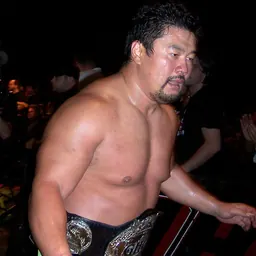


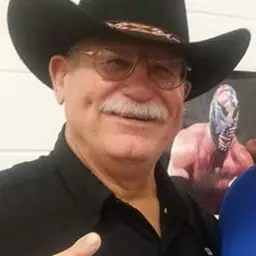
Related people
Same field, nearest in time

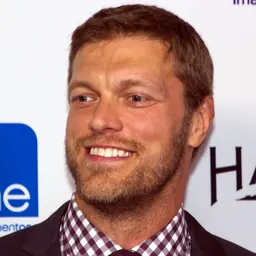
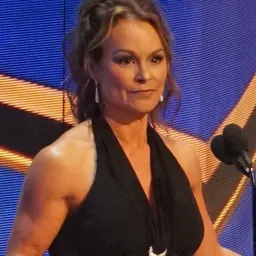
Contemporaries
People whose lives overlapped Kenta Kobashi's


Frequently asked questions
Who is Kenta Kobashi?
Japanese professional wrestler
When was Kenta Kobashi born?
Kenta Kobashi was born on 27 March 1967 in Fukuchiyama.
What is Kenta Kobashi's occupation?
Kenta Kobashi is a professional wrestler, judoka and rugby union player.
What nationality is Kenta Kobashi?
Kenta Kobashi is Japanese.
Sources & further reading
Cite this page
APA: Biography.guide. (2026). Kenta Kobashi. https://biography.guide/kenta-kobashi/
MLA: "Kenta Kobashi." Biography.guide, https://biography.guide/kenta-kobashi/.
Chicago: "Kenta Kobashi." Biography.guide. https://biography.guide/kenta-kobashi/.
Data last updated: 2026-09-20 · Spot an error? Report a correction.
Page generated 2026-09-27 05:18 UTC