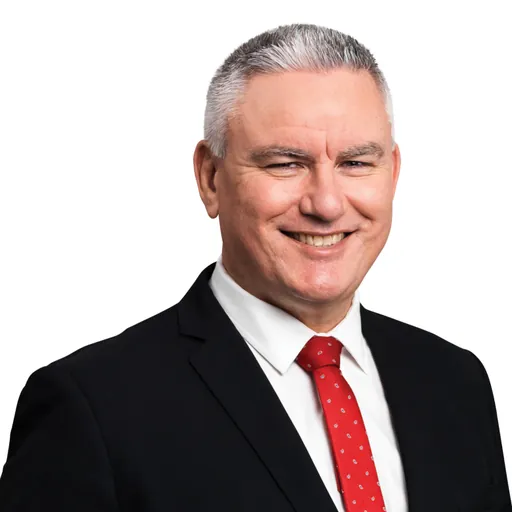
About Kelvin Davis
Born 1967. Kelvin Davis is a New Zealand politician and political candidate.
Kelvin Glen Davis (born 2 March 1967) is a New Zealand politician. He was a member of the House of Representatives, and was a senior minister in the Sixth Labour Government and the deputy leader of the New Zealand Labour Party from 2017 to 2023.
A former teacher, Davis was first elected as a list MP in 2008. He was not re-elected in 2011, but returned to Parliament as a list MP in May 2014 and went on to win the electorate of Te Tai Tokerau that September. He held the electorate for two further elections, but was defeated in the 2023 election. After briefly returning to Parliament as a list MP, Davis announced he would retire from politics on Waitangi Day, 6 February 2024.
During the Sixth Labour Government, Davis served as the Minister of Corrections, Minister for Children, Minister for Māori–Crown Relations, Minister of Tourism, and Associate Minister of Education (Māori Education).
Early life and career Born in Kawakawa on 2 March 1967, and raised at Karetu in the Bay of Islands, Davis affiliates to the Ngāpuhi iwi and the Ngāti Manu hapū. He is the third of four children to Glenys (née Clow) and Panapa Davis. While Davis' paternal grandparents were native speakers of te reo Māori, his father spoke only English and Davis did not begin learning Māori until secondary school. He attended Bay of Islands College in Kawakawa from 1980 to 1984 and went on to the Auckland College of Education (1985–1987), where he earned a diploma of teaching. He met his wife, Moira, at teachers' college; they have three children.
Member of Parliament
Early political career
In the 2008 general election Davis stood for the Labour Party in the Te Tai Tokerau seat after being recruited by Labour MP Shane Jones. Davis failed to unseat the incumbent Hone Harawira of the Māori Party, but was elected to the 49th New Zealand Parliament by way of the party list. The Fifth Labour Government was defeated in the election and, in his first term, Davis was assigned opposition portfolios as the Labour spokesperson for biosecurity and associate spokesperson for education, Māori affairs and tourism. He was a member of the Māori affairs committee. but Harawira retook the seat. Davis stood for the seat in the November 2011 general election, but placed second to Harawira for a third time and also failed to re-enter parliament from the party list. Davis announced his retirement from politics
Return to politics Davis was re-selected as Labour's candidate in Te Tai Tokerau for the September 2014 general election. He became Labour's associate spokesperson for corrections. This resulted in Davis getting endorsements from Winston Peters of New Zealand First party and prime minister John Key of the National Party. Even the candidate for the Māori Party, Te Hira Paenga, reminded voters of the importance of strategic voting. Davis won the seat, unseating Harawira and ending the representation of the Mana Party in Parliament. In the first year of the 51st Parliament, Davis was a member of the law and order committee. Thereafter he sat on the Māori affairs committee and was that committee's deputy chair in 2017. In 2015, he criticised private prison provider Serco's management of inmates, alleging 'corruption' at the Mount Eden remand facility. Following an inquiry, Serco lost its contract to run the facility and Minister of Corrections Sam Lotu-Iiga was relieved of his post. Davis also drew attention to the disproportionately high number of Māori in the New Zealand prison system, with Māori comprising 50.9% of the prison population despite making up just 15% of New Zealand's population.
A member's bill in Davis' name was drawn from the ballot and introduced to Parliament in November 2016. The Housing Corporation (Affordable Housing Development) Amendment Bill proposed an early version of Labour's KiwiBuild policy which would require the Minister of Housing to arrange for 10,000 houses to be built each year. The bill was defeated at its first reading in March 2017.
Becoming deputy leader On 1 August 2017, Davis was appointed deputy leader of the Labour Party, serving under Jacinda Ardern. Previously, Davis had led the Māori caucus within the Labour Party. On becoming deputy leader, Davis said his promotion would give a "sense of satisfaction" to Māori within the party and more generally. He was encouraged to accept the position by former Labour deputy leader Annette King and nominated by another former deputy, Grant Robertson. On 19 September, Davis indicated that he was willing to sacrifice his potential position as deputy prime minister in order for Labour to form a coalition government with either New Zealand First or the Green Party.
Minister in Sixth Labour Government
In the 2017 general election, Davis was re-elected in Te Tai Tokerau, defeating Mana Movement leader Harawira by 4,807 votes. Labour, New Zealand First and the Green Party formed a coalition government in which Davis was the third-ranked Cabinet minister. He was appointed to the new role of Minister for Māori–Crown Relations: Te Arawhiti, Minister of Corrections, Minister of Tourism, and Associate Minister of Education with responsibility for Māori education. Labour continued as a majority government after the 2020 general election, in which Davis won a third term as Te Tai Tokerau MP over new Māori Party candidate Mariameno Kapa-Kingi. Davis continued in most of his ministerial roles after the 2020 election, but traded the tourism portfolio to be Minister for Children.
Although the deputy leader of a single-party government typically would become deputy prime minister, Davis declined the position and instead remained third in Cabinet. It was reported that his poor performances in Parliament's question time was a factor in his decision. In 2017, during his first stint as acting prime minister, Stuff.co.nz writer Jo Moir described his performance in the debating chamber as a "trainwreck." In 2020, Stuff further reported, "it is widely considered, on both sides of the House, that he underperforms when put under the media or parliamentary spotlight" and described finance minister Grant Robertson as Ardern's de-facto political deputy. Robertson took the position after Davis declined. In 2023, shortly before leaving the portfolio, Davis described its purpose as improving the capacity and capabilities of the Pākehā public service into te ao Māori, via the Treaty of Waitangi, "so that they get to know us as Māori, hopefully our language, our customs, why we think, feel and behave as we do and have the demands that we do as Māori, so that Māori don’t have to continuously justify our world view to Government agencies." In 2018, after his first year in the portfolio, Davis was praised by political scientist Bronwyn Hayward, who said that although his work was "below the beltway of gallery commentary... outside the Wellington bubble, he has been everywhere: visiting marae, listening, rebuilding trust."
Minister of Corrections As Minister of Corrections, Davis has stressed the need to address the high rates of incarceration of Māori people. In August 2018, he called for a change to "a level of imprisonment that is simply devastating our Māori whānau and communities". By the end of Davis' term in office, the prison population overall had reduced from 213 people per 100,000 in 2018, near the highest in the OECD, to 149 per 100,000. Two of the policies advanced to achieve this were supporting defendants to be bailed, rather than held in prison on remand, and enabling prisoners to access a parole readiness scheme earlier in their sentence. However, Davis was accused by his National Party counterpart Mark Mitchell of focusing on emptying prisons rather than reducing crime. The Corrections Minister's silence during the five-day standoff drew criticism from the National Party's corrections spokesperson Simeon Brown and Māori Party co-leader Rawiri Waititi, with the former criticising Davis' alleged lack of leadership and the latter saying that the prisoners were protesting their right to basic needs such as clean water, insufficient clothing, and washing facilities. Following the prisoners' negotiated surrender on 3 January, Davis disputed the prisoners' claims that the unrest had been sparked by inhumane and unhygienic conditions at the prison. He also said that "[the men] damaged property worth hundreds of thousands of dollars, and they put their own lives and the health and safety of staff and other prisoners at risk." An investigation into the prison riots was conducted by chief ombudsman Peter Boshier. The report recommended the Department of Corrections urgently address workplace culture and leadership issues; Davis said some of the comments in the report was unfair because that work was already underway.
Minister for Children Davis had been critical of Oranga Tamariki, the Ministry of Children, before his appointment as Minister for Children in November 2020, but resisted calls from Te Pāti Māori to close down the agency. He refused to express confidence in its chief executive, Grainne Moss and met with the public service commissioner about the future leadership of the agency. Moss resigned in January 2021. Soon after, Davis announced a ministerial advisory board that would investigate Oranga Tamariki's criticised policy of uplifting children from their families. Following the board's advice, Davis began reforms to devolve Oranga Tamariki services to iwi and community providers. Davis' remarks were condemned as racist by ACT leader David Seymour, Davis initially defended his remarks, but subsequently phoned Chhour and apologised to her. Davis has been described as coming from the more conservative, right wing of the Labour Party, Davis broke from Labour Party policy and personally supported charter schools in New Zealand; he said they enable Māori to have greater autonomy over the education of their children and said he would resign if the two charter schools in his electorate were closed. The schools were not closed but were transitioned to become state-integrated schools. Davis stated in 2014 that he was opposed to deep-sea oil drilling but not to mining on land in principle.
Retirement from politics During the 2023 New Zealand general election, Davis lost his Te Tai Tokerau seat to Māori Party candidate Mariameno Kapa-Kingi by a margin of 517 votes. Davis was re-elected to Parliament on the Labour party list and was appointed Labour's spokesperson for Māori–Crown relations and Treaty of Waitangi negotiations. Davis was ranked 20th, much lower than his position in the previous government; Labour leader Chris Hipkins said that Davis had asked to "step away from the front line."
During the election campaign, Davis said he wanted to be re-elected as Te Tai Tokerau MP and, if he lost that race, would retire from politics rather than continue as a list MP, "to allow whoever is successful to have free rein." On 15 December 2023, two months after being elected as a list MP, Davis announced that he would resign as an MP, with his last day being Waitangi Day, 6 February 2024. He indicated he would work as an indigenous relations consultant in Australia. His retirement and that of fellow Labour MP Rino Tirikatene allowed both Tracey McLellan and Shanan Halbert to reenter Parliament on the Labour Party list.
On 5 December 2023, Davis was granted retention of the title The Honourable, in recognition of his term as a member of the Executive Council.
Davis was appointed to the Māori Education Ministerial Advisory Group by education minister Erica Stanford for a two-year term, starting in May 2026.
Don’t just read it —
keep it.
Full-length biographies made to live with: read them, listen on the way to work, watch them tonight.
- E-book
- Audio
- Video
Instant download · yours to keep · every purchase keeps this site free
Important facts
People in Kelvin Davis's life
Named in this biography and alive at the same time





Related people
Same field, nearest in time




Contemporaries
People whose lives overlapped Kelvin Davis's



Frequently asked questions
Who is Kelvin Davis?
New Zealand politician
When was Kelvin Davis born?
Kelvin Davis was born on 2 March 1967 in Kawakawa.
What is Kelvin Davis's occupation?
Kelvin Davis is a politician and political candidate.
What nationality is Kelvin Davis?
Kelvin Davis is New Zealand.
Sources & further reading
· DBpedia: Kelvin Davis (politician)
Cite this page
APA: Biography.guide. (2026). Kelvin Davis. https://biography.guide/kelvin-davis-politician/
MLA: "Kelvin Davis." Biography.guide, https://biography.guide/kelvin-davis-politician/.
Chicago: "Kelvin Davis." Biography.guide. https://biography.guide/kelvin-davis-politician/.
Data last updated: 2026-09-23 · Spot an error? Report a correction.
Portrait: Wikimedia Commons · author & licence
Page generated 2026-09-27 05:07 UTC