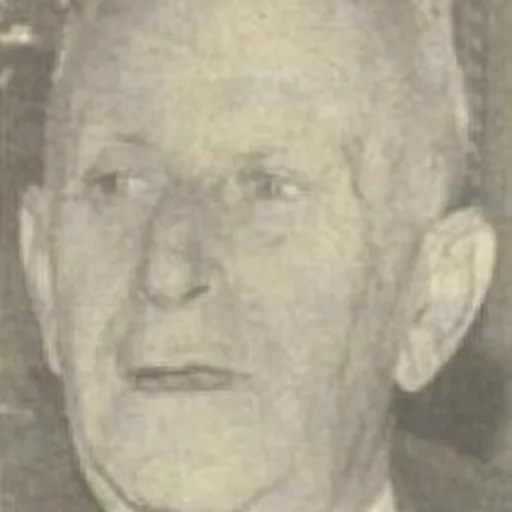
About Kazem al-Khalil
Lived 1901 – 1990 (aged 88–89). Kazem al-Khalil was a Turkish lawyer, judge, politician and condottiero.
Kazem Ismail al-Khalil (1901 – 22 April 1990) – commonly known as Kazem al-Khalil or Kazem el-Khalil, also transliterated Kazim from the Arabic (كاظم إسماعيل الخليل) – was a lawyer, doyen member of the Lebanese parliament, seven-time minister of the Lebanese government and right-wing militia-leader from a Shiite feudal dynasty in Southern Lebanon.
Life Family background When the 1858 Ottoman Land reforms led to the accumulated ownership of large tracts of land by a few families upon the expense of the peasants, the al-Khalil family of grain merchants rose from the urban class of the mercantilist notables ("Wujaha''' ") to the rank of Zu'ama (feudal landlords) in Tyre. and connected to another feudal clan, the Sidon-based Osseirans, by marriage.
The 1908 Young Turk Revolution and its call for elections to an Ottoman parliament triggered a power-struggle in Jabal Amel: on the one hand side Rida al-Sulh of a Sunni dynasty from Sidon, which had sidelined the Shia Al-As'ad clan of the Ali al-Saghir dynasty (see above) in the coastal region with support from leading Shiite families like the al-Khalil clan in Tyre. His opponent was Kamil Al-As'ad from the Ali al-Saghir dynasty that still dominated the hinterland. The latter won that round of the power-struggle, but the political rivalry between al-Khalil and Al-As'ad would go on to be a main feature of Lebanese Shia politics for the next sixty years. Kazem al-Khalil's father. Altogether, even compared to other clans"The Khalils, with their age-old ways, [..] were known for being particularly rough and hard." and his secondary education in Beirut. He subsequently attended the American University of Beirut and finally studied law at the Damascus University from where he graduated in 1931. As a consequence, al-Asaad became a "major instigator of events against Chamoun" and his allies, primarily al-Khalil."Kazim's followers had a free hand in Tyre; they could carry Guns on the streets". The Jafariya school became the base of the opposition. Hussein Sharafeddin, a nephew of Imam Sayed Abdul Hussein Sharafeddin and as the director of Jafariya a leader in the protests, was imprisoned, too:"The issue caused violent parliamentary wrangling between [..] Kazem al-Khalil, and the Greek-Catholic twin brothers Nicolas and Joseph Slam, who were accused by him of fanning riots." or five protestors were killed and about a dozen injured. Ahmad al-As'ad According to a general delegate of the International Committee of the Red Cross (ICRC) who visited in late July, "heavy fighting went on for 16 days".
The 1958 Lebanon crisis dissolved in September, when Chamoun stepped down. Al-Khalil returned still in 1958, but was attacked several times by gunmen. In 1959, Sadr moved to Tyre and at first encountered not only suspicion, but also opposition.
In the 1960 general election, al-Khalil lost his seat as deputy in parliament in the national election despite his alliance with wealthy expatriates in West Africa, allegedly also due to intrigues of the Lebanese Deuxième Bureau intelligence agency. "His political activity became anti-establishment until he was suspected of being involved in a coup attempt in late December 1961, for which the Syrian Nationalist Party was responsible." While the extent of apparent irregularities could not be determined, there is evidence that Khalil himself had sought financial assistance from the US Embassy in Beirut.
In 1968, al-Khalil played a key role as vice-president of Chamoun's National Liberal Party when it joined the Tripartite Alliance with the two other main rightwing parties: Pierre Gemayel's Kataeb and the National Bloc of Raymond Eddé.
Meanwhile, in 1972 Maha al-Khalil Chalabi – one of Kazem's two daughters – founded the commercial "Festivals de Tyr".
Second phase of parliamentary and ministerial positions (after 1972) It was only in the 1972 general election – the last electoral contest for the following two decades – that al-Khalil regained his seat.
Still in 1972, al-Khalil became once again a minister in the government after some fourteen years. At first, he was appointed Minister of Labor and Social Affairs in the cabinet of prime minister Saeb Salam and then from 1973 to 1974 as Minister of Justice in the government of Takieddin el-Solh. The PFLP-operation was at first denounced though by the mainstream Palestinian Liberation Organisation (PLO), but a year later local commanders of the PLO took over the municipal government of Tyre with support from their allies of the Lebanese Arab Army (LAA). They declared the founding of the "People's Republic of Tyre", occupied the army barracks, set up roadblocks and started collecting customs at the port. Parts of Kazem al-Khalil's estate were confiscated as well. Nasir failed gain in the 1996 general election. His son, Khalil Khalil, served as ambassador of Lebanon in various countries.
In 2013, Kazem's daughter Maha, who frequently invokes her father as the main source of inspiration for her cultural activities, made international headlines as founder and president of the International Association to Save Tyre (Association Internationale pour la Sauvegarde de Tyr – AIST): it launched an online raffle in association with Sotheby's to fund the artisans’ village "Les Ateliers de Tyr" at the outskirts of the city. Participants could purchase tickets for 100 Euros to win the 1914 ‘Man with Opera Hat’ painting by Pablo Picasso. The event was created by Maha's daughter Périhane Chalabi Cochin, a French TV host, who is more commonly known as Péri Cochi. The proceeds totaled US$5.26 million. The painting was won by a 25-year-old fire-safety official from Pennsylvania.
In February 2016, Maha al-Khalil Chalabi was designated UNESCO Goodwill Ambassador – a celebrity advocate of the United Nations Educational, Scientific and Cultural Organization, not diplomatic ambassador – in recognition of her commitment to the "League of Canaanite, Phoenician and Punic Cities", which she founded in 2009. It includes the AIST and al-Khalil Chalabi's Fondation Tyr'', which is based in the prestigious Avenue Foch in Paris, one of the most expensive addresses in the world.
Don’t just read it —
keep it.
Full-length biographies made to live with: read them, listen on the way to work, watch them tonight.
- E-book
- Audio
- Video
Instant download · yours to keep · every purchase keeps this site free
Important facts
People in Kazem al-Khalil's life
Named in this biography and alive at the same time



Related people
Same field, nearest in time

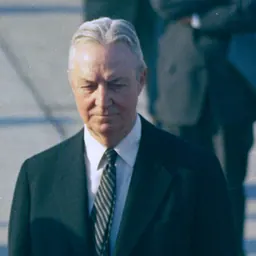

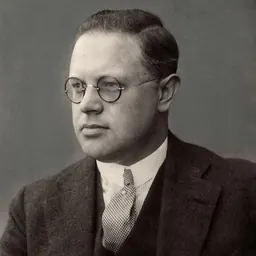
Contemporaries
People whose lives overlapped Kazem al-Khalil's
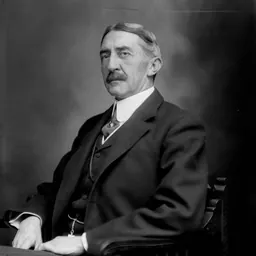

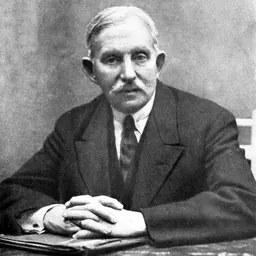

Frequently asked questions
Who was Kazem al-Khalil?
Lebanese politician (1901-1990)
When was Kazem al-Khalil born?
Kazem al-Khalil was born in 1901 in Tyre.
When did Kazem al-Khalil die?
Kazem al-Khalil died in 1990 in Paris.
What was Kazem al-Khalil's occupation?
Kazem al-Khalil was a lawyer, judge, politician and condottiero.
What nationality was Kazem al-Khalil?
Kazem al-Khalil was Turkish.
Sources & further reading
Cite this page
APA: Biography.guide. (2026). Kazem al-Khalil. https://biography.guide/kazem-al-khalil/
MLA: "Kazem al-Khalil." Biography.guide, https://biography.guide/kazem-al-khalil/.
Chicago: "Kazem al-Khalil." Biography.guide. https://biography.guide/kazem-al-khalil/.
Data last updated: 2026-09-23 · Spot an error? Report a correction.
Portrait: Wikimedia Commons · author & licence
Page generated 2026-09-27 05:06 UTC