
Kay Behrensmeyer
American taphonomist and paleoecologist
About Kay Behrensmeyer
Born 2000. Kay Behrensmeyer is an American paleontologist, curator, university teacher and scientific collector.
Anna Katherine "Kay" Behrensmeyer is an American taphonomist and paleoecologist. She is a pioneer in the study of the fossil records of terrestrial ecosystems and engages in geological and paleontological field research into the ecological context of human evolution in East Africa. She is Curator of Vertebrate Paleontology in the department of Paleobiology at the National Museum of Natural History (NMNH) of the Smithsonian Institution. At the museum, she is co-director of the Evolution of Terrestrial Ecosystems program and an associate of the Human Origins Program.
While she was a graduate student at Harvard in 1969, Behrensmeyer was invited by paleoanthropologist Richard Leakey to be his team geologist and to map fossil deposits at Koobi Fora in Kenya. She discovered a cluster of stone tools eroding out of a volcanic tuff, an ash layer from an ancient eruption that filled a small paleochannel. The site was named in her honor and the layer was named the Kay Behrensmeyer Site Tuff or KBS Tuff. The tools were similar to those discovered by Mary Leakey at Olduvai Gorge. The radiometric dating used by the team indicated that the fossils were 2.6 million years old. The dating of the site was controversial, as it contradicted other paleobiological evidence. A later independent investigation revised the date to 1.9 mya.
Behrensmeyer received her Ph.D. the in vertebrate paleontology and sedimentology from Harvard University department of Geological Sciences in 1973. Her dissertation, published in 1975, showed that the composition of the fossil vertebrate faunas of East Turkana, Kenya, varied with sedimentary environment (channel, floodplain, lake margin), and this provided new information on the taphonomy and paleoecology of hominin-bearing, Plio-Pleistocene sediments .
She held post-doctoral positions at UC Berkeley and Yale and taught for the UC Santa Cruz Earth Science Board before beginning her career at the Smithsonian Institution in 1981. Since 1986, she has led research on the geological context of Olorgesailie.
Aside from Behrensmeyer's research into the paleoecology and taphonomy of hominid-bearing deposits in the Olorgesailie basin, Baringo basin and East Turkana, she has conducted a long-term study of the taphonomy of modern vertebrate remains in the Amboseli National Park in Kenya, that began in 1975, in collaboration with ecologist David Western. The study involves a census of live animals and carcasses every five to ten years. The study suggests that fossil animal assemblages in tropical settings may be used to make inferences about ancient habitats when post-depositional taphonomic biases are accounted for. At a field area in Kenya known as Koobi Fora where work by Behrensmeyer had begun in 1978, field work in 2026 by her and other anthropologists has opened the possibility of a better understanding of the physical size of a hominid for whom records are scarce.
Her other projects include field exploration and analysis of Upper Triassic – Lower Jurassic vertebrate taphonomy and paleoecology in Arizona and paleoecological research in the Miocene Pakistan Siwalik sequence.
She was named one of the "50 Most Important Women Scientists" by Discover magazine in 2002.
Honors and awards 2016: Raymond C. Moore Medal of the Society for Sedimentary Geology 2018: Romer-Simpson Medal of the Society of Vertebrate Paleontology 2018: Paleontological Society Medal 2019: G. K. Warren Prize 2020: Elected Member of the National Academy of Sciences
Selected publications Behrensmeyer has published over 130 scientific articles. Behrensmeyer, A. K. (1970) "New hominid remains and early artefacts from northern Kenya: Preliminary geological interpretation of a new hominid site in the Lake Rudolf Basin." Nature 226 (5242):225–226. Isaac, G., Leakey, R., Behrensmeyer, A. (1971) "Archeological traces of early hominid activities east of Lake Rudolf, Kenya." Science 173:1129–1134. Behrensmeyer, A. K. (1975) "The Taphonomy and Paleoecology of Plio-Pleistocene Vertebrate Assemblages East of Lake Rudolf, Kenya." Bulletin MCZ 145 (10):473–574. (Ph.D. Dissertation) Behrensmeyer, A. K. (1978) "The habitat of Plio-Pleistocene hominids in East Africa: taphonomic and microstratigraphic guidance." In: C. Jolly (ed.), Early Hominids of Africa (Duckworth: London), pp. 165–189. Behrensmeyer, A. K., Hill A. (Editors). (1980) Fossils in the Making: Vertebrate Paleoecology and Taphonomy (Chicago: University of Chicago Press). 338 pp. ; hbk ; pbk ; Behrensmeyer, A. K., Laporte, L. F. (1981) "Footprints of a Pleistocene Hominid in Northern Kenya." Nature 289: 167–169. Behrensmeyer, A. K. (1985) "Taphonomy and the paleoecologic reconstruction of hominid habitats in the Koobi Fora Formation." In: Coppens, Y., Ed., L'environment des hominides au Plio-Pleistocene. (Paris: Foundation Singer-Polignac). pp. 309–324. Behrensmeyer, A. K., Gordon, K. D., Yanagi, G. T. (1986) "Trampling as a cause of bone surface damage and pseudo-cutmarks." Nature 319:768–771. Behrensmeyer, A. K. (1991) "Terrestrial Vertebrate Accumulations." pp. 291–335 in Allison, P. and Briggs, D. E. G. Taphonomy: Releasing the Data Locked in the Fossil Record. New York: Plenum. Behrensmeyer, A. K., Hook, R. W. (1992) Chapter 2. "Paleoenvironmental contexts and taphonomic modes" (in the terrestrial fossil record). In: Behrensmeyer, A. K., Damuth, J. D., DiMichele, W. A., Potts, R., Sues, H.-D., Wing, S. L., Eds. Terrestrial Ecosystems Through Time, pp. 15–136. (Chicago: University of Chicago Press). xx+568 pages, pbk. . Based on a conference, Washington, D.C., 1987. Behrensmeyer, A. K., Potts, R., Plummer, T., Tauxe, L., Opdyke, N., Jorstad, T. (1995) "Stratigraphy, chronology, and paleoenvironments of the Pleistocene locality of Kanjera, western Kenya." Journal of Human Evolution 29: 247–274. Isaac, G. L., Behrensmeyer, A. K. (1997) "Chapter 2: Geological Context and Paleoenvironments." pp. 12–53. In: Koobi Fora Research Project Volume 5: Plio-Pleistocene Archaeology. Glynn L. Isaac and B. Isaac, Eds. Oxford: Clarendon Press. 556 pp. Behrensmeyer, A. K., Todd, N. E., Potts, R., McBrinn, G. E. (1997) "Late Pliocene faunal turnover in the Turkana Basin, Kenya and Ethiopia." Science 278:1589–1594. Potts, R., Behrensmeyer, A. K., Ditchfield, P. (1999) "Paleolandscape variation and early Pleistocene hominid activities: Members 1 and 7, Olorgesailie Formation." Journal of Human Evolution 37:747–788. Behrensmeyer, A. K., Potts, R., Deino, A., Ditchfield, P. (2002) "Olorgesailie, Kenya: A million years in the life of a rift basin." Sedimentation in Continental Rifts, Renaut, R. W. and Ashley, G. M, Eds.) SEPM Special Publication 73: 97–106. Bobe, René, Behrensmeyer, A. K. (2004) "The expansion of grassland ecosystems in Africa in relation to mammalian evolution and the origin of the genus Homo." Palaeogeography, Palaeoclimatology, Palaeoecology 207: 399–420. Potts, R., Behrensmeyer, A. K., Deino, A., Ditchfield, P., Clark, J. (2004) "Small mid-Pleistocene hominin associated with East African Acheulean technology." Science 305: 75–78. Behrensmeyer, A. K. (2006) "Climate change and human evolution." Science 311:476–478. Behrensmeyer, A. K. (2008) "Paleoenvironmental context of the Pliocene A.L. 333 “First Family” Hominin Locality, Denen Dora Member, Hadar Formation, Ethiopia." GSA Special Paper 446: The Geology of Early Humans in the Horn of Africa, edited by Jay Quade and Jonathan Wynn, pp. 203–214. Western, D., Behrensmeyer, A. K. (2009) "Bone assemblages track community structure over 40 years in an African savanna system." Science 324: 1061–1064.
Don’t just read it —
keep it.
Full-length biographies made to live with: read them, listen on the way to work, watch them tonight.
- E-book
- Audio
- Video
Instant download · yours to keep · every purchase keeps this site free
Important facts
more
A K BehrensmeyerPeople in Kay Behrensmeyer's life
Named in this biography and alive at the same time


Related people
Same field, nearest in time
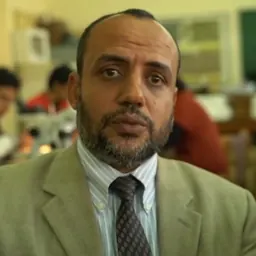

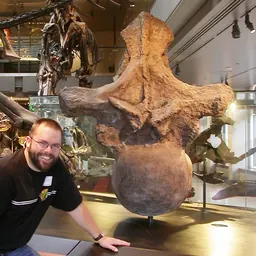


Contemporaries
People whose lives overlapped Kay Behrensmeyer's
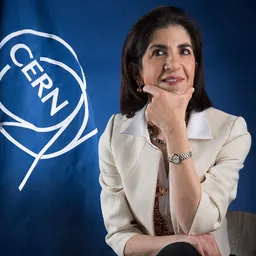
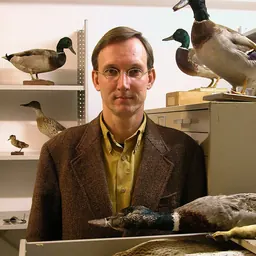


Frequently asked questions
Who is Kay Behrensmeyer?
American taphonomist and paleoecologist
When was Kay Behrensmeyer born?
Kay Behrensmeyer was born in 2000 in Quincy.
What is Kay Behrensmeyer's occupation?
Kay Behrensmeyer is a paleontologist, curator, university teacher and scientific collector.
What nationality is Kay Behrensmeyer?
Kay Behrensmeyer is American.
Sources & further reading
Cite this page
APA: Biography.guide. (2026). Kay Behrensmeyer. https://biography.guide/kay-behrensmeyer/
MLA: "Kay Behrensmeyer." Biography.guide, https://biography.guide/kay-behrensmeyer/.
Chicago: "Kay Behrensmeyer." Biography.guide. https://biography.guide/kay-behrensmeyer/.
Data last updated: 2026-09-26 · Spot an error? Report a correction.
Page generated 2026-09-27 05:14 UTC