
Kaveh Madani
Iranian environmental scientist
About Kaveh Madani
Born 1981. Kaveh Madani is an Iranian environmental scientist, environmentalist, engineer and ecologist, known for Iran.
Kaveh Madani (; born 1981) is an Iranian scientist and UN official based in New York. He was formerly an Iranian government official in the Department of Environment, which included serving as Deputy Vice President of Iran from 2017 to early 2018. he is the director of the United Nations University Institute for Water, Environment and Health (UNU-INWEH), and a research professor at the City College of New York. He previously served as the deputy head of Iran's Department of Environment, but left in April 2018 after a crackdown by hardliners against environmental activists. He served as the vice president of the United Nations Environmental Assembly Bureau from 2017 to 2018, and held academic positions at Yale University and Imperial College London.
In the academic world, Madani is known for his work on integrating game theory and decision analysis into water resources management models, Iran, to parents working in the water sector.
He went to school in Tehran, and received his BSc in Civil Engineering from the University of Tabriz in Tabriz, northwestern Iran, in 2003. and a PhD in Civil and Environmental Engineering from the University of California, Davis in California, US.
He undertook post-doctoral studies in Environmental Policy and Economics at the Water Science and Policy Center and the Department of Environmental Sciences of the University of California, Riverside.
Academic career (2010–present) From around 2010 partly because he was not interested in highly theoretical work, but wanted to influence policies.
He joined the United Nations University as the Director of the Nexus Program at UNU-FLROES in 2021. Since 1 February 2023 and he is the director of the United Nations University Institute for Water, Environment and Health (UNU-INWEH),
Madani is known for his work on integrating game theory and decision analysis into water resources management models, and is credited with coining the term "water bankruptcy" . He is the author of the "Global Water Bankruptcy Report" (published January 2026), which declared that the planet had entered the "era of Global Water Bankruptcy", with many river basins and aquifers worldwide having lost their ability to restore their historical conditions.
He has held research and teaching positions at Stockholm University, Cornell University, UC Irvine, K. N. Toosi University of Technology (Iran), and Dalian University of Technology (China), and his alma maters Lund University, UC Davis, and UC Riverside, and has also advised many graduate students and post-doctoral scholars. When he first arrived back in Iran, he was detained and interrogated by Islamic Revolutionary Guard Corps (IRGC) officers for several hours about his time abroad, and they confiscated his phone and computer.
In Iran, he served as the chair of the National Committee on International Climate Change Negotiations, vice president of the National Committee of Sustainable Development, member of the Supreme Council of Iran's House of Farmers, Member of Iran's Supreme Water Council, and Member of the Iran-Afghanistan Negotiations Workgroup on Water. and the following month was the Iranian representative at the anniversary of the 2015 Paris Agreement on Climate Change in Paris, where many countries were represented by their leaders.
During this time, he was critical of the government's past water policies, in particular its building of multiple dams, and cloud seeding. Such policies benefited the Islamic Revolutionary Guard Corps (IRGC) through its industrial arm. In April 2018, he resigned from his political post and revealed that he was kept under surveillance by the Iranian intelligence services and hardliners since his return to Iran.
By running a national campaign on waste, he tried to raise public awareness about waste and plastic pollution in Iran. He was the initiator of the popular Bi-Zobaleh (No Waste) challenge, a social game that reminded both citizens and decision makers about their responsibilities on waste using the "Let's Start with Ourselves" slogan. Bi-Zobaleh turned into a viral social media game in Iran with many celebrities, top politicians, influential figures, activists and the public from all walks of life joining the challenge from different parts of the country, sharing their solutions and actions on waste reduction in the environment.
Known as "Iran's expat eco-warrior", he was considered the "Symbol of Expatriate Return" to Iran during President Rouhani's administration (2013–2021).
Other activities Madani was the founding director of Water SISWEB (2008-2017). The acronym stands for "Scientific Information Syndication WEBsite", intended as one of a family of SISWEBs, which are "collaborative websites, which provide scientists, researchers, and professionals with free service to know what is new and popular on the web", with each SISWEB dedicated to a different area of science. However, as of 2026, this had not grown beyond the Water SISWEB.
He has published opinion pieces in The Guardian and online journals, and has posted many tweets in Persian, in which he both criticised and defended Iran.
He has received several awards for his research contributions, teaching innovations, and humanitarian activities. for "work and personal achievements representing the bold and humanitarian future of civil engineering”.
He received the Arne Richter Award for Outstanding Young Scientists from the European Geosciences Union (EGU) in 2016 for "fundamental contributions to integrating game theory and decision analysis into water management models" and “outstanding leadership in the application of systems analysis to environmental, water and energy resource problems.”
He received the Hydrologic Sciences Early Career Award from the American Geophysical Union (AGU) in 2019 for "fundamental contributions to integrating game theory and decision analysis methods into conventional water resources systems models" and "proven dedication to education, outreach, raising public awareness on environmental and climate issues, and selfless service to the hydrologic sciences community has had major societal impacts."
Madani was awarded the American Geophysical Union 2020 Ambassador Award for his contributions and leadership in research, education and outreach in the Earth and space science, and for "his selfless service and outstanding societal impacts as an ambassador of the hydrologic sciences community in the real world".
In March 2026 Madani was announced as the winner of the Stockholm Water Prize, which is presented by the Stockholm Water Foundation in collaboration with the Royal Swedish Academy of Sciences, and "honours individuals and organisations whose work contributes significantly to the sustainable use and protection of the world's water resources". King Carl XVI Gustaf of Sweden will present Madani with the award during World Water Week in Stockholm in August.
he lived in the United States, and was married. His parents were still alive and living in Iran at that time.
Footnotes
Don’t just read it —
keep it.
Full-length biographies made to live with: read them, listen on the way to work, watch them tonight.
- E-book
- Audio
- Video
Instant download · yours to keep · every purchase keeps this site free
Important facts
Related people
Same field, nearest in time
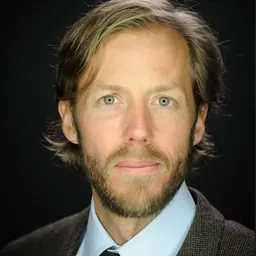

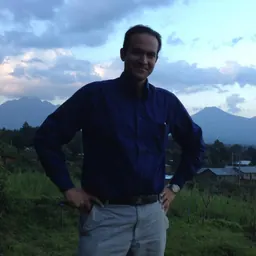


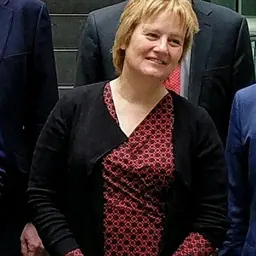
Contemporaries
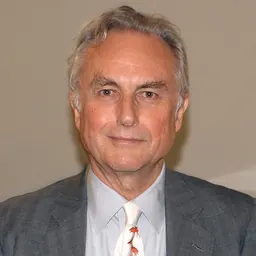
People whose lives overlapped Kaveh Madani's

Frequently asked questions
Who is Kaveh Madani?
Iranian environmental scientist
When was Kaveh Madani born?
Kaveh Madani was born in 1981 in Tehran.
What is Kaveh Madani's occupation?
Kaveh Madani is an environmental scientist, environmentalist, engineer and ecologist.
What is Kaveh Madani known for?
Kaveh Madani is known for Iran.
What nationality is Kaveh Madani?
Kaveh Madani is Iranian.
Sources & further reading
Cite this page
APA: Biography.guide. (2026). Kaveh Madani. https://biography.guide/kaveh-madani/
MLA: "Kaveh Madani." Biography.guide, https://biography.guide/kaveh-madani/.
Chicago: "Kaveh Madani." Biography.guide. https://biography.guide/kaveh-madani/.
Data last updated: 2026-09-20 · Spot an error? Report a correction.
Page generated 2026-09-27 05:26 UTC