
About Katsuji Matsumoto
Lived 1904 – 1986 (aged 81). Katsuji Matsumoto was a Japanese mangaka and illustrator.
was a Japanese illustrator and shōjo manga artist. Matsumoto's 16-page The Mysterious Clover is recognized as a pioneering work in the field of manga, but he is best known for his shōjo manga Kurukuru Kurumi-chan, serialized from 1938 to 1940, and again from 1949 to 1954.
His illustrations were popular from the 1930s through the 1950s, and he contributed illustrations to numerous popular girls' novels by some of the period's most famous authors, including Yasunari Kawabata and Nobuko Yoshiya. He was also a prolific illustrator of children's books and created merchandise for babies, small children, and girls. Through the introduction of a teacher at Rikkyō, Matsumoto began drawing illustrations for the magazine at the age of 17. (Matsumoto's younger sister, Ryōko , would eventually marry Fukiya.) At around this time, Matsumoto took on Toshiko Ueda as an apprentice.
Matsumoto could draw in a wide range of styles, from the realistic to the near-abstract, but all of his work was distinguished by clean, almost geometrical lines and a strictly Modern sensibility. While he illustrated numerous dramatic girls' novels, his style was better suited to sunny, playful, or humorous work. In 1935, Matsumoto began to work for the magazine that would become his primary forum. , with its modern, stylish image, was the ideal magazine for Matsumoto.
In 1932, at the age of 28, Matsumoto was wed to Ayako Nimori . They went on to have seven children (four boys, three girls) together. Because Ayako was an only child, the decision was made to have the firstborn male child legally adopted by her parents in order to carry on the Nimori name. On official records, therefore, Ki Nimori (, born 1933) is listed as the younger brother of Ayako, and therefore the brother-in-law of Matsumoto.
Major works
The Mysterious Clover
In 1934, Matsumoto drew his first full-fledged manga, a 16-page story titled . Printed as an over-sized pamphlet with a sturdy cardboard cover, and included as a premium in the April issue of Shōjo no tomo, The Mysterious Clover was a variation on The Scarlet Pimpernel and Zorro. The protagonist of The Mysterious Clover is a young girl who protects the poor peasants from the cruel and greedy nobles. This work is remarkable for its use of varying angles, including bird's-eye views, and variation in the size of panels. The Mysterious Clover had been neglected for decades by manga scholars until it was displayed at a 2006 exhibition at the Yayoi Art Museum, where it caught the eye of Fusanosuke Natsume, who then wrote about it on his blog and in a newspaper column. He worked with such prominent Japanese authors and poets as Nobuko Yoshiya and Yaso Saijō, and adapted many works by non-Japanese author's, including Katherine Mansfield's short story "The Doll's House", to the short-lived genre of .
Although Matsumoto drew in a wide range of styles, certain features remain consistent. His characters have an air of intelligence without melancholy, and of cheerful optimism that is never saccharine. In the genre of sentimental melodrama, according to Akiko Horiguchi, no one was more popular than Hiroshi Katsuyama . But in an age when print media of all kinds were becoming increasingly visual, there was plenty of work to go around.
Children's books and infant merchandise In 1955, Matsumoto abandoned manga altogether. Although he continued to do illustration work in a variety of styles, his focus shifted to the kind of hyper-stylized, wryly adorable character epitomized by the later Kurumi-chan. His target audience accordingly shifted from preteen and low-teen girls to toddlers and young mothers. In addition to illustrating new and original children's books, Matsumoto illustrated numerous classics, including Little Red Riding Hood (1955), Andrew Lang's Blue Fairy Book (1959, translated by Yasunari Kawabata), and various other collections of classic Japanese and European fairy tales. His designs for the infant merchandise company known originally as "Sanshin. Inc." were perhaps the mostly widely consumed and recognized, and it has been suggested that the company changed its name to Combi in 1961, which comes from the English "combination" and is used in Japanese to mean "duo") in response to the popularity of the infant duo, "Haamu" and "Monii" , created by Matsumoto and featured on a wide array of the company's products.
In 1986, Matsumoto suffered the last of a series of strokes, and was hospitalized, never to fully regain consciousness again. The stylish Matsumoto had been famously fastidious throughout his life, and his daughter, Meiko, has written that she was startled to notice that on his hospital bed, where Matsumoto lay unconscious and barely responsive, he had been using his remaining good hand to remove the pills that had formed on the old hospital blanket. Furthermore, although doctors said he had lost his sight, Matsumoto would open his eyes, and, as if looking in a mirror, would straighten the hairs of his mustache with his fingers as he had habitually done for years. Matsumoto died at the age of 81. His cremated remains are interred in the Fuji Cemetery in Gotemba, Shizuoka, at the foot of Mount Fuji.
Estate Matsumoto's children, in addition to Ki Nimori, are, in order of birth: Ikki Matsumoto (, born 1935, deceased); Rumi O'Brien (, born 1937, living in the U.S.A.); Motoi Matsumoto (, born 1939); Ken Matsumoto (, born 1941, deceased); Meiko Matsumoto (, born 1943); and Michie Utsuhara (, born 1945). Two of the first successful female shōjo manga artists of the postwar period, Toshiko Ueda and Setsuko Tamura, were his apprentices. Michie, Matsumoto's youngest child, along with several of her siblings and Matsumoto's grandchildren, manages the Gallery Katsuji Matsumoto , soon to be renamed the Katsuji Matsumoto Archives , the official Katsuji Matsumoto website and its on-line shop, and also writes ". The gallery is located at 4-14-18 Tamagawa, Setagaya-ku, Tokyo, 158-0094.
Footnotes
Don’t just read it —
keep it.
Full-length biographies made to live with: read them, listen on the way to work, watch them tonight.
- E-book
- Audio
- Video
Instant download · yours to keep · every purchase keeps this site free
Important facts
People in Katsuji Matsumoto's life
Named in this biography and alive at the same time
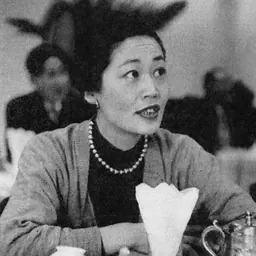
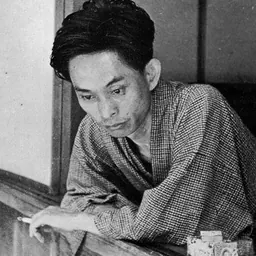


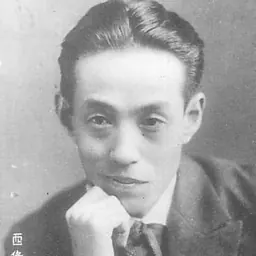


Related people
Same field, nearest in time



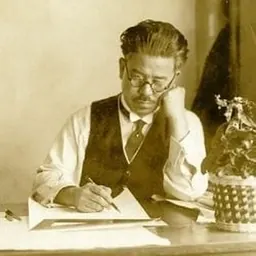

Contemporaries
People whose lives overlapped Katsuji Matsumoto's




Frequently asked questions
Who was Katsuji Matsumoto?
illustrator, manga artist (1904–1986)
When was Katsuji Matsumoto born?
Katsuji Matsumoto was born on 25 July 1904 in Kobe.
When did Katsuji Matsumoto die?
Katsuji Matsumoto died on 13 May 1986 in Nakaizu.
What was Katsuji Matsumoto's occupation?
Katsuji Matsumoto was a mangaka and illustrator.
What nationality was Katsuji Matsumoto?
Katsuji Matsumoto was Japanese.
Sources & further reading
· Wikipedia: Katsuji Matsumoto
Cite this page
APA: Biography.guide. (2026). Katsuji Matsumoto. https://biography.guide/katsuji-matsumoto/
MLA: "Katsuji Matsumoto." Biography.guide, https://biography.guide/katsuji-matsumoto/.
Chicago: "Katsuji Matsumoto." Biography.guide. https://biography.guide/katsuji-matsumoto/.
Data last updated: 2026-09-20 · Spot an error? Report a correction.
Page generated 2026-09-27 05:29 UTC