
About Kathryn Fort
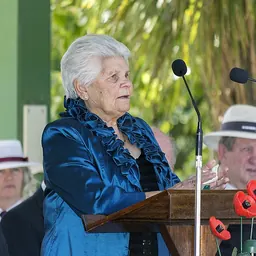
Kathryn Fort was an indigenous rights activist and lawyer.
Kathryn E. Fort is an attorney, author, professor, director the MSU Law Clinic at Michigan State University College of Law, Associate Director of the Indigenous Law and Policy Center, and runs the Indian Law Clinic. She is considered a national expert on ICWA. Fort teaches American Indian Children & the Law, Indian Law Clinic courses I and II. Fort started the Indian Child Welfare Act (ICWA) Appellate Project.
Education Fort earned a Juris Doctor degree from Michigan State University College of Law in 2005. She graduated Magna Cum Laude and received the Dean King Scholarship as well as the Indian Law Certificate. During Fort's time at the university, she also served as the Vice President of the Native American Law Student Association from 2004 to 2005. Before this, Fort attended Hollins University in Virginia and graduated Magna Cum Laude with a Bachelor of Arts degree in history with Honors in 1999. On December 1, 2016, Fort was given The Outstanding Alumni Award from Adrian High School, in Adrian, Michigan for her work in Native American law. She was in the class of 1995.
The Indian Child Welfare Act Appellate Project The managing director of the Indian Child Welfare Programs at Casey Family Programs, approached Professor Fort in 2011 to participate in a program that aimed to measure compliance with the Indian Child Welfare Act (ICWA) through court observations. Fort put together a pilot project with her law students to observe child welfare hearings in Ingham and Wayne Counties with the initial stipend. The purpose was to determine if the court proceedings were in compliance with ICWA.
The program offers an opportunity for students to develop their legal research skills and prepare appellate briefs and policy papers for tribal governments and organizations. The faculty provides close supervision to ensure the quality of the work. This work can potentially benefit the tribes and provide students with experience. According to Fort, the training that her students receive in the program is distinct from anything they have encountered in law school before joining the Clinic. Since 2015, the program has taken on increasingly complex ICWA cases often involving state Supreme Court and federal court litigation related to ICWA.
In 2018, when two siblings were removed from their home and parents told the court about their Native heritage in order to qualify their two children as Indian (valid terminology specifying a child is American Indian or Alaska Native), however, ICWA was not applied. The judge determined that there was not enough "reason to know" the children were Indian under the law.
This was important for the parties involved. If the court's decision would have been upheld, the use of ICWA compliance in the removal and placement of children would have been greatly effected by setting some precedence. The article interviewing Fort wrote, "The burden of checking in with a tribe is low, she says, but the outcome has immense implications for the family, children and tribe." Looking past the issues of law, Ford expressed ""to find no ‘reason to know’ there's an Indian child involved when you're literally looking at Indian people in the courtroom — it makes no sense."
Haaland v. Brackeen In October 2017, the Brackeen federal lawsuit case was filed in the federal District Court in Fort Worth. The Indian Law Clinic, under the leadership of Kathryn Fort, worked with Kilpatrick Townsend & Stockton LLP represented the intervening tribes. Later, the law firm Jenner & Block also joined as co-counsel. The primary objective behind their intervention was to ensure that the Native voices were heard and represented fairly when the court ultimately decided the case.
Haaland v. Brackeen was noted by many as "the most important" Indian Child Welfare Act case in history or in generation. As director of the Indian Law Clinic, Fort represented tribes who had appealed a federal judge's ruling in Texas that declared the Indian Child Welfare Act (ICWA) unconstitutional in 2018. She had been preparing for several months, expecting that the Supreme Court might significantly alter or completely dismantle the law.
An article in Propublica, a non-profit investigative journalism organization was published just days after SCOTUS upheld the Indian Child Welfare Act in Haaland v. Brackeen by a 7–2 vote. "I was shocked," said Fort. When referring to the people opposing ICWA, Fort commented, "The messaging has really come through that people who are removing Native children from their family and culture, you're not doing good things for Native people." Fort remains outspoken in listing items that would represent significant progress. For native people and their children, Brackeen represented a significant victory.
Working toward nationwide ICWA compliance According to Fort, there has been no adequate tracking by the federal government to ensure that states adhere to ICWA guidelines. The national database that provides insights into the outcomes of the child welfare system, the Adoption and Foster Care Analysis and Reporting System (AFCARS), does not gather information on whether ICWA covers the children.
The Obama administration's rule aimed to track trends in ICWA-eligible cases' outcomes by modifying the collection method for AFCARS data. This system had a category for tribal citizenship and dozens of other data points. However, in 2020, the Trump administration withdrew those updated guidelines, leading to a lawsuit that argues the decision was unjustified, and Fort's clients have been involved ever since.
The Association of American Law Schools (AALS) named Prof. Ford "AALS Litigation Section Practitioner of the Year" for her "pivotal role in the landmark case, Brackeen v. Haaland." During the event, Professor Nicole Godfrey commended Professor Fort's unwavering commitment towards protecting Native children through the Indian Child Welfare Act of 1978 (ICWA). Professor Fort has been defending the ICWA against challenges to its constitutionality in state and federal courts across the country since 2009, when she filed a brief in the Michigan Supreme Court on behalf of the American Indian Law Section of the State Bar of Michigan.
September 8, 2021, Fort received the 2021 Tecumseh Peacekeeping Award from the American Indian Law Section of the Michigan State Bar
Media commentary Fort has commented on an assortment of cases in the media as an expert in ICWA, and her knowledge of Indian law and experiences with her appellate project. NBC News wrote "Tribal courts can hear custody cases involving their citizens — even if there are existing orders in place from another court, the U.S. Court of Appeals for the 8th Circuit ruled." This appeal was won after kidnapping conviction, when a mother - a member of Cheyenne River Sioux, took her children to the South Dakota reservation, breaching a joint custody order. Fort's commented, "In this case, the tribal court decided it was necessary to claim jurisdiction over the case, but the laws of the Cheyenne River Sioux Tribe and the states of North Dakota and South Dakota factored into how it ended up in federal appellate court," and added "I don't think the sky is falling regarding custodial interference."
In another report on the above-mentioned case, Fort, who represented the defending tribes said, "tribes have more than 200 years of legal history, including treaties and other major precedent-setting cases, that have outlined and codified this political relationship with the federal government." Another report discussing Matthew McGill's view of "the real injustice of [ICWA]," replacing the test (the individual assessments in regular adoption hearings) with "a hierarchy of preferences". Fort answered, "ICWA doesn't prevent an individualized assessment of the best placement for each child," and adding "I personally don't know a state court judge who would be comfortable being told that they weren't allowed to do an individualized assessment." And, when explaining the process, Fort told NPR that this individualized assessment includes consideration of the child's relationship with her relatives, her language, her religion, and her tribal tradition.
Notable legal publications and contributions
The Road to Brackeen: Defending ICWA 2013-2023, 72 AMERICAN U. L. REV. 1673 (2023) The Indian Child Welfare Act in the Brackeen Years, 27 JUVENILE & FAMILY COURT J. 9 (2023), with Adrian T. Smith. After Brackeen: Funding Tribal Child Protection Systems, 56 FAMILY L. Q. 191 (2023) Intimate Choice and Autonomy: Adoptive Couple v. Baby Girl, with Matthew L.M. Fletcher, in Critical Race Judgements: Rewritten U.S. Court Opinions On Race And The Law, Cambridge University Press (2022) The Vanishing Indian Returns: The Supreme Court's Use of Narrative and Historical Fictions in Federal Indian Law, 57 ST. LOUIS U. L.J. 297 (2013) Michigan State University College of Law's Indian Law Clinic and Fort worked on the California Tribal Families v. Azar lawsuit with Democracy Forward. Kathryn Fort is a contributor to the upcoming edition of the Cohen Handbook of Federal Indian law and work with Kevin Washburn and the next edition of American Indian Child Welfare and the Law: Cases and Materials, Carolina Academic Press (2nd edition).
Don’t just read it —
keep it.
Full-length biographies made to live with: read them, listen on the way to work, watch them tonight.
- E-book
- Audio
- Video
Instant download · yours to keep · every purchase keeps this site free
Important facts
Related people
Same field, nearest in time





Frequently asked questions
Who was Kathryn Fort?
lawyer, author, and academic
What was Kathryn Fort's occupation?
Kathryn Fort was an indigenous rights activist and lawyer.
Sources & further reading
Cite this page
APA: Biography.guide. (2026). Kathryn Fort. https://biography.guide/kathryn-fort/
MLA: "Kathryn Fort." Biography.guide, https://biography.guide/kathryn-fort/.
Chicago: "Kathryn Fort." Biography.guide. https://biography.guide/kathryn-fort/.
Data last updated: 2026-09-20 · Spot an error? Report a correction.
Page generated 2026-09-27 05:25 UTC