
About Katherine Stewart MacPhail
Lived 1887 – 1974 (aged 86). Katherine Stewart MacPhail was a British surgeon.
Katherine Stewart MacPhail OBE (30 October 1887 – 11 September 1974) was a Scottish surgeon. During World War I, she served as chief medical officer of two units of the Scottish Women's Hospitals for Foreign Service. She cared for the wounded in Serbia, France, and the Thessaloniki Front. In 1921, during her stay in Serbia, she founded the country's first children's hospital. While she is remembered as a national hero in Serbia, she was criticised by some for providing her expertise in Serbia rather than in her own country. Her honours include several medals, plaques, and a postage stamp.
Early years and education Katherine Stewart MacPhail was born in Glasgow on 30 October 1887, the third of four daughters of Jessie MacPhail and Dr Donald MacPhail, a doctor. MacPhail was the only daughter in the family who showed an interest in her father's work. As a young girl, she entered the father's office and watched him examine the patients or treat wounds; she also went with him to visit patients on remote farms. In addition, her decision to dedicate her life to medicine was probably influenced by her uncles who were successful doctors: James led a missionary hospital in India, and Alex was a professor of anatomy at the University of Glasgow.
MacPhail and her siblings were initially home-schooled by private teachers. Once they were old enough they attended the distant elementary school in Coatbridge, going on to study at Hillhead High School in Glasgow. All four children successfully completed their studies at the academy, and later at the University of Glasgow.
At that time in Scotland, it was unusual for women to study at all, and especially medicine. Of the well-educated women from reputable families, they were expected only to lead the household well and deal with art. Probably for this reason, her father was against his daughter's desire to study medicine. However, she had already demonstrated decisive determination and persistence, and he could not stand in the way of her decision. Her parents understood the importance of education, and on 26 April 1906 she enrolled to study medicine at the University of Glasgow. She was an excellent student, and received numerous awards for her studies: prizes in physiology (first class) and second class in practical zoology, anatomy and surgery. She graduated on 12 October 1911 with an MB ChB from University of Glasgow Medical School.
MacPhail began her medical career at the Glasgow Royal Infirmary, and she was also an assistant doctor at her father's clinic.
World War I Scotland, 1914 When World War I broke out, MacPhail decided to volunteer for active service in the British Army and sent a letter to the War Office requesting to do so. The answer was fast, declining her request and explaining that the Royal Army Medical Corps did not accept women. She turned to the Red Cross, and received a similar response, as it too did not accept female doctors. She contacted Dr Elsie Inglis, who was recruiting women doctors and other medical staff for a women's volunteer medical units. Dr Inglis offered her hospital team to the British War Office, but was rejected by the sentence: "My dear lady, go home and sit still." Dr Inglis then sent letters to the embassies of France, Belgium, Russia and Serbia, who accepted this offer immediately and with gratitude.
"We knew we were being sent out under the auspices of the Suffrage Societies, and each was afraid that every other was a strong supporter, but were much relieved to find that almost none of us was what might be called 'strong', and that Serbia was the common bond, not suffrage."
Pavilion in Topčider
By spring of 1919, the hospital was already too small in particular due to an increase in the number of children with tuberculosis. MacPhail learned that there was an empty and abandoned open pavilion that was previously used for children at Topčider, from Belgrade. The pavilion was located on a hill, at the edge of a forest, so it was ideal for a treatment consisting of fresh air and sun, which, in addition to good food and rest, was at that time the only medicine for tuberculosis. MacPhail was granted a permit from the city government to arrange necessary repairs for the building and to procure equipment. By Easter 1919 the 40 bed pavilion received its first patients. It was managed by Mary Baker and soon proved to be successful with many children recovering. As an open pavilion it was only used in the summer months. It closed in 1924.
Anglo-Serbian Children's Hospital
As the work expanded, MacPhail realised that the existing capacities would soon be insufficient for an increasing number of patients, especially because the top of the pavilion made it unusable in the winter, so she began to think about expanding the hospital. An enlarged building in Kneza Milosa Street, near the Military Hospital, was left empty when British marines left Belgrade and MacPhail immediately started the action to get that house for her hospital. It was a large, bright, well-built and preserved building that had enough space to accommodate 50 beds, especially when MacPhail succeeded in replacing large military beds for children's beds. In addition, a small operating room for easy surgical cases was formed, while severe surgical cases were sent to the state hospital. A large department for outpatient patients was also established. This new hospital began operating in November 1919, though it officially opened in February 1921. It was no longer an improvised institution, but a real medical institution. It was officially recognised by the Government of the Kingdom of Serbs, Croats and Slovenes as the first Children's Hospital in Serbia, called the Anglo-Serb Children's Hospital, abbreviated ASCH. It was the only children's hospital in what was now Yugoslavia. Shortly after the opening of this hospital, the Ministry of Health asked MacPhail to receive infants and newborns, so a special nursing department was also set up with treatment provided by the most experienced nurse. By 1921, MacPhail was hopeful to not only perfect this hospital, but to encourage the foundation of others and to train native nurses to work in them.
Dubrovnik
As the number of patients at Topcider had been steadily increasing, MacPhail came to the idea of finding a place on the seashore where she could accommodate children with tuberculous. She learned that there was a villa in Dubrovnik that would be ideal for this purpose. MacPhail contacted Zivojin Mišić who was then the head of the generalštab and whom MacPhail knew from the Thessaloniki front. When MacPhail explained to him that this villa in Dubrovnik should serve as a health center and a children's rest home, he immediately ordered the villa to be handed over to the English-Serbian children's hospital for further use. MacPhail's sister, Isabel, who was already volunteering at the Children's Hospital in Belgrade, traveled to Dubrovnik to see the building and find equipment for her. While in Dubrovnik, Isabel heard of an abandoned Austrian hospital near Zelenika in Boka Kotorska and traveled there to visit it. She found a deserted, fully equipped hospital, with beds, bedding and other material, and a young Serbian officer, Vasa Srdić, who oversaw the hospital with his soldiers. Srdić offered Isabel all that she needed, and he immediately arranged shipping and transport of equipment to Dubrovnik. Isabel selected 60 beds and other equipment. As the building itself was well preserved, the hospital was established in February 1920.
Sremska Kamenica In the early 1930s, a report was submitted regarding the Anglo-Serbian Children's Hospital stating that during the preceding two years, 115 hospital patients were hospitalised (hospitalisation of some patients lasted up to 24 months), and 160 children were treated clinically, or outside the hospital. There were also 25 surgical procedures, 194 punctures and 113 x-ray imaging, and 84 immunisations with gypsum were performed. Fifty children left the hospital as successfully cured, 12 of them had improved health status during discharge, and the rest was on further treatment. The conclusion was that in spite of the small number of beds and a limited fund owned by the Anglo-Yugoslav hospital, she managed to fulfill all the tasks. The enormous costs of maintaining a hospital in Belgrade had become increasingly high year after year, and this, among other reasons, influenced MacPhail to start thinking about moving the hospital somewhere in the interior of the country, but not too far from Belgrade, which would be in open air with fresh air and sun. She even thought about buying one of the abandoned Fruška Gora monasteries. Darinka Grujic advised her to try to find a suitable building or to build a new building in Sremska Kamenica, which according to its natural conditions, was the most suitable place for this purpose. As MacPhail already had a holiday home in Sremska Kamenica, she immediately started making plans for the establishment of a new hospital.
MacPhail's friend, Vasa Srdić had been an officer of the Serbian army in Zelenika in the early 1920s and had helped Isabel, and subsequently became a great friend of the MacPhail sisters. After the war, as a graduate engineer of agronomy, he got land in Temerin, where he settled and was engaged in farming and fruit growing. Being aware of MacPhail's plans, he soon learned that on the hill Čardak, just above Sremska Kamenica, an old and abandoned vineyard was being sold which could suit MacPhail's plans. She was thrilled with the position of the city itself and its surroundings and bought the land, which was officially conveyed to her on 1 August 1933, and immediately began preparations for the construction of the hospital. According to Ketrin's idea and with the help of an engineer of the Hygienic Institute in Belgrade, an old Russian architect made plans for a three-winged building with a central courtyard and a long terrace along the north and west wing so that children can be in the sun all day.
In the spring of 1934, the work on the new hospital was completed, all necessary equipment was ordered, and lists of patients scheduled to start treatment were compiled. The Royal Commission of the Danube Banovina approved the opening of the children's sanatorium. The building consisted of a main frontal area and two symmetrically situated wings. The main part consisted of three departments of the hospital, a patient unit, a workshop, a radiotherapy department, a pharmacy section, a space intended for patients with infectious diseases and rooms for the sterilisation of instruments and appliances. Also, there was an area for the administration of the hospital, as well as a warehouse for medicines and instruments. In the wings of the building was a kitchen with a pantry and a dining room for children. On the first floor were four-room dormitories for doctors and nurses. There were also four bathrooms and toilets arranged in the wings of the building. The hospital was built in accordance with the needs of patients who anticipated a longer stay for treatment. There were terraces in front of the south and west wings. Even the courtyard was fenced and decorated like a park. The orchard and vineyard were also located within the yard.
The principal treatment of bone and joint tuberculosis at the time when antibiotics and antituberculotics did not exist consisted of increasing the general resistance of patients with hygienic and dietary regimen, fresh air therapy, heliotherapy (exposure to the sun during the day, during the winter exposure to artificial light), immobilisation and various surgical procedures. Special attention was also paid to hospital hygiene. School-age children attended daily classes that corresponded to their age and curriculum, after which they would receive a certificate at the end of the school year. The hospital also organised workshops that were part of the work therapy, where children attended art classes. Once a week, the Orthodox priest would come to provide the children with religious instruction. The hospital also had a library that was equipped with a large number of children's books, which were both educational and entertaining, and some toys.
The English-Yugoslav Hospital for Treatment of Osteoarticular Tuberculosis
In 1940, the situation in the region became serious and the sanatorium staff began to prepare with the military against an enemy attack. In February 1941, MacPhail had a plan to evacuate children from the hospital. Three weeks before the war, all children were sent from the hospital to their homes, and all the hospital equipment was packed and sheltered in the basements to be protected in the event of a bombing. The situation become very serious and the British Embassy advised all British citizens to leave the country. Not leaving in time, she and other British residents became the prisoners of the Germans before she was repatriated to Britain. In a report published in the Daily Record in March 1945, which included a photograph of her, she described the local conditions. She noted that of a thousand beds, 920 were bare, and hospital equipment such as x-ray machines had been shattered or thrown into the Danube.
When she went to visit Sremska Kamenica, she encountered a building that was without a door and windows, empty and ruined. There was no longer any medical or electrical equipment in it. In July, MacPhail began negotiations over the reopening of a hospital in Sremska Kamenica with the help of the Child Protection Fund from London. The Ministry of Public Health of the Democratic Federative Yugoslavia gave permission to start the reconstruction on 15 August. With the help of staff, MacPhail managed to procure medical equipment and medical supplies to carry out the operation. From humanitarian organisations from Canada and the United Kingdom came bedding and blankets. The complete equipment from the surgery was found in a military hospital in Sremski Karlovci and was soon returned. Katherine also received 46 boxes of clothes and bedding for children from friends. The complete repair of the hospital was financed by the Government of the Autonomous Welfare of Vojvodina, and the hospital was restarted on 19 December 1945.
During the war, the number of children who had tuberculosis increased. The hospital now operated with a capacity of 75 beds and was permanently filled. The working conditions were difficult at that time due to the lack of equipment and food, as the supply of the hospital was difficult. During this period, the fruit trees and vineyards around the hospital were of great help. Soon, life and work at the hospital returned to normal. However, the new government slowly increased the amount of mistrust towards MacPhail and her associates. She proposed to the Ministry of Health to turn the hospital into a rehabilitation center for children with disabilities, as well as for children who became disabled due to tuberculosis or other illnesses. She also planned to build a workshop where adults with disabilities would help in the production of orthopedic aids.
In 1947, the new regime nationalised all hospitals, and the Anglo-Serb Children's Hospital was transferred to the Yugoslav authorities in the autumn of that year. After nationalisation, the hospital continued to exist as a state sanatorium for bone tuberculosis and was overseen by the Department of Orthopedic Surgery of the Medical Faculty in Belgrade, led by Professor Svetislav Stojanovic. Realising that nothing could prevent the implementation of the communist regime, MacPhail returned to Scotland in 1949, settling in St Andrews.
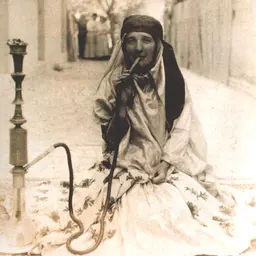
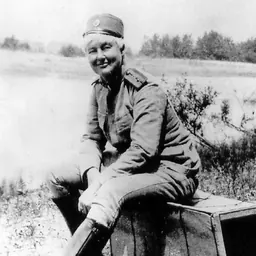
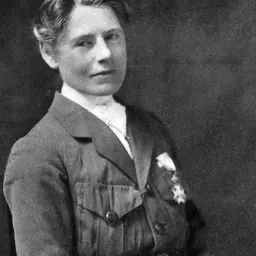
In 1928, she received an OBE. MacPhail was included in the series along with fellow doctors Elsie Inglis, Isobel Galloway Hutton, Evelina Haverfield and Elizabeth Ross and Captain Flora Sandes.
Her biography, Ever Yours Sincerely: The Life and Work of Dr Katherine S. MacPhail (Cambridge, 2007), was translated from Serbian to English by Muriel Heppell, from Želimir Dj. Mikić's original version in Serbian, Uvek vaša: život i delo dr Ketrin Makfejl (Novi Sad, 1998).
Don’t just read it —
keep it.
Full-length biographies made to live with: read them, listen on the way to work, watch them tonight.
- E-book
- Audio
- Video
Instant download · yours to keep · every purchase keeps this site free
Important facts
People in Katherine Stewart MacPhail's life
Named in this biography and alive at the same time


Related people
Same field, nearest in time



Contemporaries
People whose lives overlapped Katherine Stewart MacPhail's



Frequently asked questions
Who was Katherine Stewart MacPhail?
Scottish physician (1887-1974)
When was Katherine Stewart MacPhail born?
Katherine Stewart MacPhail was born on 30 October 1887 in Glasgow.
When did Katherine Stewart MacPhail die?
Katherine Stewart MacPhail died on 11 September 1974 in St Andrews.
What was Katherine Stewart MacPhail's occupation?
Katherine Stewart MacPhail was a surgeon.
What nationality was Katherine Stewart MacPhail?
Katherine Stewart MacPhail was British.
Sources & further reading
· Wikipedia: Katherine Stewart MacPhail
· DBpedia: Katherine Stewart MacPhail
Cite this page
APA: Biography.guide. (2026). Katherine Stewart MacPhail. https://biography.guide/katherine-stewart-macphail/
MLA: "Katherine Stewart MacPhail." Biography.guide, https://biography.guide/katherine-stewart-macphail/.
Chicago: "Katherine Stewart MacPhail." Biography.guide. https://biography.guide/katherine-stewart-macphail/.
Data last updated: 2026-09-20 · Spot an error? Report a correction.
Page generated 2026-09-27 05:32 UTC