
About Katharine Bushnell
Lived 1856 – 1946 (aged 89). Katharine Bushnell was an American missionary.
Katharine Bushnell (born Sophia Caroline Bushnell; February 5, 1855, in Evanston, Illinois – January 26, 1946) was a medical doctor, Christian writer, Bible scholar, social activist, and forerunner of feminist theology. Her lifelong quest was for biblical affirmation of the integrity and equality of women, and she published God's Word to Women as a correction of mistranslation and misinterpretation of the Bible. As a missionary and a doctor, Bushnell worked to reform conditions of human degradation in North America, Europe, and Asia. She was recognized as a forceful and even charismatic speaker.
Early life and education
Born February 5, 1856, in Evanston, Illinois, or “the great Methodist mecca of the northwest,” Bushnell's roots in Christianity were well established from the beginning. Here, she studied under Dean Frances Willard, who inspired Bushnell to pursue a career in social justice. After Northwestern, Bushnell found another mentor in Dr. James Stewart Jewell. The catalyst behind her interest in medicine, Dr. Jewell convinced Bushnell to study medicine at Chicago Women's Medical College, where she specialized in nerve disorders. A driven and intelligent student, she graduated three years ahead of her peers.
Early career
China Bushnell served as a medical doctor in Jiujiang, China from 1879 to 1882. However, she was quickly overwhelmed with visitors seeking medical attention and, finding that she could not refuse their entreaties, treated hundreds of patients. In response to her friend's thriving practice, Dr. Ella Gilchrist came out to China to assist Bushnell, but the hot summers proved to be intolerable. In 1882, both women fell ill and soon after they were forced to return home.
Quite discouraged by this mission cut short, Bushnell left feeling that "her whole life had been a failure."
Global mission work Frustrated by her newfound notoriety and convinced that her status as somewhat of a celebrity distracted people from reform, Bushnell became a global missionary. For guidance, she wrote to Josephine Butler, a more experienced reformer than herself. Butler encouraged her to go to India, and in 1891 Bushnell brought her friend Elizabeth Andrew along with her. Unlike Bushnell, Andrew “struggled to shed her prejudice against ‘fallen women’” and for a time had difficulty in interacting with prostitutes the pair encountered. Thus, the Contagious Diseases Acts were instituted in 1864. Women suspected of being prostitutes or carrying venereal diseases could be arrested and sent to lock hospitals to suffer a series of traumatic experiences described by Bushnell and Andrews as follows: The concern was with the potential contamination of British troops rather than the potential spread of foreign diseases among the native population, a point which Bushnell and Andrews emphasize. The pair published The Queen’s Daughters in India, a comprehensive account of their travels throughout India, in 1899. The inspiration for the title came from the missionaries' belief that “the Queen herself must not approve of the measures, ‘for she has daughters of her own; and she cares for her daughters in India also.'" The report consists of the two reformers' descriptions of the harrowing events which took place and their seemingly miraculous entrance into the cantonments. Since the commanding officer of a cantonment has the authority to remove anyone from the garrison at any time for any reason, the women had to step carefully and be sure not to raise suspicion. Furthermore, while they never explicitly lied about their intentions in visiting, they also never explicitly stated their purpose, allowing the officers and the women in charge of running the brothels—the mahaldarnis—to assume that they were there for an evangelical or medical purpose rather than investigative. The women's efforts led to a reprimand for Lord Roberts, the Commander-in-Chief, India.
Australia and New Zealand In early October 1892, Andrew and Bushnell travelled from Queensland, Australia to New Zealand. They first spoke in Auckland, giving an overview of the U.S. WCTU history and emphasising the concepts of temperance and social purity. Beginning on October 25, they spoke for several weeks in churches on behalf of the World WCTU, and allowed for the WCTU NZ president, Annie Jane Schnackenberg, to invite the attendees to become members of a local Union as they worked on various projects, including the right for women to vote in national elections. In full agreement with the Auckland WCTU's efforts to push for the repeal of the 1869 Contagious Diseases Act, Dr. Bushnell "denounced the mocking conventionality of society which brands women and exculpates men." Together they reinforced the work the WCTU NZ was doing in pushing for women's right to vote - a victory won in 1893.
Books They coauthored two books about their experiences, The Queen's Daughters in India and Heathen Slaves and Christian Rulers. The British government subsequently commissioned her to look into the opium trade between India and China.
God's Word to Women Throughout the nineteenth century, women struggled with "oppressive interpretations of the Bible that deprived them of their power and dignity." Bushnell has been called the most prominent voice declaring the Bible as liberating of women. was first published in book form in 1921. At the time she was 65 years old. God's Word to Women began as a correspondence course in 1908. In 1916, the loose single sheets were bound into two paper-covered volumes, which evolved into the cloth-bound 1921 edition. The book created a stir in America and elsewhere. It did not have mass appeal when first published because of its scholarly content and the few scholars interested in the topic. It relies on translation of ancient Hebrew and Koine Greek and ancient Hebrew culture. However, the book is now valued highly by Christian egalitarian scholars. It is now in public domain and is available online both electronically and in print.
It has been termed a groundbreaking study of what the Bible really says about women. The book is a culmination of her life's work. It was compiled from a correspondence course of the same name. In it, she works through every biblical portion interpreted to mean that women are inferior to men. This included the topics of women not being allowed to preach, required subordination to their husbands, polygamy, and head coverings. She wrote that male-biased mistranslations of the Bible, instead of "hastening the coming of the day of God, are hindering the preparation for that coming."
The scriptural status of women continued to be of intense concern to her. Bushnell believed that mistranslations were responsible for the social and spiritual subjugation of women. As may be seen in the above quotation, she was very "plain-spoken" in her writing. Further, she wrote, God does not approve "that law which places Jehovah in a position secondary to her husband in a wife's life." In another passage from her book, she courageously wrote:
Death Bushnell died on January 26, 1946, only a few days before her 91st birthday.
Don’t just read it —
keep it.
Full-length biographies made to live with: read them, listen on the way to work, watch them tonight.
- E-book
- Audio
- Video
Instant download · yours to keep · every purchase keeps this site free
Important facts
People in Katharine Bushnell's life
Named in this biography and alive at the same time
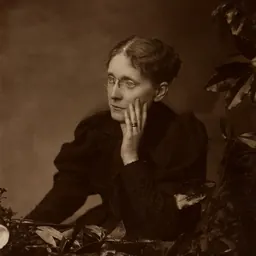

Related people
Same field, nearest in time
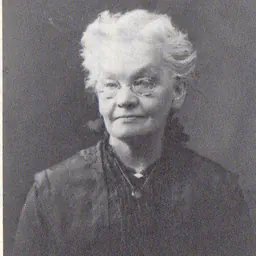
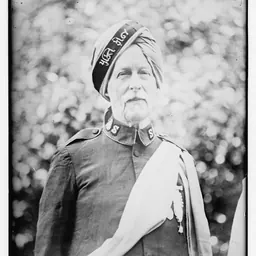

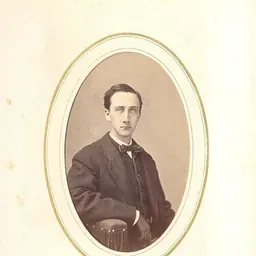
Contemporaries
People whose lives overlapped Katharine Bushnell's





Frequently asked questions
Who was Katharine Bushnell?
American physician and missionary
When was Katharine Bushnell born?
Katharine Bushnell was born on 5 February 1856 in Peru.
When did Katharine Bushnell die?
Katharine Bushnell died on 26 January 1946.
What was Katharine Bushnell's occupation?
Katharine Bushnell was a missionary.
What nationality was Katharine Bushnell?
Katharine Bushnell was American.
Sources & further reading
· Wikipedia: Katharine Bushnell
Cite this page
APA: Biography.guide. (2026). Katharine Bushnell. https://biography.guide/katharine-bushnell/
MLA: "Katharine Bushnell." Biography.guide, https://biography.guide/katharine-bushnell/.
Chicago: "Katharine Bushnell." Biography.guide. https://biography.guide/katharine-bushnell/.
Data last updated: 2026-09-20 · Spot an error? Report a correction.
Page generated 2026-09-27 05:21 UTC