
Katerina Efimovskaya
Russian Orthodox nun
About Katerina Efimovskaya
Lived 1850 – 1925 (aged 75). Katerina Efimovskaya was a Russian hegumen.
Coming from a deeply religious aristocratic family, she obtained a university education in Russian language and literature and worked as a teacher at a model Orthodox school. Influenced by Slavophile ideas, she became an Orthodox nun, combining ascetic life with social work. She took her perpetual monastic vows in 1889 and became a hegumenia. Under her leadership, the monastery became one of the largest female monasteries in Russia, as well as a significant pilgrimage center and educational hub.
In 1915, she was evacuated from Leśna to Petrograd and later emigrated to Bessarabia and the Kingdom of Serbs, Croats, and Slovenes, where she helped restore the Novo Hopovo Monastery and promote women's monasticism in the Serbian Orthodox Church. An informal cult of Catherine as a saint exists within the Russian Orthodox Church Outside of Russia, and she was canonized by the Russian True Orthodox Church in 2010. She also authored studies on the role of deaconesses in early Christianity and participated in discussions about Russian monasticism in the early 20th century.
Biography
Early life She was the daughter of Count Boris Andreevich Yefimovsky, the Marshal of Nobility in the Gzhatsk district of the Smolensk Governorate, and his wife, a member of the princely Khilkov family. She had a brother and a younger sister. She was raised in the family home in Moscow and on their estate in Klementyevo near Smolensk.
A few years later, her father became seriously ill, and her mother left Moscow to join him in Smolensk. During this time, Yevgeniya worked as a French teacher at the Nikolayevsky Institute.
Teacher The issue of raising children in the Orthodox faith had already been a subject of her reflection and interest, which led her to accept a teaching position at a parish school founded by Sergey Rachinsky in Tatyevo (Smolensk Governorate). Rachinsky, a pedagogue and social activist, envisioned the school as a model institution for primary education in the Orthodox spirit. Church historian Pavel Zyryanov compared Yefimovskaya's vision and her determination to dedicate her life to serving the poor to the "going to the people" movement of wealthy and well-born activists of Narodnaya Volya in previous decades.
Initially, the woman sought the opportunity to implement these plans at the Veliko-Budissky Monastery in the , where she worked as a parish school teacher, but her concept was rejected.
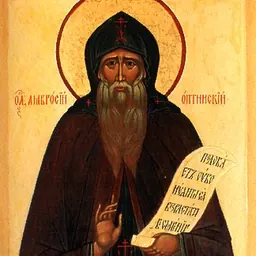
Before departing for Leśna, the woman met with Starets Ambrose of Optina, who blessed her plans.
In the first years of its existence, Hegumenia Catherine personally worked on setting up the monastery and its church (in the former Pauline church). She also sang in the monastery choir and served as a chanter. The seminary's main goal was to train future teachers to work in rural parish schools.
Under the hegumenia's initiative, a hospital and an outpatient clinic were also opened in Leśna, providing free medicine, along with a botanical garden focused on cultivating medicinal herbs.
Hegumenia Catherine's work was highly appreciated by Tsar Nicholas II, who awarded her the Cross with Ornaments in 1900. The imperial couple made two pilgrimages to Leśna, and during their second visit in 1900, Hegumenia Catherine commemorated their stay by building a chapel in Biała Podlaska. Hegumenia Catherine frequently traveled to Saint Petersburg to petition for additional financial support for the monastery, and she usually obtained assistance from the state or private donors. Her influence at court allowed the delegation to secure multiple audiences with Nicholas II, who, impressed by Eulogius' arguments, recognized the necessity of creating an independent Chełm Eparchy. By 1915, the Leśna Monastery had become a significant local economic and educational center.
In 1920, Hegumenia Catherine, along with 62 nuns and novices, arrived in Belgrade on a barge funded by King Alexander. Bishop Dositej of Niš provided them with accommodation at Kuveždin Monastery on Fruška Gora.
In 1923, Hegumenia Catherine hosted King Alexander I at the monastery, and in September 1925, the monastery held the third Congress of the Russian Christian Student Movement, which was honorably chaired by the First Hierarch of the Russian Orthodox Church Outside of Russia, Metropolitan Antony. Hegumenia Catherine played an active role in the congress. According to Archimandrite Dositeus, when Catherine's body was found during the process of locating her burial site, it was discovered to be incorrupt, which, according to Orthodox tradition, could be a sign of sainthood. At that time, her first life account, troparion, kontakion, and akathist were composed in her honor. In 1993, after reading Catherine's letters, Metropolitan Vitaly, the First Hierarch of the Russian Orthodox Church Outside Russia, considered her canonization.
Ultimately, however, Hegumenia Catherine was only recognized as The Venerable within the non-canonical Russian True Orthodox Church. This was because the nuns of the Monastery of the , which continued the traditions of the communities in Leśna and Novo Hopovo, had transferred to its jurisdiction in opposition to the union of the Church Abroad with the Moscow Patriarchate. Her canonization, unrecognized by canonical Orthodox churches, took place in 2010.
Don’t just read it —
keep it.
Full-length biographies made to live with: read them, listen on the way to work, watch them tonight.
- E-book
- Audio
- Video
Instant download · yours to keep · every purchase keeps this site free
Important facts
People in Katerina Efimovskaya's life
Named in this biography and alive at the same time
Related people
Same field, nearest in time




Contemporaries
People whose lives overlapped Katerina Efimovskaya's


Frequently asked questions
Who was Katerina Efimovskaya?
Russian Orthodox nun
When was Katerina Efimovskaya born?
Katerina Efimovskaya was born on 9 September 1850 in Moscow.
When did Katerina Efimovskaya die?
Katerina Efimovskaya died on 28 October 1925 in Pančevo.
What was Katerina Efimovskaya's occupation?
Katerina Efimovskaya was a hegumen.
What nationality was Katerina Efimovskaya?
Katerina Efimovskaya was Russian.
Sources & further reading
· Wikipedia: Katerina Efimovskaya
· DBpedia: Catherine Yefimovskaya
Cite this page
APA: Biography.guide. (2026). Katerina Efimovskaya. https://biography.guide/katerina-efimovskaya/
MLA: "Katerina Efimovskaya." Biography.guide, https://biography.guide/katerina-efimovskaya/.
Chicago: "Katerina Efimovskaya." Biography.guide. https://biography.guide/katerina-efimovskaya/.
Data last updated: 2026-09-20 · Spot an error? Report a correction.
Page generated 2026-09-27 05:31 UTC