
About Kasper Twardowski
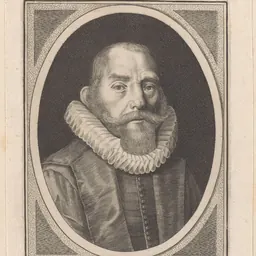
Lived 1592 – 1641 (aged 48–49). Kasper Twardowski was a Polish poet.
Kasper Twardowski (ca. 1592 – ca. 1641) was a Polish poet of the early Polish Baroque period, representing the so-called metaphysical or metaphysical-and-devotional line of poets. Little is known of his personal life. Twardowski was most likely born in Sambor (now Sambir) into the family of the local tailor, and spent his youth in Kraków (Cracow), Poland, where he is assumed to have studied at the Jagiellonian University (then known as the Kraków Academy). In 1629 Twardowski moved probably to Lwów (Lviv), where he died. Twardowski is best known for his erotica called "the Cupid's Lessons", banned by the bishop of Kraków, and later rejected by the poet himself as immoral; blamed for his own poor health as the apparent wrath of God. "Wenus i kupidyn" (Venus and Cupid, 1600s). Oil painting by Albani removed from Poland by the Nazis during World War II. Never seen again
Poet convert Kasper Twardowski debuted in 1617 as the author of a 12-part poem entitled "Lekcyje Kupidynowe" (Cupid's Lessons), modelled on the Latin "quinqua linea amoris" describing five steps to love from gaze, talk, and touch, to kiss, and intimate union. The work did not survive in its published original; only in copies which, nevertheless, allow for its full reconstruction. Following publication, the poem was condemned and indexed by the ecclesiastical censorship of the Royal City of Kraków with Bishop Marcin Szyszkowski. Soon after, the poet experienced a grave illness, which was described in the Preface to his subsequent works. Twardowski blamed his erotica for getting ill. Helped by the nuns, he reconciled himself to God and was admitted to the Jesuit religious brotherhood called the Congregation of the Assumption of the Blessed Virgin Mary (Kongregacja Wniebowzięcia Najświętszej Marii Panny).
The poem "Cupid's Lessons" begins with a short invocation entitled To the Reader ("Do Czytelnika") and ends with a 14-line lament ("Lament na to") over the protagonist's own handle (or trzonek in Polish) gone soft with the sight of a female chaperone. The work is composed of 12 strophes written in hendecasyllabic meter, 11 syllables per line. Do Czytelnika
Ja z Kupidynowej szkoły idąc do domu wesoły, rad bym, żeby mej łaciny nauczył się i kto iny. Jeśli dobrze repetuję, niechaj łaskę twoję czuję; a ten, komu nie smakuje, niechaj po swemu miłuje.
Just as "the Cupid's Lessons" were a kind of "Ars Amandi", so was Twardowski's subsequent output as the poet-convert. In 1618 he published his other famous work called A boatful of young people floating to shore ("Łódź młodzi z nawałności do brzegu płynąca"), an allegorical poem for the young, modelled after the "Confessions" of St. Augustine, describing his own return to the circle of the pious.
Works by Kasper Twardowski The most widely held works by Kasper Twardowski include: 1618 Kolęda. Nowe lato. Szczodry dzień abo piosneczki Emmanuelowe (The Carol. New summer. Bountiful days or the Emmanuel songs), 1619 Kolęda. Nowe lato. Szczodry dzień (The Carol. New summer. A bountiful Day), 1623 Bicz Boży abo krwawe łzy utrapionej Matki Ojczyzny Polskiej (Scourge of God, or bloody tears of Polish mournful Motherland), 1625 Pochodnia Miłosci Bożej z piącią strzał ognistych (The torch of God's Love with five arrows of fire), 1628 Bij Gustawa, kto dobry. Pobudka utrapionej Ojczyzny (Beat Gustav, who in the right mind. Reveille mournful Homeland), 1629 Bylica świętojańska (St. John's Artemisia), 1630 Gęś świętego Marcina (St. Martin's Goose), 1630 Katafalk Aleksandrowi księciu Zasławskiemu (Catafalque for Prince Alexander Zasławski), 1630 Kolebka Jezusowa. Pasterze. Trzej krolowie (A cradle of Jesus. Pastors. The three kings), 1630 or 1632 Najjaśniejszej Konstancjej krolowej polskiej [...] obchod nieodżałowanej śmierci (Serene Queen Constance of Poland [...] celebration of much lamented death), 1631
Notes and references
Don’t just read it —
keep it.
Full-length biographies made to live with: read them, listen on the way to work, watch them tonight.
- E-book
- Audio
- Video
Instant download · yours to keep · every purchase keeps this site free
Important facts
People in Kasper Twardowski's life
Named in this biography and alive at the same time
Related people
Same field, nearest in time



Contemporaries
People whose lives overlapped Kasper Twardowski's



Frequently asked questions
Who was Kasper Twardowski?
poet
When was Kasper Twardowski born?
Kasper Twardowski was born in 1592 in Sambir.
When did Kasper Twardowski die?
Kasper Twardowski died in 1641 in Lviv.
What was Kasper Twardowski's occupation?
Kasper Twardowski was a poet.
What nationality was Kasper Twardowski?
Kasper Twardowski was Polish.
Sources & further reading
· Wikipedia: Kasper Twardowski
Cite this page
APA: Biography.guide. (2026). Kasper Twardowski. https://biography.guide/kasper-twardowski/
MLA: "Kasper Twardowski." Biography.guide, https://biography.guide/kasper-twardowski/.
Chicago: "Kasper Twardowski." Biography.guide. https://biography.guide/kasper-twardowski/.
Data last updated: 2026-09-20 · Spot an error? Report a correction.
Page generated 2026-09-27 05:02 UTC