
About Kartar Singh Sarabha
Lived 1896 – 1915 (aged 19). Kartar Singh Sarabha was an Indian revolutionary and freedom fighter.
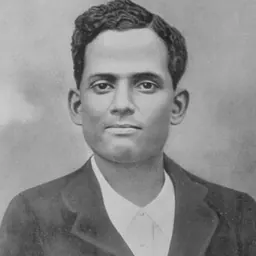
Kartar Singh Sarabha (24 May 1896 — 16 November 1915) was an Indian revolutionary. At the age of 15, he became a member of the Ghadar Party; later taking a leadership role and fighting for the Indian independence movement as an extremely active member of the movement. In November 1915 at Central Jail, Lahore, he was executed for his role in the movement at the age of 19.
Early life Kartar Singh was born to Mangal Singh Grewal and Sahib Kaur, a Jat Sikh family in Sarabha, a village near Ludhiana in Punjab. He was very young when his father died ,and consequently, his grandfather brought him up. After receiving his initial education in his village, Singh entered the Malwa Khalsa high school in Ludhiana; he studied there until 8th standard.
In July 1912, he sailed to San Francisco to enroll at the University of California at Berkeley, but the evidence that he did study is unclear. The university does not have any record of Kartar Singh's enrollment. His association with the Nalanda club of Indian students at Berkeley aroused his patriotic sentiments, and he felt agitated about the treatment that immigrants from India, especially manual workers, received in the United States. A note by Baba Jwala Singh mentions that when he went to Astoria, Oregon in December 1912, he found Kartar Singh working in a lumber mill .
Sohan Singh Bhakna, the founder of the Ghadar Party, inspired Singh to campaign against British colonial rule for the sake of an independent country. Sohan Singh Bhakna called Kartar Singh "Baba Gernal". He learnt from Americans how to shoot a gun, and how to make detonators. Kartar Singh also took lessons for flying aeroplanes. He frequently spoke with other Indians, many of whom supported colonial rule, on the need for India to become independent from British rule. A large number of leaders of the Ghadar Party were arrested by the government at the ports. In spite of these arrests, a meeting was held by members of the Ghadar Party at Ladhouwal near Ludhiana in which it was decided to commit robberies in the houses of the rich to meet the financial requirements for armed action. Two Ghadris, Waryam Singh and Bhai Ram Rakha, were killed in a bomb blast in one such raid.
After the arrival of Rash Behari Bose at Amritsar on 25 January 1915, it was decided in a meeting on 12 February that the uprising should be started on 21 February. It was planned that after capturing the cantonments of Mian Mir and Ferozepur, mutiny was to be engineered near Ambala and Delhi.
Betrayal Kirpal Singh, a police informer in the ranks of the Ghadar Party, had a large number of members arrested on 19 February and informed the government of the planned revolt. The government disarmed the native soldiers and the revolt failed.
After the failure of the revolution, the members who had escaped arrest decided to leave India. Kartar, Harnam Singh Tundilat, Jagat Singh, and others were asked to go to Afghanistan, while Ishar Singh was directed to China and made a move toward that area. On 2 March 1915, he came back with two friends and went over to Chak No. 5 in Sargodha where there was a military stud and started propagating rebellion amongst the army men. Risaldar Ganda Singh had Kartar, Harnam Singh Tundilat, and Jagat Singh arrested from Chak No. 5, Lyallpur district.
Execution
All of these accused in the Conspiracy Case were executed in the Lahore Central Jail on 17 November 1915. In the Court room, and also when standing before the gallows, the condemned men refused to accept their endeavour to be termed a 'conspiracy'. They contended that it was an open challenge to the foreigners who charged the patriots with the offence of sedition, of waging war against the King. Kartar was not at all sorry for what he had done; rather he felt proud for enjoying the privilege of throwing out the challenge to the usurpers. He was really sorry over the outcome of their efforts. He averred that every 'slave' had a right to revolt and it could never be a crime to rise in defence of the primary rights of the sons of the very soil. When he was being tried on the charge of sedition, he took the entire blame upon himself. The Judge was astounded to see such a young boy behaving in such a nonchalant manner. In view of his age, he advised the young revolutionary to modify his statement, but the result was the opposite. When asked to appeal he retorted, "Why should I? If I had more lives than one, it would have been a great honour to me to sacrifice each of them for my country."
He was later sentenced to death and hanged in 1915. During the period of his detention in Lahore Central Jail, Kartar managed to get hold of some instruments with which he wanted to cut the iron-bars of his window and escape in company with some other revolutionaries. However, the jail authorities who had learnt about his designs seized the instruments from underneath an earthen pitcher in his room. At the time of his execution Kartar was hardly nineteen years old. But such was his courage that in the course of his detention he gained 14 pounds in weight.
Legacy Bhagat Singh was inspired by him. "On Bhagat Singh's arrest, a photo of Sarabha was recovered from him. He always carried this photo in his pocket. Very often, Bhagat Singh would show me that photograph and say, 'Dear mother, this is my hero, friend and companion.' " - Bhagat Singh's mother.
Shaheed Kartar Singh Sarabha, an Indian Punjabi-language biographical film on the revolutionary, was released in 1977.
Don’t just read it —
keep it.
Full-length biographies made to live with: read them, listen on the way to work, watch them tonight.
- E-book
- Audio
- Video
Instant download · yours to keep · every purchase keeps this site free
Important facts
People in Kartar Singh Sarabha's life
Named in this biography and alive at the same time
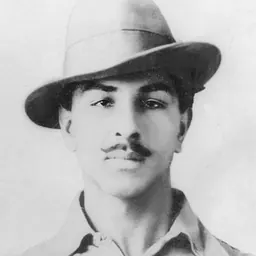
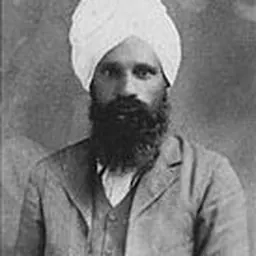
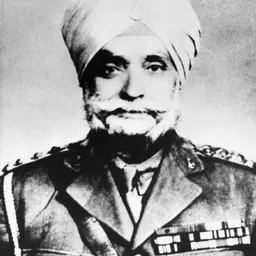


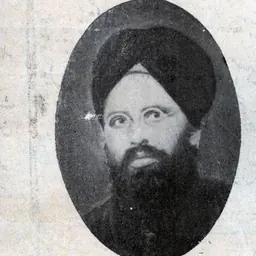
Related people
Same field, nearest in time


Frequently asked questions
Who was Kartar Singh Sarabha?
Indian revolutionary (1896-1915)
When was Kartar Singh Sarabha born?
Kartar Singh Sarabha was born on 24 May 1896 in Ludhiana, Punjab.
When did Kartar Singh Sarabha die?
Kartar Singh Sarabha died on 16 November 1915 in Lahore, Punjab.
What was Kartar Singh Sarabha's occupation?
Kartar Singh Sarabha was a revolutionary and freedom fighter.
What nationality was Kartar Singh Sarabha?
Kartar Singh Sarabha was Indian.
Sources & further reading
· Wikipedia: Kartar Singh Sarabha
· DBpedia: Kartar Singh Sarabha
Cite this page
APA: Biography.guide. (2026). Kartar Singh Sarabha. https://biography.guide/kartar-singh-sarabha/
MLA: "Kartar Singh Sarabha." Biography.guide, https://biography.guide/kartar-singh-sarabha/.
Chicago: "Kartar Singh Sarabha." Biography.guide. https://biography.guide/kartar-singh-sarabha/.
Data last updated: 2026-09-22 · Spot an error? Report a correction.
Page generated 2026-09-27 05:19 UTC