
About Karl Patterson Schmidt
Lived 1890 – 1957 (aged 67). Karl Patterson Schmidt was an American zoologist, herpetologist, environmentalist and zoogeographer.
Karl Patterson Schmidt (June 19, 1890 – September 26, 1957) was an American herpetologist.
Family Schmidt was the son of George W. Schmidt and Margaret Patterson Schmidt. George W. Schmidt was a German professor, who, at the time of Karl Schmidt's birth, was teaching in Lake Forest, Illinois. His family left the city in 1907 and settled in Wisconsin. They worked on a farm near Stanley, Wisconsin, where his mother and his younger brother died in a fire on August 7, 1935. The brother, Franklin J. W. Schmidt, had been prominent in the then-new field of wildlife management. Karl Schmidt married Margaret Wightman in 1919, and they had two sons, John and Robert.
Education In 1913, Schmidt entered Cornell University to study biology and geology. In 1915, he discovered his preference for herpetology during a four-month training course at the Perdee Oil Company in Louisiana. In 1916, he received the degree of Bachelor of Arts and made his first geological expedition to Santo Domingo. In 1952 he was awarded an honorary Doctor of Science degree by Earlham College. Schmidt wrongly believed that the snake could not produce a fatal dose because of its age and the fact that boomslangs are rear-fanged. The bite occurred because he held the snake in an unsafe manner, "too far behind the head." Boomslang venom causes disseminated intravascular coagulation, a condition in which so many small clots form in the blood that the victim loses the ability to clot further and bleeds to death.
Later that evening, Schmidt felt slightly ill. By the next morning, the lethal effects of the venom rapidly became evident. He did not report to work, and at noon, he reported to the museum that he was very ill. Following the bite, he took detailed notes on the symptoms that he experienced, almost until death. He collapsed at his home in Homewood, Illinois, bleeding in his lungs, kidneys, heart, and brain, and was dead on arrival at Ingalls Memorial Hospital.
Legacy Schmidt was one of the most important herpetologists in the 20th century. Though he made only a few important discoveries by himself, he named more than 200 species and was a leading expert on coral snakes. are named in his honor, including:
Acanthodactylus schmidti Haas, 1957 Afrotyphlops schmidti (Laurent, 1956) Amphisbaena schmidti Gans, 1964 Aspidoscelis hyperythra schmidti Van Denburgh & Slevin, 1921 Batrachuperus karlschmidti C.-c. Liu, 1950 Calamaria schmidti Marx & Inger, 1955 Coniophanes schmidti Bailey, 1937 Eleutherodactylus karlschmidti C. Grant, 1931 Emoia schmidti W. Brown, 1954 Lerista karlschmidti (Marx & Hosmer, 1959) Liolaemus schmidti (Marx, 1960) Pseudoxenodon karlschmidti Pope, 1928 Scincella schmidti Barbour, 1927 Thrasops schmidti Loveridge, 1936 Tribolonotus schmidti Burt, 1930 Urosaurus ornatus schmidti (Mittleman, 1940) Varanus karlschmidti Mertens, 1951
Some taxa described by him Batrachuperus tibetanus K.P. Schmidt, 1929 Eleutherodactylus wightmanae K.P. Schmidt, 1920 Varanus albigularis angolensis K.P. Schmidt, 1933 Leptopelis parvus K.P. Schmidt & Inger, 1959 Neurergus kaiseri K.P. Schmidt, 1952
Publications He wrote more than two hundred articles and books, including Living Reptiles of the World, which became an international bestseller.
Books 1933 – Amphibians and Reptiles Collected by The Smithsonian Biological Survey of the Panama Canal Zone 1934 – Homes and Habits of Wild Animals 1938 – Our Friendly Animals and When They Came 1941 – Field Book of Snakes of the United States and Canada with Delbert Dwight Davis 1949 – Principles of Animal Ecology with Warder Clyde Allee (1885–1955) and Alfred Edwards Emerson 1951 – Ecological Animal Geography: An Authorized, Rewritten edition with Warder Clyde Allee, based on Tiergeographie auf oekologischer Grundlage by Richard Hesse. 2nd, John Wiley & Sons, New York 1953 – A Check List of North American Amphibians and Reptiles 1957 – Living Reptiles of the World with Robert Frederick Inger
Other publications Schmidt, Karl P. (1922). The American Alligator. Field Museum of Natural History, Zoology Leaflet No. 3 Schmidt, Karl P. (1925). "New Reptiles and a New Salamander from China". American Museum Novitates (157): 1–6. Schmidt, Karl P. (1945) A New Turtle from the Paleocene of Colorado. Fieldiana: Geology, published by the Field Museum of Natural History Schmidt, Karl P.; Shannon, F. A. (1947). "Notes on Amphibians and Reptiles of Michoacan, Mexico". Fieldiana Zool. 31: 63–85.
Don’t just read it —
keep it.
Full-length biographies made to live with: read them, listen on the way to work, watch them tonight.
- E-book
- Audio
- Video
Instant download · yours to keep · every purchase keeps this site free
Important facts
People in Karl Patterson Schmidt's life
Named in this biography and alive at the same time



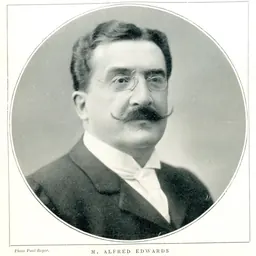
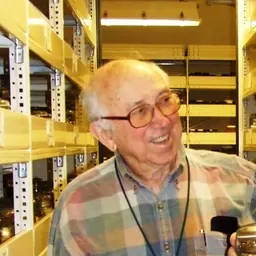


Related people
Same field, nearest in time
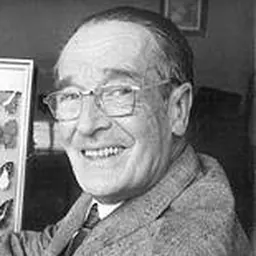
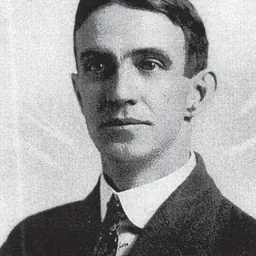
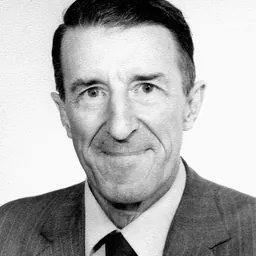


Contemporaries
People whose lives overlapped Karl Patterson Schmidt's




Frequently asked questions
Who was Karl Patterson Schmidt?
American herpetologist (1890–1957)
When was Karl Patterson Schmidt born?
Karl Patterson Schmidt was born on 19 June 1890 in Lake Forest.
When did Karl Patterson Schmidt die?
Karl Patterson Schmidt died on 26 September 1957 in Chicago.
What was Karl Patterson Schmidt's occupation?
Karl Patterson Schmidt was a zoologist, herpetologist, environmentalist and zoogeographer.
What nationality was Karl Patterson Schmidt?
Karl Patterson Schmidt was American.
Sources & further reading
· Wikipedia: Karl Patterson Schmidt
· DBpedia: Karl Patterson Schmidt
Cite this page
APA: Biography.guide. (2026). Karl Patterson Schmidt. https://biography.guide/karl-patterson-schmidt/
MLA: "Karl Patterson Schmidt." Biography.guide, https://biography.guide/karl-patterson-schmidt/.
Chicago: "Karl Patterson Schmidt." Biography.guide. https://biography.guide/karl-patterson-schmidt/.
Data last updated: 2026-09-20 · Spot an error? Report a correction.
Page generated 2026-09-27 05:30 UTC