
About Karl Ludwig Jühlke
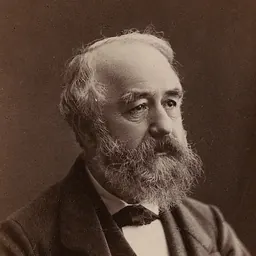
Lived 1856 – 1886 (aged 30). Karl Ludwig Jühlke was a German merchant and explorer.
Karl Ludwig Jühlke (6 September 1856 - 1 December 1886) was a German explorer. He was a leading member of the team which in 1885 set the groundwork for creating the colony of German East Africa. His killing in Kismayo at the end of 1886 by a Somali, who remains unnamed in sources, provoked strong government anger in Berlin where it was reported as a murder undertaken on instructions which came, it was not unreasonable to conclude, from the Sultan of Zanzibar.
Life Provenance and early years Karl Ludwig Jühlke was born at Eldena (Greifswald), where his father had recently resigned after twenty successful years as a high-profile educator at the Royal Agricultural Academy in order to accept a (more itinerant) government job. His father was the distinguished horticulturist Ferdinand Jühlke. His mother, born Maria Johanna Caroline Bladt (1817-1899), was the daughter of a dance teacher. There were two sisters, but Karl Ludwig was his parents' only recorded son. He attended school initially, in Erfurt where the family had moved in 1858 in connection with his father's work. The family moved again in 1868 and it was at a secondary school in Potsdam that the boy received most of his schooling. In 1874 he was switched again, to the prestigious "Königliche Klosterschule" (as it was known at that time) at Ilfeld, and it was here that in 1877 he passed his "Abitur" (school finals), opening the way to university-level education. A school contemporary at Ilfeld who became a friend was Carl Peters.
Student years and qualification as a lawyer In Germany at this time it was not unusual for promising young men of Jühlke's background to attend several universities in succession. He studied Jurisprudence at Tübingen, Leipzig, Heidelberg and Berlin. It was at Heidelberg that he received his doctorate in law. By this time he was also a reserve officer with the 20th Brandenburg Infantry Regiment, having completed his military service with a "Garde-Jäger" infantry battalion. They stayed in town for just over a week, trying to ensure that their supplies and equipment were complete, and then on 12 November crossed the channel to the African continent itself and set off inland, following the Wami River towards Saadani in the Ussagara countryside. Their passage was facilitated by the caravan that accompanied them, which they had hired from an Indian merchant, but their method of travel is nevertheless described as a "forced march". On reaching their destination, Peters and Jühlke returned to the coast. The inland expedition had lasted only six weeks, but the German party had nevertheless laid the groundwork for future colonisation by "signing [twelve] contracts" with ten "independent chiefs". (It is far from obvious that the Sultan of Zanzibar regarded the chiefs in question as independent.) The contracts (or treaties) would be ratified by the emperor on behalf of Germany during the early part of 1885.
Chancellor von Bismarck was never a man to share his intentions indiscriminately, but during the course of 1885 it became very clear that he was no longer content to leave European imperial expansion to the French and the British. The British had become increasingly isolated within Europe, but the German government nevertheless had reason to welcome - and quietly to endorse - Britain's obsessive concern over Russian expansionism which had been on display since before 1855. On the world stage, too, German governments had reason to welcome British imperial expansion and a counterweight to French ambitions. In East Africa, therefore, the rivalry inherent in the unfolding overlapping ambitions of the British and the German governments between 1885 and 1914 would be disguised under a curiously collaborative cloak. However, if Bismarck's government remained diplomatic low-key over plans for colonising large parts of East Africa, Carl Peters was not operating under the same constraints. He and his fellow company directors, appreciated that the twelve week Ussagara expedition at the end of 1884 had left their colonisation project unfinished. During 1885 numerous further expeditions were sent inland from the East African coast. One of these took Jühlke as far as Mount Kilimanjaro. During most of 1885 he remained in Zanzibar City, leaving expeditions to explore the African interior to others, but on 10 May 1885 he set out for the interior from Pangani, accompanied by a Premierlieutenant Weiß, in response to an order received, via the recently installed telegraph, from Berlin. It appears that the English arrived slightly ahead of the Germans, but any margin would have been slight. The two expeditions met each other on the lower slopes of Mount Kilimanjaro, but managed to pass each other without exchanging a word. Jühlke's expedition continued back to Moshi, the main town in Mandara. Moshi was home to the most powerfully independent sultan in the Dschaggaland region. The Germans stayed for four days. Vows of eternal "Blutsfreundschaft" (literally, "blood friendship") were exchanged. The journey back to the coast was quicker than the trip inland had been. It involved forced marches along the southern side of the Pare Mountains and through Usambara, concluding with a rapid passage downstream along the Pangani River, most of which they were able to complete by boat. They may not have "won the race" to reach Mount Kilimanjaro, but by the time they crossed the channel to their base back in Zanzibar, on 6 July 1885, Jühlke and his team had concluded a number of further treaties with local chiefs which, it would become apparent, amounted to acceptance of the company's sovereignty over the entire region between Pangani and Kilimanjaro. A few years later, on 20 November 1890, the company agreed to transfer its administrative role and the region became unambiguously part of German East Africa.
After that, apart from a brief trip to Ussagara, Jühlke spent the rest of 1885 attending to the interests of the company from and in Zanzibar. In March 1886 he made the journey back to Germany for a few months of rest and recuperation. In 1890 the Anglo-German agreement partitioning the East German colonial territories between Germany and England, while compensating the Sultan of Zanzibar for his resulting loss of income, superseded these concerns, since "Hohenzollernhafen" ended up in British East Africa. The British called it "Port Durnford". In 1924 it was ceded to the Italians as part of their reward for participating in the First World War on the British side. They called it "Bur Gavo" which was the Somali name of the entire town, adapted for Italian speakers.
Killing On 1 December 1886, with a large consignment of equipment for beginning work on the new port installations planned for "Hohenzollernhafen", and directly after an apparently friendly meeting with the Sultan of Zanzibar, Karl Ludwig Jühlke was "treacherously murdered" ("heimtückisch ermordet"). The killing came shortly after his appointment as the company's Chief Representative for the Somali Coast was formalised.
Don’t just read it —
keep it.
Full-length biographies made to live with: read them, listen on the way to work, watch them tonight.
- E-book
- Audio
- Video
Instant download · yours to keep · every purchase keeps this site free
Important facts
Family & relationships
People in Karl Ludwig Jühlke's life
Named in this biography and alive at the same time
Related people
Same field, nearest in time


Contemporaries
People whose lives overlapped Karl Ludwig Jühlke's





Frequently asked questions
Who was Karl Ludwig Jühlke?
German jurist and explorer (1856-1886)
When was Karl Ludwig Jühlke born?
Karl Ludwig Jühlke was born on 6 September 1856 in Eldena.
When did Karl Ludwig Jühlke die?
Karl Ludwig Jühlke died on 1 December 1886 in Kismayo.
What was Karl Ludwig Jühlke's occupation?
Karl Ludwig Jühlke was a merchant and explorer.
What nationality was Karl Ludwig Jühlke?
Karl Ludwig Jühlke was German.
Sources & further reading
· Wikipedia: Karl Ludwig Jühlke
Cite this page
APA: Biography.guide. (2026). Karl Ludwig Jühlke. https://biography.guide/karl-ludwig-juhlke/
MLA: "Karl Ludwig Jühlke." Biography.guide, https://biography.guide/karl-ludwig-juhlke/.
Chicago: "Karl Ludwig Jühlke." Biography.guide. https://biography.guide/karl-ludwig-juhlke/.
Data last updated: 2026-09-25 · Spot an error? Report a correction.
Page generated 2026-09-27 05:11 UTC