
About Karl Beurlen
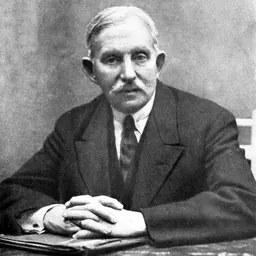
Lived 1901 – 1985 (aged 84). Karl Beurlen was a German paleontologist and geologist.
Karl Theodor Beurlen (17 April 1901 – 27 December 1985) was a German paleontologist. Beurlen was a prolific researcher on invertebrate paleontology, and is credited with publishing over 200 papers, with important contributions to the paleontology and stratigraphy of both Germany and Brazil. He held several important positions in geological societies and institutions in Germany in the 1930s and 1940s.
Beurlen's paleontological legacy is overshadowed by his political conviction in national socialism. Beurlen was an associate member of the SS as early as 1931, co-founded a Nazi-aligned scientific journal (the ZGN) in 1935, and was named to the Reichsforschungsrat (Reich Research Council) in 1939. During the Second World War, Beurlen served as the director of the Palaeontological Museum, Munich. Beurlen's belief that the Luftwaffe would protect German cities from Allied bombings during the war, and his aggressive refusal to move the museum's collections to safety outside of the city, is today blamed for the near-total destruction of the museum's paleontological collection in the 1944 bombing of Munich. The destroyed fossils included several scientifically important specimens, including the original material of Spinosaurus and Aegyptosaurus.
Beurlen was dismissed from his positions after the war, and worked as a paleontologist and geologist in Brazil in 1950–1969. He retired in 1969 and returned to Germany, where he wrote a series of popular science books on geology and paleontology.
Biography
Early life and career Karl Theodor Beurlen was born in Aalen on 17 April 1901. He was the son of an elementary school teacher. He completed a PhD in 1923, with whom he published a dissertion on ammonites. He used the term metakinesis (coined by Otto Jaekel) to describe sudden changes of development in organisms. He also invented the term palingenesis as a mechanism for his orthogenetic theory of evolution. Beurlen aggressively blocked efforts from museum staff to move the collections of the Bavarian State Collection to safety outside the city; taking such precautions was seen as a lack of loyalty to the Führer, and a lack of confidence in Germany's capability to win the war. Much of the museum's collections, including almost the entire paleontological collection, was destroyed in an allied bombing on 24–25 April, 1944. Parts of the collections were saved through covert efforts by curators of the museum, including , against Beurlen's wishes and orders. Most of the museum's geological collection, easier to transport than the fossils, was covertly saved by the curator Therese zu Oettingen-Spielberg.
Post-war life and career
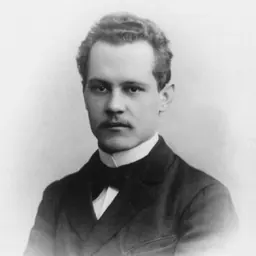
Beurlen was dismissed as director of the Bavarian State Collection, and from his other positions, after the war. He attempted to regain his position at the Ludwig-Maximilians-Universität München during denazification and asked for a letter of recommendation from the physicist Arnold Sommerfeld. Sommerfeld declined, arguing that Beurlen had been a "more than willing collaborator" of the Nazis. With little possibility of academic employment, Beurlen did not do any scientific work for half a decade. He worked as a construction worker for a few years to support his family.
In 1950, Beurlen was invited by the Brazilian Geological Survey in Rio de Janeiro to assist in research on the stratigraphy and paleontology of the Panama Basin. Beurlen spent over a decade in Brazil, and did prolific paleontological and stratigraphic work in the country. He became a professor at the University of Recife in 1959. After the 1964 Brazilian coup d'état, Beurlen felt that conditions had worsened in Brazil. He retired from his professorial position in 1969 and returned to Germany, settling in Tübingen.
After his retirement, Beurlen wrote popular science books on fossils and geology, such as Geologie von Brasilien (1970, "Geology of Brazil"). Beurlen died in Tübingen on 27 December 1985.
Don’t just read it —
keep it.
Full-length biographies made to live with: read them, listen on the way to work, watch them tonight.
- E-book
- Audio
- Video
Instant download · yours to keep · every purchase keeps this site free
Important facts
People in Karl Beurlen's life
Named in this biography and alive at the same time

Related people
Same field, nearest in time



Contemporaries
People whose lives overlapped Karl Beurlen's


Frequently asked questions
Who was Karl Beurlen?
German paleontologist (1901-1985)
When was Karl Beurlen born?
Karl Beurlen was born on 17 April 1901.
When did Karl Beurlen die?
Karl Beurlen died on 27 December 1985 in Tübingen.
What was Karl Beurlen's occupation?
Karl Beurlen was a paleontologist and geologist.
What nationality was Karl Beurlen?
Karl Beurlen was German.
Sources & further reading
Cite this page
APA: Biography.guide. (2026). Karl Beurlen. https://biography.guide/karl-beurlen/
MLA: "Karl Beurlen." Biography.guide, https://biography.guide/karl-beurlen/.
Chicago: "Karl Beurlen." Biography.guide. https://biography.guide/karl-beurlen/.
Data last updated: 2026-09-20 · Spot an error? Report a correction.
Page generated 2026-09-27 05:03 UTC