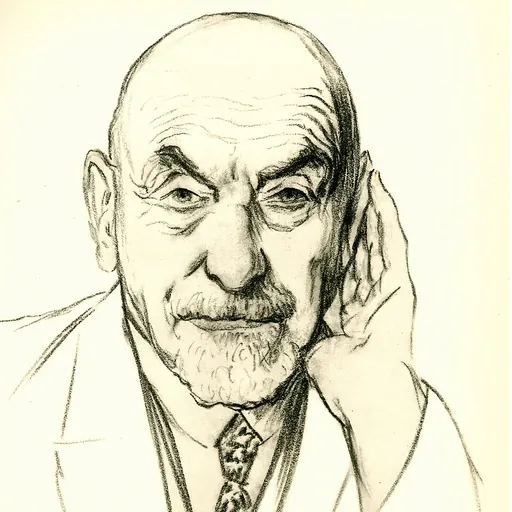
About Karl Arnold
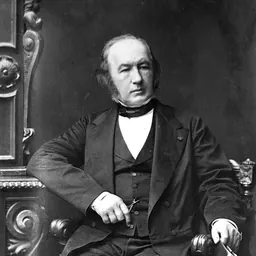
Lived 1853 – 1929 (aged 76). Karl Arnold was a German chemist, mineralogist, mountaineer, non-fiction writer, pharmacist and university teacher.
Karl Arnold, variously Carl Johann Moritz Arnold or Johann Karl Moritz Arnold (12 March 1853 – 24 June 1929), was a German chemist and mountaineer. He served as Director and briefly as Vice-Chancellor of the Institute of Chemistry at the University of Veterinary Medicine Hanover. His published works on organic chemistry were of importance to veterinarians, medical students and pharmacists. He was also an accomplished alpinist and chairman of the Hanover section of the German-Austrian Alpine Association.
Early life Karl Arnold was the son of chemist Georg Friedrich Arnold of the village of Uffenheim. From 1851 to 1859, Georg Friedrich Arnold operated a pharmacy in the lower floor of the town hall. The family then moved to Ansbach, where Georg Friedrich Arnold became the Bavarian court pharmacist.
Education After attending the local gymnasium, Karl Arnold began training as a pharmacist with his Father, also working as an assistant apothecary in pharmacies in Zofingen, Hamburg, Frankfurt am Main and Magdeburg.
In 1875, he began formal studies in pharmacy at the Ludwig-Maximilians-Universität München, receiving his license as a pharmacist in 1876. Arnold worked with Max Joseph von Pettenkofer, professor of hygiene at the Ludwig-Maximilians-Universität München. During his time in Munich, he became a member of an academic singing association, the Akademische Gesangverein (AGV) München in the Sondershäuser Verband. Arnold went on to study chemistry and physics at the University of Tübingen, where he worked with Julius Lothar Meyer. Meyer proposed models for the periodic table of elements in 1860 and 1868, and Arnold himself proposed a model for the periodic table in 1885.
In 1913, the university created the post of rector. Karl Arnold was the first person to be elected to the Vice-Chancellor of the School of Veterinary Medicine, on 7 May 1913, but declined the post. It was eventually accepted by Bernhard Malkmus (1913–1915) who held the rectorship from 1913 to 1915. Malkmus was called up for military service in 1915, and Arnold replaced him as Vice-Chancellor from 30 May 1915 to 1 August 1915. After making an ascent of the Ankogel in 1885, he encouraged development of the town of Mallnitz in Carinthia, now part of High Tauern National Park as a locale for mountaineers. In 1886, the main committee of the Alpine Association gave the Hanover section responsibility for the Ankogel area.
Arnold's ashes were buried in an urn in a small mausoleum that Arnold had built on the Arnoldshöhe near what was then Hanover house.
Don’t just read it —
keep it.
Full-length biographies made to live with: read them, listen on the way to work, watch them tonight.
- E-book
- Audio
- Video
Instant download · yours to keep · every purchase keeps this site free
Important facts
People in Karl Arnold's life
Named in this biography and alive at the same time



Related people
Same field, nearest in time



Contemporaries
People whose lives overlapped Karl Arnold's




Frequently asked questions
Who was Karl Arnold?
German chemist, mineralogy and mountaineer (1853-1929)
When was Karl Arnold born?
Karl Arnold was born on 12 March 1853 in Uffenheim.
When did Karl Arnold die?
Karl Arnold died on 24 June 1929 in Hanover.
What was Karl Arnold's occupation?
Karl Arnold was a chemist, mineralogist, mountaineer, non-fiction writer, pharmacist and university teacher.
What nationality was Karl Arnold?
Karl Arnold was German.
Sources & further reading
· DBpedia: Karl Arnold (chemist)
Cite this page
APA: Biography.guide. (2026). Karl Arnold. https://biography.guide/karl-arnold/
MLA: "Karl Arnold." Biography.guide, https://biography.guide/karl-arnold/.
Chicago: "Karl Arnold." Biography.guide. https://biography.guide/karl-arnold/.
Data last updated: 2026-09-23 · Spot an error? Report a correction.
Portrait: Wikimedia Commons · author & licence
Page generated 2026-09-27 05:05 UTC