
About Karl Aegerter
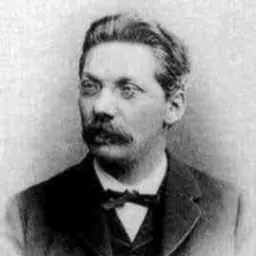
Lived 1888 – 1969 (aged 81). Karl Aegerter was a Swiss painter, sculptor, illustrator and printmaker.
Karl Aegerter (16 March 1888 – 12 May 1969) was a prolific Swiss painter, draftsman, etcher, muralist, illustrator, designer and sculptor. Now in numerous private and public collections, Aegerter's works are often likened to those of Edvard Munch.
Childhood
At the age of seven, young Karl was given up as a “Verdingbub” (foster child), a common practice in an impoverished Switzerland at the time, as struggling farmers gave up their children to urban foster families for a given period of time. During this time, Karl's older brother and role model, August Samuel Aegerter (Basel 17 October 1878 Basel – I June 1971, Basel), established himself in Basel as an artist, inspiring the young Karl.
Studies and influence During his basic schooling, Aegerter worked in factories and construction sites before beginning an apprenticeship as a decorative painter in the 'Fabriken und auf den Bau'. At the age of 27, having saved enough money, Aegerter left Basel to begin his studies in Munich, walking the 400-kilometer distance from Basel to Munich, where he enrolled to study drawing in the private art academy run by Heinrich Knirr. The Knirr Academy is also known for having schooled other Swiss artists such as Paul Klee and Ernst Morgenthaler. From 1915 to 1919 he continued his studies at the , In 1924, Aegerter had to leave Munich for health reasons and moved to the Engadin. In 1926, he returned to Basel.
In 1926, Aegerter left aside his artistic activity for a full-time engagement in politics to become the Party Secretary of the Swiss Communist Party in Basel (KP Basel). This continued through the 1930s until the banning of the Party in Switzerland, after which time his political affiliation moved to the Socialist Party (SP). From 1932 to 1941 Aegerter served as an elected official in the City Council of Basel. From 1948, he served additionally as a Judge. During the same time he served for many years as president of the Basel Section of the Swiss Painter & Architects Guild (Gesellschaft Schweizerischer Maler, Bildhauer und Architekten (GSMBA)), founded in 1865 as the first and most powerful artists’ association of Switzerland at the time. After the Second World War, Aegerter and his wife spent long periods in the Belgian coal mining town of Borinage, completing a full series of paintings showing the suffering of the workers. Borinage itself had already been made famous in the 1934 silent film of Joris Ivens, “Misere au Borinage”; in the paintings of Henry Luyten of the 1860s of the great strikes of the time; and for being the home town of Vincent van Gogh.
In 1955, after long illness, died. Later that year, Aegerter married for a second time, this time Marta Buchser.
In 1962, an extensive catalog of Aegerter's works appeared, under the title "Gestalter des Humanen (Designer of Humane), which included a lengthy foreword of texts prepared from colleagues and professional acquaintances. Public recognition of the artist evolved from one major exhibition to another: 1959 in Basel; 1968 in Schloss Arbon; 1980 in Muttenz; 1987 in St-Ursanne; and 1996 in St. Moritz in the Galleria Curtins.
Following in the line of German Expressionism, and following on the First World War, Aegerter chose those who had been marginalized by society the central focus of his work. The working class milieu and the mining communities were at the forefront of his themes. Aegerter had experienced the resulting misery of war first hand and painted this in a dark, powerful fashion – each painting standing as a call for human justice, and global peace.
A large part of his oeuvre comes from his Social Realism phase, culminating in the largest exhibition of the year at the Kunsthalle Bern in 1926, Aegerter exhibited with Käthe Kollwitz. R.R. Junghanns, and Dora Lauterburg amongst others. For ten years thereafter, Aegerter did not exhibit, being fully engaged in politics.
After the war, having completed his Borinage series to much acclaim, there was a growing demand for murals and frescos by Aegerter. During the ensuing decade he completed more than ten murals, none of which have survived except one. These gross format works drew on classical symbolism as well as the Neue Sachlichkeit, with strong clear lines, which his good friend and artistic colleague, Niklaus Stoecklin, had popularized in Switzerland (exhibition in the Kunsthalle Basel 1959, K.A., Niklaus Stoecklin). With the death of his wife Elisabeth Gerter, the human figure disappeared from his painting and his work became more and more focused on architectural subjects and landscapes. Not only did the human figure slowly leave his work, but human suffering as well. His late works offer up generous landscapes, alpine settings, peaceful natural scenes – new horizons and a new palette, working with bright felt pens, a modern development, to layout his later works. 1941: Galerie Knöll, Basel 1942: Atelier-Ausstellung, Basel 1944: Drawings and und Designs, Fälkli Basel 1950: K.A. zum 60. Geburtstag, Kunsthalle Basel 1953: Kunsthalle Basel 1953: Schloss Ebenrain, Sissach 1955: Kunstmuseum Lausanne 1959: Jubiläumsausstellung, Kunsthalle Basel 1960: Galerie Belvedere, Hergiswil 1970: Heimatmuseum, Rorschach: K.A. zum 80. Geburtstag, Landenberg-Gesellschaft, Arbon 1974: Galerie Orly, Basel 1977: Galerie Steiner, Thun 1980: Coop-Bildungszentrum, Muttenz, Weihnachtsausstellung 1982: Galerie Kyburg, Thun 1987: Musee Lapidaire, St. Ursanne 1996 Galerie Curtins, St.Moritz. Vorwort zum Katalog von (Altbundesrat) H.P. Tschudi 1997: Karl Aegerter 1888–1969, Gestalter des Humanen, Curtins, St. Moritz 2005: Galerie Folke Truedsson, Röschenz 2006: Galerie Mesmer, Basel
Group Exhibitions:
List of works held in collections "Lesender", "Winterlandschaft", "Passwang", "Arbeitergruppe" und Zeichnungen staatlicher Kunstkredit, Basel (für die öff. Slg., *Kupferstichkabinett), 1941–1944, 1947 "Die Heimkehr", "Der Fabrikweg"—Schweiz. Eidgenossenschaft, (EDI) "Selbstbildnis" Öffentlich Kunstsammlung, Basel "Bergarbeiter-Dorf"—1950, Kunstverein Basel, Oil on canvas "Humanität"—1957, Mural in Basel, Jakobsberg "Arbeiter"—2008, Gift to the Solothurner Kunstmuseums With the exception of “Humanität“, all of Aegerter's murals in Basel and the surroundings have been lost as a result of reconstruction
Literature 1953 Allgemeines Lexikon der bildenden Künstler des XX. Jahrhunderts 1953 Schiess, W.S.: Karl Aegerter 1957 Ein Querschnitt durch das Schaffen des Basler Kunstmalers Karl Aegerter 1958 Künstlerlexikon der Schweiz. XX. Jahrhundert 1962 "Gestalter des Humanen", (Werkverzeichnis) 1992 Allgemeines Künstlerlexikon: Die bildenden Künstler alle Zeiten & Völker 1998 Biographisches Lexikon der Schweizer Kunst 2002 Historisches Lexikon der Schweiz (HLS)
Don’t just read it —
keep it.
Full-length biographies made to live with: read them, listen on the way to work, watch them tonight.
- E-book
- Audio
- Video
Instant download · yours to keep · every purchase keeps this site free
Important facts
People in Karl Aegerter's life
Named in this biography and alive at the same time




Related people
Same field, nearest in time


Contemporaries
People whose lives overlapped Karl Aegerter's


Frequently asked questions
Who was Karl Aegerter?
Swiss artist (1888-1969)
When was Karl Aegerter born?
Karl Aegerter was born on 16 March 1888 in Bern.
When did Karl Aegerter die?
Karl Aegerter died on 12 May 1969 in Basel.
What was Karl Aegerter's occupation?
Karl Aegerter was a painter, sculptor, illustrator and printmaker.
What nationality was Karl Aegerter?
Karl Aegerter was Swiss.
Sources & further reading
Cite this page
APA: Biography.guide. (2026). Karl Aegerter. https://biography.guide/karl-aegerter/
MLA: "Karl Aegerter." Biography.guide, https://biography.guide/karl-aegerter/.
Chicago: "Karl Aegerter." Biography.guide. https://biography.guide/karl-aegerter/.
Data last updated: 2026-09-22 · Spot an error? Report a correction.
Page generated 2026-09-27 05:20 UTC