
About Karen A. Panetta
Karen A. Panetta was a researcher.
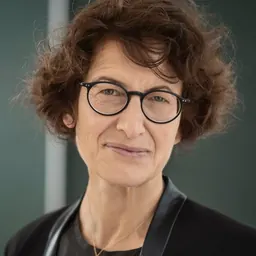
Karen Ann Panetta is an American computer engineer and inventor who is a professor and Dean of Graduate Education at Tufts University. Her research considers machine learning and automated systems. She is a Fellow of the Institute of Electrical and Electronics Engineers, Her father, despite lacking a college education of his own, encouraged Panetta to pursue engineering. She then moved to Northeastern University for her master's degree. Panetta remained at Northeastern for her doctoral studies, working on information systems and robotics. Both her master's and Ph.D. were paid for by the Digital Equipment Corporation (DEC), in exchange for her returning to academia as a Professor and researcher. The DEC believed that if more real engineers were put back into college as teachers, students would receive a better education surrounding the science, which could be more easily applied to real-world issues and challenges. Panetta develops signal and image processing algorithms. She is particularly interested in approaches for robot vision and biomedical imaging. Her primary areas of research include Artificial Intelligence, Machine Learning, automated systems, and visual sensing systems.
Panetta created an autonomous software that can benefit medical diagnostics. Amongst the pieces of software developed by Panetta, she created a piece that can identify pneumonia caused by COVID-19, and another that can provide detailed information to dentists about areas of the mouth that need attention.
Innovations While working at the Digital Equipment Corporation (DEC), Panetta created algorithms that were instrumental in creating the first complete digital twin of a CPU design, which could run multiple software programs that have redefined semi-conductor manufacturing and test processes. Panetta also created multiple patented underwater imaging measures and algorithms that are used by companies and organizations for underwater search and rescue, as well as ocean exploration operations. Panetta's other innovations include a parametric logarithmic image processing operators and image quality measures that emulate human vision, allowing computers to view similarly to a human, and perceive humans more clearly. With her innovations, she addressed the pain point of computer and robot's inability to sufficiently process real-world visuals, as perceived by the human eye. Part of her inspiration for this project was the events that transpired during 9/11, leading to her desire to create an image/video enhancement in real time for safety and security applications. She was appointed the worldwide director for the Institute of Electrical and Electronics Engineers (IEEE) Women in Engineering program and editor-in-chief of the Women in Engineering magazine. In 1999, Panetta founded Nerd Girls, a platform dedicated to challenging stereotypes about women scientists, and encouraging more young women to pursue engineering and science.
Awards and honors 2011 Anita Borg Institute Women of Vision Award 2012 Presidential Award for Excellence in Science, Mathematics, and Engineering Mentoring 2013 William E. Sayle II Award for Achievement in Education 2013 IEEE Award for Distinguished Ethical Practices 2021 Elected to the National Academy of Inventors
Selected publications
Don’t just read it —
keep it.
Full-length biographies made to live with: read them, listen on the way to work, watch them tonight.
- E-book
- Audio
- Video
Instant download · yours to keep · every purchase keeps this site free
Important facts
Related people
Same field, nearest in time





Frequently asked questions
Who was Karen A. Panetta?
researcher
What was Karen A. Panetta's occupation?
Karen A. Panetta was a researcher.
Sources & further reading
Cite this page
APA: Biography.guide. (2026). Karen A. Panetta. https://biography.guide/karen-a-panetta/
MLA: "Karen A. Panetta." Biography.guide, https://biography.guide/karen-a-panetta/.
Chicago: "Karen A. Panetta." Biography.guide. https://biography.guide/karen-a-panetta/.
Data last updated: 2026-09-20 · Spot an error? Report a correction.
Page generated 2026-09-27 05:21 UTC