
About Kaori Sakamoto
Born 2000. Kaori Sakamoto is a Japanese figure skater.
is a Japanese retired figure skater. She is the 2026 Olympic silver medalist, 2022 Olympic bronze medalist, a two-time Olympic team event silver medalist (2022, 2026), a four-time World champion (2022–2024, 2026), the 2025 World silver medalist, the 2018 Four Continents champion, the 2023–24 Grand Prix Final champion, two-time Grand Prix Final bronze medalist (2024–25, 2025–26), a thirteen-time ISU Grand Prix medalist, the 2025 Asian Winter Games silver medalist, the 2023 World University Games silver medalist, and a six-time Japanese national champion. At the junior level, she is the 2017 World Junior bronze medalist and the 2016–17 Junior Grand Prix Final bronze medalist.
She is the first Japanese woman to win the World Championships since Mao Asada in 2014, the first Japanese skater to win three consecutive World titles in any discipline, the first woman to win three consecutive World titles since Peggy Fleming (1966–1968), the first woman since Michelle Kwan to win four World titles, the first and only Japanese skater in any discipline to win four World titles, and the only women's singles skater from Japan to compete at three Olympic Winter Games.
Personal life Kaori Sakamoto was born on 9 April 2000 in Kobe, Hyōgo, Japan. The decision for Sakamoto to become a figure skater was made with her family at an early age. She graduated from Kobe Gakuin University in September 2023.
Sakamoto was awarded the Kobe City Sports Special Award in August 2023 for becoming a two-time World Figure Skating Champion.
On 12 May 2026, Sakamoto announced during a press conference that she had gotten married the previous week to a man that previously attended Kobe Gakuin University with her.
In addition to figure skating, her hobbies are swimming and completing jigsaw puzzles.
2024–2025 season: World silver and Grand Prix Final bronze
Sakamoto began the season by finishing third at the 2024 CS Lombardia Trophy behind American skaters, Amber Glenn and Sarah Everhardt. During the event's exhibition gala, all members of the 2022 Olympic Team Event, including Sakamoto, were invited to center stage, wearing their Olympic costumes and Olympic medals, in celebration of their achievement.
With her Grand Prix results, she qualified for the Grand Prix Final for a third consecutive year. Competing there, she finished in fourth place in the short program after falling on her jump combination, and she said that she had skated with too much caution. In the free skate, she received under-rotation calls on her jump combinations in the second half of the program but rose to third place overall to win the bronze medal. She noted that she had been struggling with her jumps in practice and said, "I'm glad I was able to get on the podium."
In February, Sakamoto competed at the 2025 Asian Winter Games, where she won the silver medal behind Kim Chae-yeon of South Korea. She came back with a strong free skate, however, placing second in that segment and winning the silver medal overall behind Alysa Liu of the United States.
A few weeks later, Sakamoto competed for Team Japan at the 2025 World Team Trophy. She placed second in the women's short program behind Alysa Liu and third in the free skate behind Liu and Amber Glenn. These placements helped secure the silver medal for Team Japan. For her free skate, one of the songs used in the program, "Hymne à l'amour", was music Sakamoto had been saving to use in her last season after having seen fellow Japanese skater Akiko Suzuki, whom she admired, perform to it during her own final season at the 2014 Winter Olympics.
She opened the season at the 2025 CS Kinoshita Group Cup in September, where she won the silver medal behind Mone Chiba.
The following month, she placed a close second behind Ami Nakai at the 2025 Grand Prix de France. She came back with a solid free skate, however, winning that segment to rise to the bronze medal position overall. "I basically left something on the table in both the short and free programs," Sakamoto acknowledged. "But despite that, I was able to place third, so I’m satisfied with this result. The Japanese Nationals is only two weeks from now, so I think it was a good experience for me to have been able to do this competition." Sakamoto's performance was described as "dazzling", earning top levels on her spins and step sequence. "I thought I skated really well for my first performance at this Olympics," Sakamoto said in an interview. "I was my usual self. I was nervous like I always am, but it wasn’t to a point where my legs were shaking."
"The idea of getting the perfect 10 points had been something that made me put pressure on myself internally," she said. "But today, I skated with the mindset of simply doing what I needed to do properly, so instead of it becoming overwhelming pressure, it turned into a good, healthy level of tension." Two days later, Sakamoto also won the free skate segment, helping Team Japan secure the Olympic silver medal for a second consecutive time. "We’ve been talking about this since Paris two years ago, really since Beijing four years ago," she shared after her free skate. Riku, Ryuichi, Yuma, and I talked about doing our best to win another medal at the Milan Olympics four years later. Since winning a medal in Beijing, the team event has become just as important as the individual competition. Of course, there are concerns about physical strain, but it makes me really happy to be trusted as the team that can help Japan win, and we want to answer that trust."
On 17 February, Sakamoto competed in the short program of the Women's singles event. She placed second in the short program behind Ami Nakai after the second part of her triple flip-triple toe combination was called as being underrotated. "Today, I was nervous like usual," she said following her performance. "But I had so much fun while skating. I was probably smiling a lot, wondering why it was so much fun. I'm very satisfied... It's easier to be the one chasing, so I'm grateful to Ami for letting me stay in the chasing position until the very end. I think the generational change is already secure. Japan is in a good place."
Two days later, she competed in the free skate segment. Although she skated a solid program, Sakamoto made a costly mistake of landing too far forward on her second triple flip jump and was unable to execute the planned triple flip-triple toe combination. As a result, she incurred Zayak rule penalties for repeating a jump and omitted a third jump combination from her program. This error caused her to finish second in the free skate and second overall behind Alysa Liu by 1.89 points. After the scores were finalized, American figure skater Amber Glenn sat next to and comforted Sakamoto. A video that later went viral online shows Glenn standing up to wave away a cameraman who tried to get a close-up of Sakamoto's tear-filled face.
"I've always been able to deliver at moments like Nationals or the World Championship, when it really counts," said Sakamoto in an interview following the event. "So honestly, I keep wondering why I couldn't do it here. That feeling is really strong. I'm quite frustrated... Four years ago in Beijing, I won what felt like a miraculous bronze medal. Now, four years later, I came here aiming for gold. I'm frustrated that I couldn't win it and ended up with silver. But the fact that I can feel frustrated even though I moved up a medal color shows how much I’ve grown over these past four years. All the experiences I’ve accumulated have led to this growth, and I think that's something I can be proud of."
Sakamoto and speed skater, Wataru Morishige, were subsequently selected as Japan's flag bearers for the Olympic closing ceremony.
In March, Sakamoto earned her fourth World title at the 2026 World Figure Skating Championships in Prague, Czech Republic. She placed first in the short program, breaking the record for highest program component scores (PCS) awarded in a woman's short program, earning a small gold medal for her result. Two days later, Sakamoto skated her final competitive skating program, the free skate, for which she broke the record for highest PCS awarded in a woman's free skate and set a new personal best score with 158.97 points overall. "I actually took ten days completely away from skating," said Sakamoto. "During that time, I was able to reset both my mind and my body. After that, I had to restart training and get back into competition shape. Even that process was a lot of fun. In the last week of training, I was able to skate both my short program and free program clean, and that's how I got this medal. This whole month after the Olympics was really a lot of fun for me." Following the event, Sakamoto confirmed her retirement from competitive figure skating.
Reputation and legacy Sakamoto is recognized as one of the most beloved skaters on the competitive circuit. Media coverage has frequently noted her emotional transparency regarding her competitive results. After finishing 1.89 points behind Alysa Liu to win the silver medal at the 2026 Winter Olympics, Sakamoto openly expressed her frustration, stating that the intensity of her disappointment reflected the extent of the work she had committed over the preceding four years.
Ahead of her final competitive appearance at the 2026 World Championships in Prague, Sakamoto stated that her primary focus was not the final placement, but rather performing without regret to express gratitude to her supporters. Her influence on her teammates was evident during her retirement performance. Japanese teammate Mone Chiba, who won silver at the same event, stated she wept at rink-side upon realizing it would be the last time she watched Sakamoto compete.
Honours and awards Hyogo Prefecture Sports Award: Homare Award (2026) Hyogo Prefecture Sports Award: Special Athlete Award (2022 , 2023 , 2024 ) Japanese Olympic Committee, JOC Sports Award: Special Honour Award (2022 , 2024 ) Japan Skating Federation: JOC Cup Best Athlete Award (2022 , 2024 ) Kansai Sports Award (2023 , 2024 ) Kozuki Sports Award (2017, 2022, 2023) Kobe City: Kobe Honor Award (2022) Kobe City: Special Sports Award (2022 , 2023 ) Kobe Shimbun Sports Award (2022) TV Asahi: Big Sports Special Award (2022)
Programs
Post-Competitive Career Programs SeasonExhibition2026–2027 Feeling Good
Competition and exhibition programs
Senior level
Junior level
Other activity On May 7, 2026, it was revealed that Sakamoto was chosen, together with Kotaro Koizumi and Hey! Say! JUMP's Ryosuke Yamada, as ambassador for the NTV yearly SDGs campaign "Good for the Planet Week".
Don’t just read it —
keep it.
Full-length biographies made to live with: read them, listen on the way to work, watch them tonight.
- E-book
- Audio
- Video
Instant download · yours to keep · every purchase keeps this site free
Important facts
People in Kaori Sakamoto's life
Named in this biography and alive at the same time
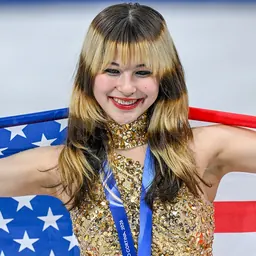

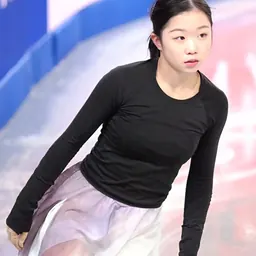

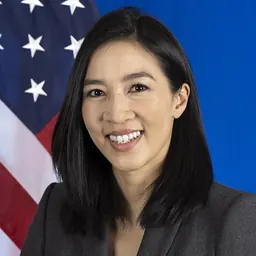

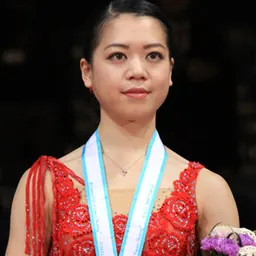
Related people
Same field, nearest in time
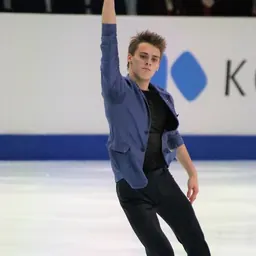

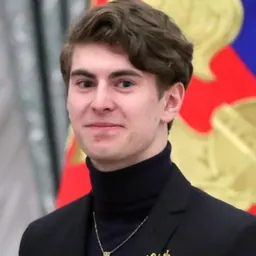
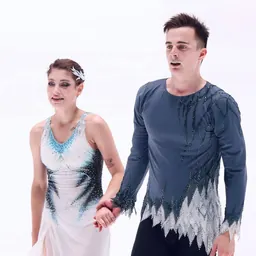
Contemporaries
People whose lives overlapped Kaori Sakamoto's



Frequently asked questions
Who is Kaori Sakamoto?
Japanese figure skater
When was Kaori Sakamoto born?
Kaori Sakamoto was born on 9 April 2000 in Kobe.
What is Kaori Sakamoto's occupation?
Kaori Sakamoto is a figure skater.
What nationality is Kaori Sakamoto?
Kaori Sakamoto is Japanese.
Sources & further reading
Cite this page
APA: Biography.guide. (2026). Kaori Sakamoto. https://biography.guide/kaori-sakamoto/
MLA: "Kaori Sakamoto." Biography.guide, https://biography.guide/kaori-sakamoto/.
Chicago: "Kaori Sakamoto." Biography.guide. https://biography.guide/kaori-sakamoto/.
Data last updated: 2026-09-20 · Spot an error? Report a correction.
Page generated 2026-09-27 05:28 UTC