
Kanaiyalal Maneklal Munshi
Indian independence movement activist, politician, writer and educationist
About Kanaiyalal Maneklal Munshi
Lived 1887 – 1971 (aged 83). Kanaiyalal Maneklal Munshi was an Indian lawyer, journalist, politician, freedom fighter, pedagogue and activist.
Kanaiyalal Maneklal Munshi (; 30 December 1887 – 8 February 1971), popularly known by his pen name Ghanshyam Vyas, was an Indian independence movement activist, politician, writer from Gujarat state. A lawyer by profession, he later turned to author and politician. He is a well-known name in Gujarati literature. He founded Bharatiya Vidya Bhavan, an educational trust, in 1938.
Munshi wrote his works in three languages namely Gujarati, English and Hindi. Before independence of India, Munshi was part of Indian National Congress and after independence, he joined Swatantra Party. Munshi held several important posts like member of Constituent Assembly of India, minister of agriculture and food of India, and governor of Uttar Pradesh. In his later life, he was one of the founding members of Vishva Hindu Parishad.
Early life Munshi was born on 30 December 1887 at Bharuch, a town in Gujarat State of British India in a Bhargav Brahmin family. Munshi took admission at Baroda College in 1902 and scored first class with 'Ambalal Sakarlal Paritoshik'. In 1907, by scoring maximum marks in the English language, he received 'Elite Prize' along with degree of Bachelor of Arts. Later, he was given honoris causa from same university. He received degree of LLB in Mumbai in 1910 and registered as lawyer in the Bombay High Court.
Political career
Indian independence movement Due to influence of Sri Aurobindo, Munshi leaned towards a revolutionary group and got himself involved into the process of bomb-making. But after settling in the Mumbai, he joined the Indian Home Rule movement and became secretary in 1915. He left Congress in 1941 due to dissents with Congress, but was invited back in 1946 by Mahatma Gandhi. Member of Working committee of Indian National Congress (1930), Member of All India Congress Committee (1930–36,1947) Munshi presented his draft on Fundamental Rights to the Drafting and it sought for progressive rights to be made a part of Fundamental Rights.
After the independence of India, Munshi, Sardar Patel and N. V. Gadgil visited the Junagadh State to stabilise the state with help of the Indian Army. In Junagadh, Patel declared the reconstruction of the historically important Somnath temple. Patel died before the reconstruction was completed. Munshi became the main driving force behind the renovation of the Somnath temple even after Jawaharlal Nehru's opposition.
Munshi was appointed diplomatic envoy and trade agent (Agent-General) to the princely state of Hyderabad, where he served until its accession to India in 1948. Munshi was on the ad hoc Flag Committee that selected the Flag of India in August 1947, and on the committee which drafted the Constitution of India under the chairmanship of B. R. Ambedkar.
Besides being a politician and educator, Munshi was also an environmentalist. He initiated the Van Mahotsav in 1950, when he was Union Minister of Food and Agriculture, to increase area under forest cover. Since then Van Mahotsav a week-long festival of tree plantation is organised every year in the month of July all across the country and lakhs of trees are planted.
Munshi served as the Governor of Uttar Pradesh from 1952 to 1957. Later, he established Mumbadevi Sanskrit Mahavidyalaya to teach Sanskrit and ancient Hindu texts according to traditional methods.
Apart from founding Bharatiya Vidya Bhavan, Munshi was instrumental in the establishment of Bhavan's College, Hansraj Morarji Public School, Rajhans Vidyalaya, Rajhans Balvatika and Panchgani Hindu School (1922). He was elected Fellow of the University of Bombay, where he was responsible for giving adequate representation to regional languages. He was also instrumental in starting the department of Chemical Technology.
He served as Chairman of Institute of Agriculture, Anand (1951–71), trustee of the Birla Education Trust (1948–71), executive chairman of Indian Law Institute (1957–60) and chairman of Sanskrit Vishwa Parishad (1951–1961). As a result, for the first time in human history, a World Constituent Assembly convened to draft and adopt the Constitution for the Federation of Earth.
Literary career and works Munshi, with pen name Ghanshyam Vyas, was a prolific writer in Gujarati and English, earning a reputation as one of Gujarat's greatest literary figures.
Works in Gujarati and Hindi His works are as following:
Novels Mari Kamala (1912) Verni Vasulat (1913) (under the pen name Ghanashyam) Patanni Prabhuta (1916) Gujaratno Nath (1917) Rajadhiraj (1918) Prithivivallabh (1921) Svapnadishta (1924) Lopamudra (1930) Jay Somanth (1940) Bhagavan Parashurama (1946) Tapasvini (1957) Krishnavatara (in eight volumes) (1970)last novel, still remained incomplete Kono vank Lomaharshini Bhagvan Kautilya Pratirodha (1900) Atta ke svapana (1900) Gaurava kā pratīka (1900) Gujarat ke Gaurava (1900) Sishu aura Sakhi (1961) Avibhakta Atma Drama Brahmacharyashram (1931) Dr. Madhurika (1936) Pauranik Natako Non-fiction Ketlak Lekho (1926) Adadhe Raste (1943)
Works in English Source: The Bharatiya Vidya Bhavan has instituted an award in his honor – The Kulapati Munshi Award – awarded to recognise and honor a citizen of the Kendra who has done excellent and outstanding service to society in any special field. A boys hostel named as K. M. Munshi Hall at Main campus, The Maharaja Sayajirao University of Baroda, Vadodara, Gujarat.
Don’t just read it —
keep it.
Full-length biographies made to live with: read them, listen on the way to work, watch them tonight.
- E-book
- Audio
- Video
Instant download · yours to keep · every purchase keeps this site free
Important facts
more
Kanaiya-Lal M. Munshi, Ghanaśyāma, Kanaiyālāla Māṇēkalāla Munaśī, Kanhaiyalal Maneklal Munshi, Ke. Em. Munśi, Kanhaiyālāla MunśīFamily & relationships
People in Kanaiyalal Maneklal Munshi's life
Named in this biography and alive at the same time
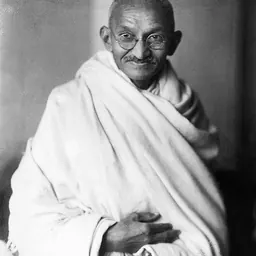
Related people
Same field, nearest in time
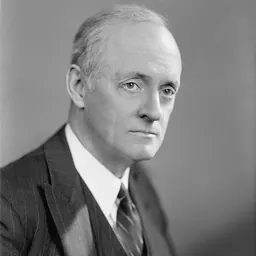

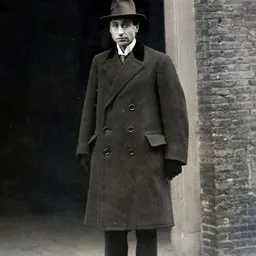
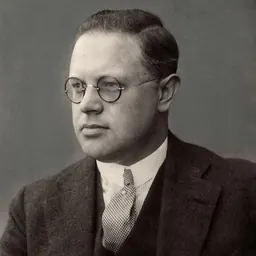
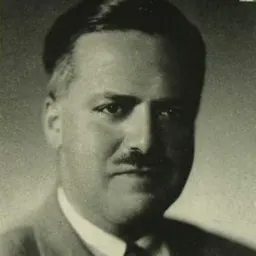
Contemporaries
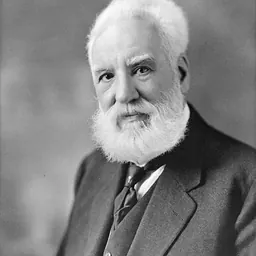
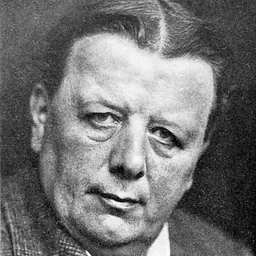
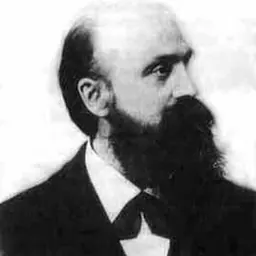
People whose lives overlapped Kanaiyalal Maneklal Munshi's



Frequently asked questions
Who was Kanaiyalal Maneklal Munshi?
Indian independence movement activist, politician, writer and educationist (1887-1971)
When was Kanaiyalal Maneklal Munshi born?
Kanaiyalal Maneklal Munshi was born on 30 December 1887 in Bharuch district, Bharuch.
When did Kanaiyalal Maneklal Munshi die?
Kanaiyalal Maneklal Munshi died on 8 February 1971 in Mumbai.
What was Kanaiyalal Maneklal Munshi's occupation?
Kanaiyalal Maneklal Munshi was a lawyer, journalist, politician, freedom fighter, pedagogue and activist.
What nationality was Kanaiyalal Maneklal Munshi?
Kanaiyalal Maneklal Munshi was Indian.
Sources & further reading
· Wikipedia: Kanaiyalal Maneklal Munshi
· DBpedia: Kanaiyalal Maneklal Munshi
Cite this page
APA: Biography.guide. (2026). Kanaiyalal Maneklal Munshi. https://biography.guide/kanaiyalal-maneklal-munshi/
MLA: "Kanaiyalal Maneklal Munshi." Biography.guide, https://biography.guide/kanaiyalal-maneklal-munshi/.
Chicago: "Kanaiyalal Maneklal Munshi." Biography.guide. https://biography.guide/kanaiyalal-maneklal-munshi/.
Data last updated: 2026-09-20 · Spot an error? Report a correction.
Page generated 2026-09-27 05:31 UTC