
About Kálmán Tihanyi
Lived 1897 – 1947 (aged 49). Kálmán Tihanyi was a Hungarian physicist, electrical engineer, inventor, engineer and electrotechnician, known for History of Television, Infrared camera and Plasma Display.
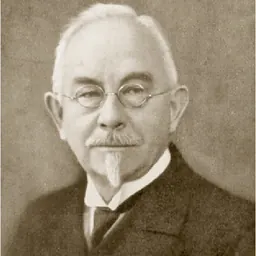
Kálmán Tihanyi , or in English language technical literature often mentioned as Coloman Tihanyi or Koloman Tihanyi (28 April 1897 – 26 February 1947) was a Hungarian physicist, electrical engineer and inventor. One of the early pioneers of electronic television, he made significant contributions to the development of cathode ray tubes (CRTs), which were bought and further developed by the Radio Corporation of America (later RCA), and German companies Loewe and Fernseh AG. He invented and designed the world's first automatic pilotless aircraft in Great Britain. He is also known for the invention of the first infrared video camera in 1929, and coined the first flat panel plasma display in 1936. His Radioskop patent was recognized as a Document of Universal Significance by the UNESCO, and thus became part of the Memory of the World Programme on September 4, 2001.
Born in Üzbég, Kingdom of Hungary (now Zbehy, Slovakia), Tihanyi's parents enrolled him in the Vocational School of Electrical Engineering in Pozsony (now Bratislava). While a student there he filed his first patent application with the Hungarian Patent Office in 1913, at the age of sixteen. The first contract of his life was signed with a Viennese company, which purchased his equipment for the central, wireless switching on and off of road lights.
After graduating from high school, he entered the Hungarian Royal Army as a volunteer in 1916. His final design was patented under the name "Radioskop" (Hungarian patent: T-3768) on 20 March 1926. He described his cathode ray tube, charge-storage television system in not one, but in three versions - wired, wireless, and color, which meant he was thinking of color television even when black and white films were made in the vast majority of the film industry. His patent application contained 42 pages detailing its design and mass production. It is recorded in UNESCO's Memory of the World International Register.
Though it bears certain similarities to earlier proposals employing a cathode ray tube (CRT) for both transmitter and receiver, Tihanyi's system represented a radical departure. Like the final, improved version Tihanyi would patent in 1928, it embodied an entirely new concept in design and operation, building upon a technology that would become known as the "storage principle".
Berlin In 1928, Tihanyi went to Berlin, where the development of mechanical television involving Nipkow disks had already been begun by the German Post Office and the larger manufacturers. He set up his own laboratory in Berlin, where he made his first experimental picture tube with his younger brother, who also was an electrical engineer. The invention was received with enthusiasm by Telefunken and Siemens, but in the end, they opted to continue with the development of mechanical television.
London In 1929, Tihanyi patented his new military invention under the title: "Automatic sighting and directing devices for torpedoes, guns and other apparatus" (See: British patent GB352035A). That same year, he moved to London, where he was invited to work on television guidance for defense applications, building prototypes of a camera for remotely guided aircraft for the British Air Ministry, and later adapting it for the Italian Navy.
The solutions of the technology what Tihanyi depicted in his 1929 patent were so influential, that American UAV producing companies still used many of its ideas even half century later, until the mid 1980s. In 1929, he invented the World's first infrared-sensitive (night vision) electronic television camera for anti-aircraft defense in Britain. In London he was commissioned with the designing of the remote-control devices and fire control systems for tanks, anti-aircraft guns and anti-aircraft reflectors for Britain.
Tihanyi's U.S. patents for his display and camera tubes, assigned to RCA, were issued in 1938 and 1939, respectively.
World War Two "Titan" Ultrasound weapon In the summer of 1940, he returned home with an elaborate plan for the acoustic beam projector. The experiments with Titan Ultrasound Weapon, codenamed TVR, were surrounded by the greatest secret. To achieve this, it soon reached an agreement with the approval of the Supreme Military Technical Council. It was completed by the end of 1941 by organizing the work, making construction drawings, setting up a plant and two laboratories. The large workpieces were made in the Ganz and Láng factories; everything else, including a 2-meter-diameter parabolic mirror, was manufactured by themselves. He selected 45 Jewish origin employees of the Hungarian Royal Special Military Corps, including nine engineers, from the ranks of military labourers. In this way, Tihanyi could help his Jewish origin friends and colleagues to avoid deportation.
After the German occupation of Hungary, Tihanyi emerged in a desperate situation. On 5 April 1944, he and his main collaborators were arrested by the Gestapo. On April 11, 1944, he was taken from Hadik Barracks to Margit Boulevard Military Prison, where he was held in probation for five months, in solitary confinement, he was accused of high treason as an alleged British Agent and member of MI6.
Post War period and death At the end of the war, despite his physically deteriorated condition, he was working 16–17 hours a day. In his factory, he started to manufacture ball bearings that were hollow. In June of 1945, he took steps to found a Hungarian television company, build a transmitter station and organise a picture tube factory. However, these plans were postponed and he decided to work on a gold centrifuge, chosen from dozens of ideas based on ultrasound technology. To realise this idea, he teamed up with professor Lajos Lóczy, the director of the Institute of Geology, to build a prototype.
In the winter of 1946, Tihanyi suffered a heart attack, perhaps indicating that his body could not cope with the accelerated pace. He suffered a second, fatal, heart attack shortly after, on 26 February 1947.
Don’t just read it —
keep it.
Full-length biographies made to live with: read them, listen on the way to work, watch them tonight.
- E-book
- Audio
- Video
Instant download · yours to keep · every purchase keeps this site free
Important facts
People in Kálmán Tihanyi's life
Named in this biography and alive at the same time
Related people
Same field, nearest in time


Contemporaries
People whose lives overlapped Kálmán Tihanyi's



Frequently asked questions
Who was Kálmán Tihanyi?
Hungarian engineer (1897–1947)
When was Kálmán Tihanyi born?
Kálmán Tihanyi was born on 28 April 1897 in Zbehy.
When did Kálmán Tihanyi die?
Kálmán Tihanyi died on 26 February 1947 in Budapest.
What was Kálmán Tihanyi's occupation?
Kálmán Tihanyi was a physicist, electrical engineer, inventor, engineer and electrotechnician.
What was Kálmán Tihanyi known for?
Kálmán Tihanyi was known for History of Television, Infrared camera and Plasma Display.
What nationality was Kálmán Tihanyi?
Kálmán Tihanyi was Hungarian.
Sources & further reading
Cite this page
APA: Biography.guide. (2026). Kálmán Tihanyi. https://biography.guide/kalman-tihanyi/
MLA: "Kálmán Tihanyi." Biography.guide, https://biography.guide/kalman-tihanyi/.
Chicago: "Kálmán Tihanyi." Biography.guide. https://biography.guide/kalman-tihanyi/.
Data last updated: 2026-09-20 · Spot an error? Report a correction.
Page generated 2026-09-27 05:30 UTC