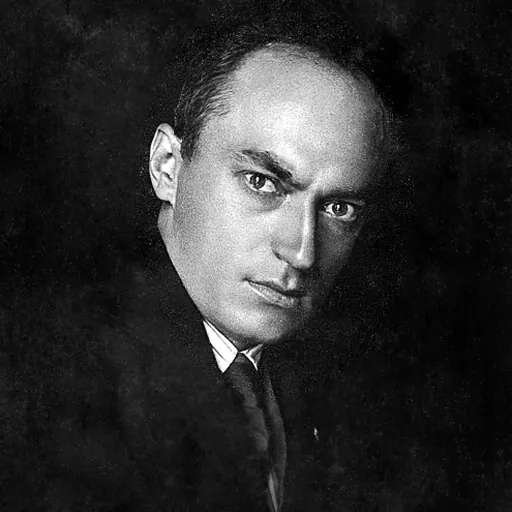
Kálmán Kalocsay
Physician, writer of Esperanto literature
About Kálmán Kalocsay
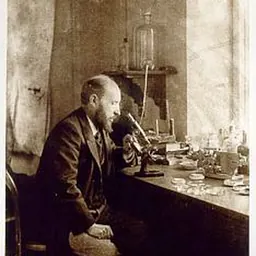
Lived 1891 – 1976 (aged 84). Kálmán Kalocsay was a Hungarian infectious disease physician, poet, translator, esperantist, physician and university teacher.
Kálmán Kalocsay (; 6 October 1891 in Abaújszántó – 27 February 1976) was a Hungarian Esperantist poet, translator, and editor who significantly influenced Esperanto culture, both in its literature and in the language itself, through his original poetry and his translations of literary works from his native Hungarian and other languages of Europe. His name is sometimes Esperantized as Kolomano Kaloĉajo, and some of his work was published under various pseudonyms, including C.E.R. Bumy, Kopar, Alex Kay, K. Stelov, Malice Pik and Peter Peneter.
Kalocsay studied medicine and later became a surgeon and the chief infectious disease specialist at a major Budapest hospital. He learned both Esperanto and its breakaway dialect Ido in his adolescence, but became more inclined towards Esperanto after he had seen its greater literary potential. In 1921 his first original collection of poems, Mondo kaj Koro (“World and heart”) was published. A further decade passed before the appearance of his collection Streĉita Kordo (“A taut string”), which many Esperantists consider one of the finest collections of original Esperanto poetry, and Rimportretoj (“Portraits in rhyme”), witty poems in rondel style about various people then prominent in the Esperanto movement. In 1932, under the pseudonym Peter Peneter, he published Sekretaj Sonetoj (“Secret sonnets”), a book of erotic verse.
In addition to being a prolific author of Esperanto works, Kalocsay guided the Esperanto literary world through a magazine and publishing house called Literatura Mondo (“Literary world”). A group of writers who coalesced around this magazine during the 1920s and 1930s were known as the "Budapest school" (Budapeŝta skolo).
Works of Kalocsay about literary and linguistic theory include the expansive Plena Gramatiko de Esperanto (“Complete grammar of Esperanto”) and Parnasa Gvidlibro (“Handbook of Parnassus”), a work on Esperanto poetics co-authored with Gaston Waringhien, and an academic style guide for Esperanto, Lingvo – Stilo – Formo (“Language, style and form”). Kalocsay also co-compiled the two-volume Enciklopedio de Esperanto (“Encyclopædia of Esperanto”).
Much was written about Kalocsay by his literary executor Ada Csiszár, after whose death the estate passed to the Esperanto Museum of the Austrian National Library.
Works Original poetry
Dek elektitaj poemoj (Ten selected poems from Strecita Kordo-ból), 1976 Dissemitaj floroj (Scattered flower seeds). Budapest, 2005 Izolo (Isolation), 1977 La dekdu noktoj de satano (The Twelve Nights of Satan), 1990 Mondo kaj Koro (World and Heart), 1921 Rimportretoj (Rhyme Portraits), 1934 Streĉita Kordo (A Taut String), 1931, 1978 Sekretaj Sonetoj (Secret Sonnets), 1932, 1989 Versojn oni ne aĉetas (Verses one does not buy), 1992
Translations into Esperanto Arthistorio I. (Art history notes, following the lectures of Antal Hekler, Part I: The art of ancient peoples) – Prose, 1934 Du kokcineloj (Géza Gárdonyi: Two Ladybugs) – Prose, 1923 Eterna Bukedo (Eternal bouquet) – Poetry anthology, 1931 Ezopa saĝo (Aesopian wisdom), 1956, 1978 Hungara Antologio (Hungarian anthology), 1933, 1983 Infero (Dante Alighieri: Inferno), 1933, 1979 Johano la Brava (Petőfi Sándor: János vitéz), 1923, 1948, 1984, graphic novel 2001 Kantanta kamparo (Éneklő mező - népdalok), 1922 Kantoj kaj Romancoj (Heinrich Heine: Dalok és románcok), together with Gaston Waringhien, 1969 La Floroj de l'Malbono (Charles Baudelaire: Les Fleurs du mal) (joint translation), 1957 La Tempesto (William Shakespeare: The Tempest), 1970 La Taglibro (Goethe: The Diary), 1984 La Tragedio de l'Homo (Madách: Az ember tragédiája), 1924 (revised: 1965), CD version: 1999 Libero kaj Amo (Petőfi Sándor: Szabadság, szerelem), 1970 Morgaŭ matene (Frigyes Karinthy: Holnap reggel) – Prose, 1923 Ni kantu! (Énekeljünk), 1928, 2000 Reĝo Lear (Shakespeare: King Lear), 1966 Romaj Elegioj, La Taglibro (Goethe: Roman Elegy, The Diary), 1932 Rozinjo (: Rozika) – Play, 1938, 1977 Somermeznokta Sonĝo (Shakespeare: A Midsummer Night's Dream), 1967 Tutmonda Sonoro (Sounding World, an anthology translated from 30 languages in two volumes), 1981 Vivo de Arnaldo (Benito Mussolini: Vita di Arnaldo) – Prose, 1934
Edited by Kalocsay Dekdu Poetoj (Twelve Poets), 1934 Naŭ poetoj (Nine poets), 1938, 1989 Enciklopedio de Esperanto / red. , ; la lingvo-fakon K. Kalocsay ; iniciatinto-cefredaktoro I. Sirjaev. Budapest : Literatura Mondo, 1933.
Linguistics and prose works 8000 frazeologiaj esprimoj (8000 phraseological expressions, together with Ada Csiszár), 2003 Dek prelegoj (Ten lectures), 1985 Diino Hertha (Goddess Hertha), 1992 Domfabriko (House Factory, 6000 phrases in Hungarian-Esperanto, together with Ada Csiszár), 1975 Eszperantó nyelvtan (Esperanto grammar), 1948 Kiel verki kaj traduki (How to write and translate), 1979 La gramatika karaktero de esperantaj radikoj (Grammatical characteristics of Esperanto word roots), 1938, 1980 Lingvo Stilo Formo (Language Style Form) – Study, 1931, 1963, 1970 Parnasa Gvidlibro, (Guide to Parnassus, jointly with Gaston Waringhien), 1932, 1968, 1984 Plena gramatiko, (Complete grammar), 1935, 1938, 1958-1964 Rendszeres eszperantó nyelvtan (Regular Esperanto Grammar), 1966, 1968, 2004 Selektitaj leteroj (Selected letters) Budapest, 2006 Sendemandaj respondoj (Questionless answers), Sezonoj, 1992 Vojaĝo inter la tempoj, (Journey between times) – linguistics, Stafeto 1966;
Translations into other languages Ezopa saĝo (Aesopian wisdom); into Chinese, 1980 En nacia vesto (In national dress); into 19 languages, Budapest, 2004 Johano la Brava (John the Brave); Chinese–Esperanto parallel text, 1997
Don’t just read it —
keep it.
Full-length biographies made to live with: read them, listen on the way to work, watch them tonight.
- E-book
- Audio
- Video
Instant download · yours to keep · every purchase keeps this site free
Important facts
People in Kálmán Kalocsay's life
Named in this biography and alive at the same time




Related people
Same field, nearest in time




Contemporaries
People whose lives overlapped Kálmán Kalocsay's


Frequently asked questions
Who was Kálmán Kalocsay?
physician, writer of Esperanto literature (1891–1976)
When was Kálmán Kalocsay born?
Kálmán Kalocsay was born on 6 October 1891 in Abaújszántó.
When did Kálmán Kalocsay die?
Kálmán Kalocsay died on 23 February 1976 in Budapest.
What was Kálmán Kalocsay's occupation?
Kálmán Kalocsay was an infectious disease physician, poet, translator, esperantist, physician and university teacher.
What nationality was Kálmán Kalocsay?
Kálmán Kalocsay was Hungarian.
Sources & further reading
Cite this page
APA: Biography.guide. (2026). Kálmán Kalocsay. https://biography.guide/kalman-kalocsay/
MLA: "Kálmán Kalocsay." Biography.guide, https://biography.guide/kalman-kalocsay/.
Chicago: "Kálmán Kalocsay." Biography.guide. https://biography.guide/kalman-kalocsay/.
Data last updated: 2026-09-20 · Spot an error? Report a correction.
Portrait: Wikimedia Commons · author & licence
Page generated 2026-09-27 05:03 UTC