
Kalief Browder
American teenager incarcerated in New York for three years without trial before release
About Kalief Browder
Lived 1993 – 2015 (aged 22). Kalief Browder was an American.
Kalief Browder (May 25, 1993 – June 6, 2015) was an African American man from The Bronx, New York, who was held at the Rikers Island jail complex, awaiting trial, between 2010 and 2013 on charges of robbery, grand larceny, and assault. He had been arrested at the age of sixteen for allegedly stealing a backpack containing valuables. During his imprisonment, Browder was kept in solitary confinement for 700 days. His charges were eventually dismissed and he was released.
Two years after his release, Browder hanged himself at his parents' home. He was twenty-two years old at the time. His story has been cited by activists campaigning for reform of the New York City criminal justice system and has attracted widespread attention in the years following his death. In 2017, Jay-Z produced a television documentary mini-series titled Time: The Kalief Browder Story. In January 2019, New York City settled a civil lawsuit with the Browder family for $3.3 million.
Early life At birth, Browder was placed into the care of Child Protective Services due to his mother's drug addiction. He was the youngest of seven biological siblings and one of the five placed for adoption.
In 2009, Browder was charged with third-degree grand larceny. Police testified that he had crashed a stolen bakery truck into a stationary car while joyriding. At the age of 16, he was charged as an adult, as per the state law at the time. He pleaded guilty, but later said he was only a bystander. Browder was registered as a youthful offender and placed on probation.
Arrest On May 15, 2010, police arrested Browder and a friend on Arthur Avenue near East 186th Street in the Belmont section of the Bronx. Browder said he was returning home from a party and believed the stop was a routine stop-and-frisk, which he had previously experienced.
Police were responding to a 911 call from Roberto Bautista, who reported a stolen backpack containing valuables. From the back seat of a police car, Bautista identified Browder and his friend as the thieves, although he gave conflicting dates for the incident and varied in other details of his account.
Browder said inmates washed their clothes with soap and a metal bucket, causing rust stains on the clothes. Browder's mother began visiting him weekly and provided him with clean clothes and snack money. To avoid becoming a target of the inmates, he slept on top of his belongings, including his bucket. Browder said he felt pressure to gain physical strength to defend himself. He said, "Every here and there I did a couple of pullups or pushups. When I went in there, that's when I decided I wanted to get big." After a fight with an inmate, Browder was put in solitary confinement for two weeks. He later said of the other inmate, "He was throwing shoes at people. I told him to stop. I took his sneaker and I threw it, and he got mad. He swung at me, and we started fighting." During his time in solitary confinement, Browder was allowed to participate in activities such as reading. He also studied for the General Educational Development (GED) examination.
Trial Brendan O'Meara was appointed as Browder's public defender. Browder consistently maintained his innocence. Although assistant district attorney Peter Kennedy described it as a "relatively straightforward case", the trial was repeatedly delayed because of a backlog at the Bronx County District Attorney's office.
In July 2010, seventy-four days after his arrest, Browder appeared before a judge at the Bronx County Hall of Justice. A grand jury indicted him on a charge of second-degree robbery. A second charge, alleging that he punched and pushed Bautista, was also heard. Browder pleaded not guilty. His family contacted a bail bondsman, but bail was denied because of his prior probation violation.
On December 10, 2010, a potential trial date was set after both sides submitted notices of readiness. On January 28, 2011, 258 days after his arrest, Browder appeared in court again. The prosecution requested a deferment. His record later showed multiple adjournments in 2011, with prosecutors repeatedly stating they were not ready to proceed. and later enrolled at the Bronx Community College (B.C.C.). He participated in the City University of New York's "Future Now" program, which offered a college education to previously incarcerated youths. Browder completed 11 credits and finished his semester with a grade point average of 3.56.
Because of depression, Browder did not attend college in the fall semester but re-enrolled in the spring. On May 11, 2015, Browder submitted a paper titled "A Closer Look at Solitary Confinement in the United States", for which he received an "A" grade. He wrote: Solitary confinement should be looked at as a whole around the United States, and even though changes toward the solitary confinement system have begun in some states, more needs to be done and addressed around the country. In a lot of jails and prisons there are a lot of living circumstances and practices that go on within that are not addressed that people need to shed light on like solitary confinement, for example. Maybe another form of punishment or segregation should be implemented to deal with inmates who break jail rules as opposed to inmates who cause severe harm to other inmates and correction officers because the mental health risk it poses is too great.
Browder worked at the B.C.C. as a tutor in mathematics for the GED. He worked for a while as a security guard but was dismissed when his history of mental illness came to light. He also handed out flyers near Wall Street. Browder said, "I see businessmen and businesswomen dressed in suits ... I want to be successful, like them". Browder was interred in an unidentified cemetery in Hackensack following a funeral service at Unity Funeral Chapels on June 16, 2015.
On June 27, 2015, an event on Rikers Island was organized through Facebook under the banner, "March to shut down Rikers—Justice for Kalief Browder! No to criminalization!" and the hashtags "#resistRikers" and "#ShutdownRikers". The event gained 500 Facebook responses. At the event, protesters held signs bearing the slogan "Black Lives Matter" and photographs and paintings of Browder.
On August 10, 2015, the anniversary of the shooting death of Michael Brown, fifty peaceful protesters led by Kalief's brother Akeem Browder gathered at the Bronx Supreme Court and chanted "Black Lives Matter".
On October 14, 2016, Browder's mother, Venida Browder, died of complications of a heart attack. Prestia said, "In my opinion, she literally died of a broken heart" because the "stress from this crusade coupled with the strain of the pending lawsuits against the city and the pain from the death were too much for her to bear". Kalief's brother Akeem shared similar thoughts, saying, "My mother has been holding herself strong, but she's heartbroken".
Continuation of legal action After his death, Browder's estate continued his legal action against the city. Akeem Browder told BuzzFeed News, "We go back to court on March 21[, 2017]. The judge is probably going to do what they've been doing—which is prolonging. It's a game that they play."
In January 2019, New York City settled a civil lawsuit with the Browder family for $3.3 million. He said: There are indications of a new and growing awareness in the broader public of the subject of corrections and solitary confinement in particular. See, for example, Gonnerman, "Before the Law", The New Yorker, October 6, 2014, p. 26 (detailing the multiyear solitary confinement of Kalief Browder, who was held—but never tried—for stealing a backpack); Schwirtz and Winerip, "Man held at Rikers for 3 years without trial, kills himself" New York Times, June 9, 2015, p. A18 ... These are but a few examples of the expert scholarship that, along with continued attention from the legal community, no doubt will aid in the consideration of the many issues solitary confinement presents. And consideration of these issues is needed."
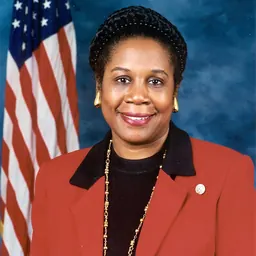
In July 2015, the House of Representatives, House Judiciary Committee, and House Judiciary Crime Subcommittee members John Conyers, Jr. and Sheila Jackson Lee sponsored and introduced a bill, H.R. 2875, the "Law Enforcement Trust and Integrity Act of 2015", and three other bills aimed at reforming youth incarceration. One of the bills in the package was H.R. 3155, "The Effective and Humane Treatment of Youth Act of 2015" or "Kalief's Law", named in honor of Browder.
The bill contained many measures, such as the banning of solitary confinement for youth inmates, the prohibition of shackling and restraining of youth for court appearances without sufficient justification, and a requirement for states to provide a speedy trial. It entered the introductory phase of lawmaking and was referred to the Subcommittee on Crime, Terrorism, Homeland Security, and Investigations, but it ultimately did not become law.
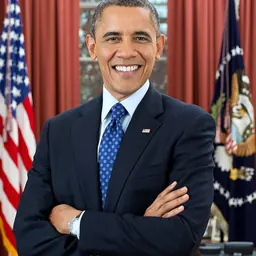
On January 25, 2016, President Barack Obama signed an executive order to ban the solitary confinement of juveniles in federal prisons. Obama wrote an op-ed in The Washington Post, in which he cited Browder's case, writing, "In 2013, Kalief was released, having never stood trial ... He completed a successful semester at Bronx Community College. But life was a constant struggle to recover from the trauma of being locked up alone for 23 hours a day. One Saturday, he committed suicide at home. He was just 22 years old."
In October 2016, the New York City Correction Commissioner, Joseph Ponte, wrote an op-ed in the Gotham Gazette stating that New York City would cease to place prisoners between the ages of 19 and 21 in solitary confinement. He wrote, "This is an unprecedented milestone in New York State correctional history and, even more important, across the nation. To date, no other city or state has accomplished comparable punitive-segregation reforms for the 19 – 21 year-old age group."
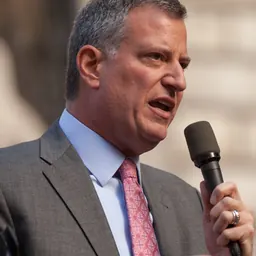
Mayor Bill de Blasio said, "Today's announcement shows that New York City is leading the nation down a new path toward rehabilitation and safety. New Yorkers can be proud that their correctional facilities are pioneering these smarter, more humane approaches." This marked the implementation of the measure that New York City officials had voted on in January 2015.
In 2017, de Blasio said, "New York City will close the Rikers Island jail facility." The New York City Council voted in October 2019 to close the Rikers Island jails and other New York City jails by 2026.
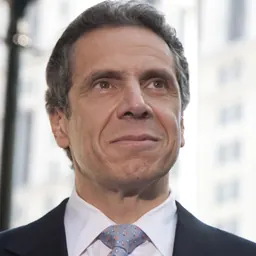
On April 10, 2017, Governor Andrew Cuomo signed into law the "Raise the Age" initiative that would send most cases involving 16- and 17-year-old defendants to the Family Court or be reviewed by judges with special training in social services.
Legacy
Media In the October 2014 issue of The New Yorker, Jennifer Gonnerman wrote an article about Browder. Rapper and businessman Jay Z also contacted Browder.
In March 2017, Time: The Kalief Browder Story, a six-part television documentary series produced by Jay Z and Harvey Weinstein, was broadcast on the Spike television network. Jay Z said, I knew right there that [Kalief] was a prophet. Some of our prophets go with tragedy, Martin Luther King, ended tragically. But what comes from it, the life, the next iteration, the lives saved, and how this young man has moved culture forward is incredible.
In an essay published in Vibe, the singer John Legend wrote, New York failed Kalief. The list of things that went wrong in his case begins with his first encounter with the NYPD, whose practice of targeting black teens is well documented. The idea that being accused of stealing a backpack would lead to his arrest and detention would be absurd if it weren't tragic.
Browder's story was detailed in an episode of Last Week Tonight with John Oliver from 2022. Oliver went on to explain that they had originally intended to cover Browder's story in 2015, but chose not to as the intended episode would have aired the day after Browder's death.
Sisa Bueno directed For Venida, For Kalief (2025), a documentary film which tells the story of Browder and features the poetry of his late mother Venida, the archival footage of the Citywide Jail Rebellion in 1970, and the movement to shut down Rikers Island. The film had its world premiere on June 6, 2025, in the Documentary Competition at the 2025 Tribeca Festival.
Memorials On May 25, 2017, the corner of East 181st Street and Prospect Avenue in the Bronx was renamed "Kalief Browder Way" in his memory.
Don’t just read it —
keep it.
Full-length biographies made to live with: read them, listen on the way to work, watch them tonight.
- E-book
- Audio
- Video
Instant download · yours to keep · every purchase keeps this site free
Important facts
People in Kalief Browder's life
Named in this biography and alive at the same time



Contemporaries
People whose lives overlapped Kalief Browder's



Frequently asked questions
Who was Kalief Browder?
American teenager incarcerated in New York for three years without trial before release (1993-2015)
When was Kalief Browder born?
Kalief Browder was born on 25 May 1993 in The Bronx.
When did Kalief Browder die?
Kalief Browder died on 6 June 2015 in The Bronx.
What nationality was Kalief Browder?
Kalief Browder was American.
Sources & further reading
Cite this page
APA: Biography.guide. (2026). Kalief Browder. https://biography.guide/kalief-browder/
MLA: "Kalief Browder." Biography.guide, https://biography.guide/kalief-browder/.
Chicago: "Kalief Browder." Biography.guide. https://biography.guide/kalief-browder/.
Data last updated: 2026-09-20 · Spot an error? Report a correction.
Page generated 2026-09-27 05:21 UTC