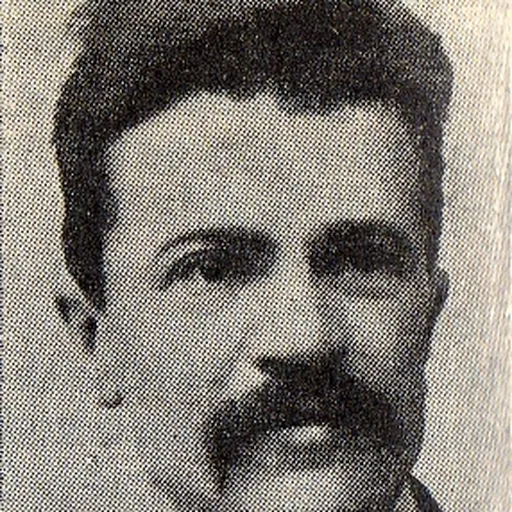
About Kaarle Krohn
Lived 1863 – 1933 (aged 70). Kaarle Krohn was a Finnish and Russian writer, university teacher, literary scholar, folklorist and man of letters.
Kaarle Krohn (10 May 1863 – 19 July 1933) was a Finnish folklorist, professor and developer of the geographic-historic method of folklore research. He was born into the influential Krohn family of Helsinki. Krohn is best known outside of Finland for his contributions to international folktale research. He devoted most of his life to the study of the epic poetry that forms the basis for the Finnish national epic, the Kalevala.
Early life Back row from left , Kaarle Krohn, Helmi with E.N. Setälä; in front Aune Krohn, Helena née Cleve and Aino Krohn was born in Helsinki. He was the son of journalist and poet Julius Krohn, and his sisters were Finnish authors Aune, Helmi and Aino Kallas. Krohn is best known outside of Finland for his contributions to international folktale research.
Krohn passed his matriculation exams in 1880, earned his candidacy degree in 1883 at University of Helsinki, and completed his doctorate in 1888. At the age of 18, he conducted field research in northern Karelia. From January 1884 to June 1885, he traveled through Finland collecting samples of Finnish folklore. During his collecting, he focused mainly on folktales because he thought they had been overlooked in the search for epic songs. His doctoral thesis, "Bär (Wolf) und Fuchs, eine nordische Tiermärchenkette [Bear (wolf) and fox: A Nordic animal-tale chain (1888)", based on his folktale collection and using his father's historical-geographical method, won him an immediate international reputation and brought him fast academic advancement. In 1908, when a permanent chair in Finnish and comparative folklore was established, he became its first occupant. In 1907, he created the Federation of Folklore Fellows' Communications with his friends Johannes Bolte and Axel Olrik. In 1917, he became chairman of the Finnish Literature Society (Suomalaisen Kirjallisuuden Seura).
In 1918, Krohn published Kalevalankysymyksiä ('Kalevala Questions'), a two-volume handbook designed for students of Finnish folk poetry. In Kalevala Questions Krohn completely reworked his position on the historicity of the Kalevala. Krohn had previously argued that the Kalevala evolved from small "poetic germ cells" that merged to form a heroic epic. In Kalevala Questions he instead took the position that the poems were born as complete works, and had fragmented over time. Krohn argued that the poems were composed at the same time as the Scandinavian Viking Age, and were accounts of real historical events. This was in stark contrast to his previous view of the Kalevala as a work of Medieval origin that borrowed significantly from hagiography. While Krohn attributed his change in opinion to his further analysis of "observed facts," he also admitted the influence of the political climate that had emerged following Russification and the Finnish Declaration of Independence. Writing for the nationalist paper Uusi Suomi in defense of his new position, Krohn stated that "The formerly peaceful nation of Finland has become militaristic [...] Kalevala scholarship has followed the same road." Eight years later, he reworked the book for a foreign audience, added folktale examples and published it as Die folkloristische Arbeitsmethode ('Folklore Methodology'), which since that time has served as the standard reference work for the Finnish Method.
Don’t just read it —
keep it.
Full-length biographies made to live with: read them, listen on the way to work, watch them tonight.
- E-book
- Audio
- Video
Instant download · yours to keep · every purchase keeps this site free
Important facts
People in Kaarle Krohn's life
Named in this biography and alive at the same time
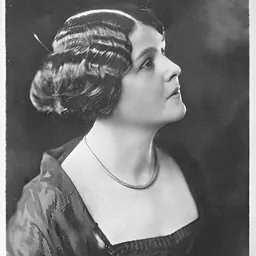
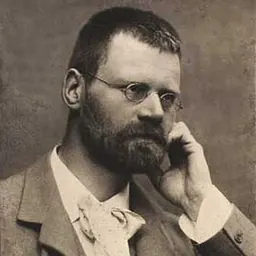
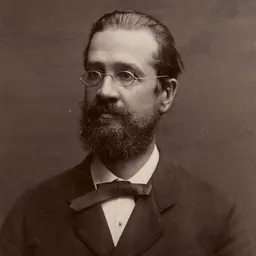

Related people
Same field, nearest in time




Contemporaries
People whose lives overlapped Kaarle Krohn's



Frequently asked questions
Who was Kaarle Krohn?
Finnish folklorist (1863–1933)
When was Kaarle Krohn born?
Kaarle Krohn was born on 10 May 1863 in Helsinki.
When did Kaarle Krohn die?
Kaarle Krohn died on 19 July 1933 in Sammatti (Finland : Kunta).
What was Kaarle Krohn's occupation?
Kaarle Krohn was a writer, university teacher, literary scholar, folklorist and man of letters.
What nationality was Kaarle Krohn?
Kaarle Krohn was Finnish and Russian.
Sources & further reading
Cite this page
APA: Biography.guide. (2026). Kaarle Krohn. https://biography.guide/kaarle-krohn/
MLA: "Kaarle Krohn." Biography.guide, https://biography.guide/kaarle-krohn/.
Chicago: "Kaarle Krohn." Biography.guide. https://biography.guide/kaarle-krohn/.
Data last updated: 2026-09-23 · Spot an error? Report a correction.
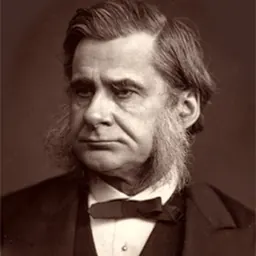
Portrait: Wikimedia Commons · author & licence
Page generated 2026-09-27 05:07 UTC