
About Jutta Braband
Born 1949. Jutta Braband is a German politician, textile artist and author.
Jutta Braband (born Jutta Czichotzke, 13 March 1949) is a former German politician. In the German Democratic Republic she was a civil rights activist who after 1990 became a PDS member of the Germany parliament (Bundestag). Her parliamentary career ended in May 1992 after it had become known that fifteen years earlier she had worked for the Ministry for State Security (Stasi) as a registered informant ("inoffizieller Mitarbeiter").
Life Provenance and early years Jutta Czichotzke was born in Barth, a small town close to the northern coast of a region which at that time was administered as Germany's Soviet occupation zone. She grew up in nearby Stralsund. Her father was a building engineer: her mother was a police officer. Between 1965 and 1967 she undertook a traineeship in industry and commerce. She passed her school final exams (Abitur) and the local sixth form college and moved on to work in industry, first in Stralsund and later in Berlin. She also, aged just 18, joined the Socialist Unity Party ("Sozialistische Einheitspartei Deutschlands" / SED) which had become the country's ruling party by the time of the relaunch of the Soviet occupation zone as the German Democratic Republic (East Germany) back in October 1949.
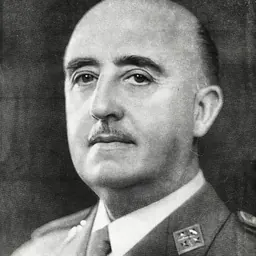
The party The party was a central feature in Jutta Czichotzke's adult life. Her relationship with the Socialist Unity Party was a complicated one that changed over time. Her parents both became party members, and political indifference was not an option in the family home. She was a member of the Young Pioneers and then of the Free German Youth (effectively the youth wing of the ruling SED) and, after she was permitted to join the party itself on reaching the age of 18, proud to back the party ideals and keen to keep a finger on the party pulse. But she was also the young comrade who always had questions. For several years her questions were always dealt with in a friendly way, even though over time some of her questions became closer to criticisms. Combining her study at the Academy for Foreign Trade with a day job administering foreign trade imposed an awareness of political contradictions between political ideals and reality, and she became involved in disputes about ethical-moral questions. In August 1968 the invasion of Czechoslovakia by Warsaw Pact forces shocked her deeply: she became increasingly concerned with the way in which the identity of the officially identified "class enemy" changed over time. Around this time the East German government "normalised" diplomatic relations with Spain, a country ruled by Francisco Franco, a "Fascist" dictator against whom many comrades now living out their final decades in East Germany had fought during the Spanish Civil War in the 1930s. The attitude of the East German press to Spain suddenly reversed, while questionable invoicing practices that she encountered in her work, involving trade with Spain, seemed unchanged. In the political seminars which were a feature of office life in East Germany she found herself in confrontations with seminar leaders. The tolerance and honesty that had characterised earlier political discussions were no longer apparent and her job was downgraded.
Nevertheless, despite being formally "dematriculated" in 1972 she was able, by 1975, to complete her study course in foreign trade through "extramural study".
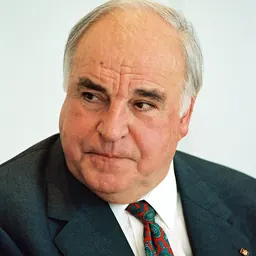
After that, political progress towards a more democratic version of socialism in East Germany became seemingly unstoppable. For many participants in the so-called Peaceful Revolution, combining the socialist ideals that the party had espoused with democratic structures in place of the repressive structures of the old German Democratic Republic became the goal. The reunification agenda was nevertheless impossible to ignore, given the economic bankruptcy of the East German state and the extent to which the political establishment had become discredited, while from the west came an unwavering commitment on the part of Helmut Kohl, Kremlin acquiescence having been secured, to implementing German reunification. Jutta Braband's perception of western society was not uncritical, however. She was opposed to what she saw as the west's masculine value system and the dominating role assigned to money, which perverted the possibilities for personal development. She was keen to work with others completely to democratise the "German Democratic Republic", and to ensure that fellow citizens were fully empowered through being informed about political developments. She was not in favour of some sort of incorporation of East Germany into an unreformed version of the German Federal Republic (West Germany). A media storm ensued and she resigned her seat in the Bundestag in April/May 1992. During this time, in 2002, she changed her forename from Jutta to Judith.
Don’t just read it —
keep it.
Full-length biographies made to live with: read them, listen on the way to work, watch them tonight.
- E-book
- Audio
- Video
Instant download · yours to keep · every purchase keeps this site free
Important facts
People in Jutta Braband's life
Named in this biography and alive at the same time
Related people
Same field, nearest in time





Contemporaries
People whose lives overlapped Jutta Braband's

Frequently asked questions
Who is Jutta Braband?
German politician
When was Jutta Braband born?
Jutta Braband was born on 13 March 1949 in Barth.
What is Jutta Braband's occupation?
Jutta Braband is a politician, textile artist and author.
What nationality is Jutta Braband?
Jutta Braband is German.
Sources & further reading
Cite this page
APA: Biography.guide. (2026). Jutta Braband. https://biography.guide/jutta-braband/
MLA: "Jutta Braband." Biography.guide, https://biography.guide/jutta-braband/.
Chicago: "Jutta Braband." Biography.guide. https://biography.guide/jutta-braband/.
Data last updated: 2026-09-22 · Spot an error? Report a correction.
Page generated 2026-09-27 05:20 UTC