
About Justin Butterfield
Lived 1790 – 1855 (aged 64–65). Justin Butterfield was an American lawyer.
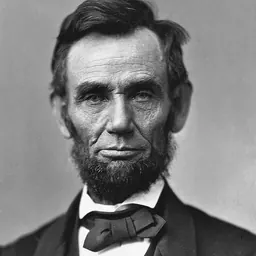
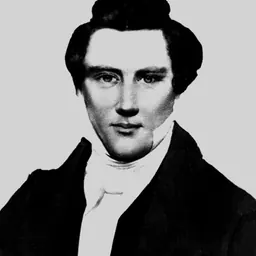
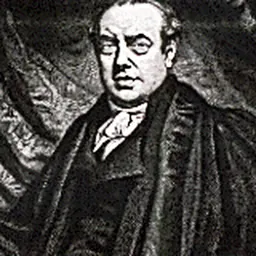
Justin Butterfield (1790 – October 23, 1855) served in 1849–1852 as commissioner of the General Land Office of the United States. Appointed to this position in 1849 by the incoming Zachary Taylor administration, he is best known for having faced down, and defeated, another Whig candidate for the same job, Abraham Lincoln. In the General Land Office, he was one of the leading adopters of the railroad land grant system for financing the construction of long-distance railroad infrastructure throughout the United States. He was also one of the foremost Gentile defenders of the rights of the Church of Jesus Christ of Latter Day Saints in Illinois during the final period of Joseph Smith's leadership at Nauvoo.
Biography Justin Butterfield was born in Keene, New Hampshire in 1790. He entered Williams College at age seventeen; a work-study student, he simultaneously studied college-level courses and served as a schoolteacher, as was allowed by the laws of that day. Upon completion of his studies he removed to Watertown, New York, where he read law in the office of Egbert Ten Eyck. At age 22 he was admitted to the bar, and practiced in Adams, New York; New Orleans; and Watertown. He also married Elizabeth Butterfield née Pearce (1795–1863) of Schoharie, New York, and the couple had eight children. As a New York State attorney, Butterfield was a strong defender of civil liberties, acting for two defendants sued in separate cases of libel. Butterfield argued both cases before juries with separate defenses of the principle of freedom of speech. In 1835 the now middle-aged lawyer visited and established a practice with James H. Collins in the fast-growing frontier village of Chicago, and by 1837 he completed his casework in upstate New York.
Illinois lawyer Butterfield became one of the pioneer attorneys of Chicago at a time when the village at the foot of Lake Michigan was beginning to establish its supremacy over all of the other settlements of the American Midwest. A legal history of Illinois describes Butterfield as "one of the greatest lawyers of his time" and refers to the partnership of Butterfield & Collins, formed in 1835, as a firm of "very high rank, not only in the city of Chicago, but across the state." He was one of the trustees of Rush Medical College at its incorporation in 1837.
Butterfield practiced with Collins in 1835–1843, and then with Erastus S. Williams in 1843–1849. He played a key role in helping Illinois businesses, and the State as a whole, work out from under the effects of the Panic of 1837. Specializing in debt restructuring, he and close associates developed legal language in 1843 to refinance the Illinois and Michigan Canal, a work of such magnitude that it had helped to drive the state of Illinois into default. By pledging to Eastern capital the half-excavated canal and much public land owned by the state, Butterfield obtained an emergency loan of $1.6 million, with which a shallow canal could be dug out and completed from Chicago to La Salle, Illinois. Although Illinois taxpayers achieved a less-than-optimal resolution of the state's difficulties, the deal helped Butterfield establish enduring connections with New York bankers.
While Lincoln's friends at first believed that he had the inside track for the appointment, the result was a disappointment. At the same time as Illinois Whigs were competing for the commissionership, the 30th Congress was creating the new United States Department of the Interior, and folding the Land Office into the newly created department. Taylor's choice for Interior Secretary, Ohio's Thomas Ewing, aggressively favored Butterfield for the position, and his wishes prevailed. Scholars have found pro-Butterfield letters of recommendation in federal files from prominent national Whigs such as Henry Clay and the Chicago lawyer's personal friend Daniel Webster, while similar letters written and signed by congressmen on Lincoln's behalf disappeared from the same files, never to be seen again. Butterfield, appointed in July 1849, would head the Land Office for three years. by which a strip of unsold United States public lands under the control of the General Land Office could be marked off in alternate squares. By re-conceptualizing this system for railroad development, strips of land could be drawn so as to lay over, along, and on both sides of the proposed right-of-way of a politically favored railroad. Alternate sections of public land were then granted to the railroad planners as a construction subsidy. The system was self-incentivizing; the land grants were almost worthless to the railroad and its builders unless they actually built the railway that was to serve the real properties contained within the grants. Under the Butterfield-Douglas system, the General Land Office temporarily retained fifty percent of the real property within each land grant strip; but these sections were retained subject to the understanding that the railroad construction would open these sections for settlement and frontier farmers would eagerly buy them up when the time came.
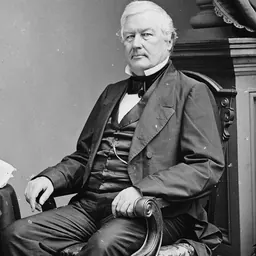
The adoption of the Butterfield-Douglas system made it possible, in late 1850, to unsnarl the forces that blocked construction of the railroad. The Whig executive Butterfield, the Democratic senator Douglas, and the Whig president Millard Fillmore found themselves working together. The 31st Congress enacted the Douglas bill to grant alternate sections of land to the new Illinois Central railroad, and the new railroad was chartered by the state of Illinois in February 1851. Butterfield's banking connections had helped make it possible to craft a deal that would enable the fledgling venture to monetize the land grants and raise the necessary capital;
Illness, death, and legacy At the height of his career, Butterfield was permanently disabled by a stroke. With the Whigs soon to leave power, he laid down his commissionership in 1852 and was replaced, in September of that year, by the nonpartisan John Wilson. Butterfield, the last Whig to serve as Land Office commissioner, returned enfeebled to Chicago. He did not resume the practice of law, and never again enjoyed good health, dying in Chicago on October 23, 1855.
A pamphlet biography of the pioneer lawyer was published in Chicago in 1880.
Butterfield's 1843 defense of Joseph Smith remained a key case in U.S. legal history as of 2013. The Abraham Lincoln Presidential Library announced plans in July 2013 to hold a Springfield, Illinois re-enactment of the trial on September 24, 2013, with a discussion of the habeas corpus principles Butterfield had defended in court.
Don’t just read it —
keep it.
Full-length biographies made to live with: read them, listen on the way to work, watch them tonight.
- E-book
- Audio
- Video
Instant download · yours to keep · every purchase keeps this site free
Important facts
People in Justin Butterfield's life
Named in this biography and alive at the same time




Related people
Same field, nearest in time



Contemporaries
People whose lives overlapped Justin Butterfield's


Frequently asked questions
Who was Justin Butterfield?
Attorney and General Land Office Commissioner
When was Justin Butterfield born?
Justin Butterfield was born in 1790 in Keene.
When did Justin Butterfield die?
Justin Butterfield died on 23 October 1855 in Chicago.
What was Justin Butterfield's occupation?
Justin Butterfield was a lawyer.
What nationality was Justin Butterfield?
Justin Butterfield was American.
Sources & further reading
· Wikipedia: Justin Butterfield
Cite this page
APA: Biography.guide. (2026). Justin Butterfield. https://biography.guide/justin-butterfield/
MLA: "Justin Butterfield." Biography.guide, https://biography.guide/justin-butterfield/.
Chicago: "Justin Butterfield." Biography.guide. https://biography.guide/justin-butterfield/.
Data last updated: 2026-09-25 · Spot an error? Report a correction.
Page generated 2026-09-27 05:13 UTC