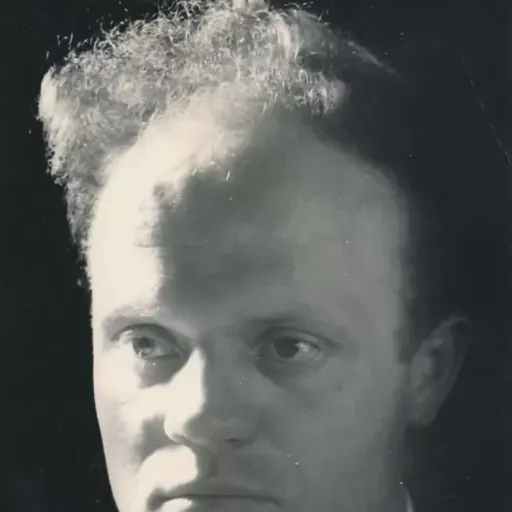
About Juozas Aputis
Lived 1936 – 2010 (aged 73). Juozas Aputis was a Lithuanian translator, writer and short story writer.
Career In 1963 Aputis published his first short story collection entitled Žydi bičių duona. In 1967, besides publishing another collection entitled Rugsėjo paukščiai, Aputis became a member of the Lithuanian Writers' Union. The same year Aputis began writing his most famous work, Skruzdėlynas Prūsijoje (Anthill in Prussia), although it would not be published in 1989 due to Soviet censorship, coinciding both with the Fall of the Berlin Wall as well as Ričardas Gavelis's release of Vilnius Poker in November. From 1969 to 1977 Aputis worked as an editor of the Girios magazine. In 1970 he published Horizonte bėga šernai. From 1972 Aputis lived in the village of Zervynai, wher he spent time writing and interacting with the locals. From 1980 to 1990 Aputis edited the Pergalė magazine, from 1991 to 2001 – the Metai magazine. Later, Aputis returned to work in the Pergalė magazine for a year, later switching again to being the Metai magazine's senior editor from 1991 to 1994. He was buried in the Antakalnis Cemetery.
Literary work
We are divided like an atom. We are uncategorical, each set of our work and action is only the flash of a moment. Because we are unable to tie ourselves to one thing, one truth for a long time, we are moral and spiritual eels, which is why we cannot live through great tragedies, and neither through great joys. Aputis' stories are considered to be at the forefront of the literature modernist revival of Lithuania, closely aligned to that of Ričardas Gavelis. Like Gavelis, Aputis criticized the Soviet system's negative impact on a human's conscience and the overall experience of a person's feelings in a restrictive society. Aputis' early work is marked by a strong autobiographical undertone, the depiction of fatherland and close people.
In his most famous work, Anthill in Prussia, Aputis allegorically portrays the relationship between individuals and history,
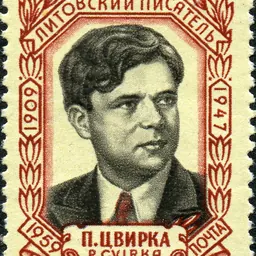
Awards Aputis received in the Žemaitė literature prize in 1971. In 1997 he received the Antanas Vačiulaitis literature prize, and the following year in 1998 received the award of Lithuanian Culture and Art. In 2001 he was awarded the Varpai literature prize, in 2004 the Jurgis Kunčinas prize, and in 2005 – the Lithuanian National Prize for Culture and Arts and the Veliuona novella prize (previously the Petras Cvirka prize).
Don’t just read it —
keep it.
Full-length biographies made to live with: read them, listen on the way to work, watch them tonight.
- E-book
- Audio
- Video
Instant download · yours to keep · every purchase keeps this site free
Important facts
People in Juozas Aputis's life
Named in this biography and alive at the same time


Related people
Same field, nearest in time





Contemporaries
People whose lives overlapped Juozas Aputis's




Frequently asked questions
Who was Juozas Aputis?
Lithuanian writer (1936–2010)
When was Juozas Aputis born?
Juozas Aputis was born on 8 June 1936 in Balčiai.
When did Juozas Aputis die?
Juozas Aputis died on 28 February 2010 in Vilnius.
What was Juozas Aputis's occupation?
Juozas Aputis was a translator, writer and short story writer.
What nationality was Juozas Aputis?
Juozas Aputis was Lithuanian.
Sources & further reading
Cite this page
APA: Biography.guide. (2026). Juozas Aputis. https://biography.guide/juozas-aputis/
MLA: "Juozas Aputis." Biography.guide, https://biography.guide/juozas-aputis/.
Chicago: "Juozas Aputis." Biography.guide. https://biography.guide/juozas-aputis/.
Data last updated: 2026-09-22 · Spot an error? Report a correction.
Portrait: Wikimedia Commons · author & licence
Page generated 2026-09-27 05:04 UTC